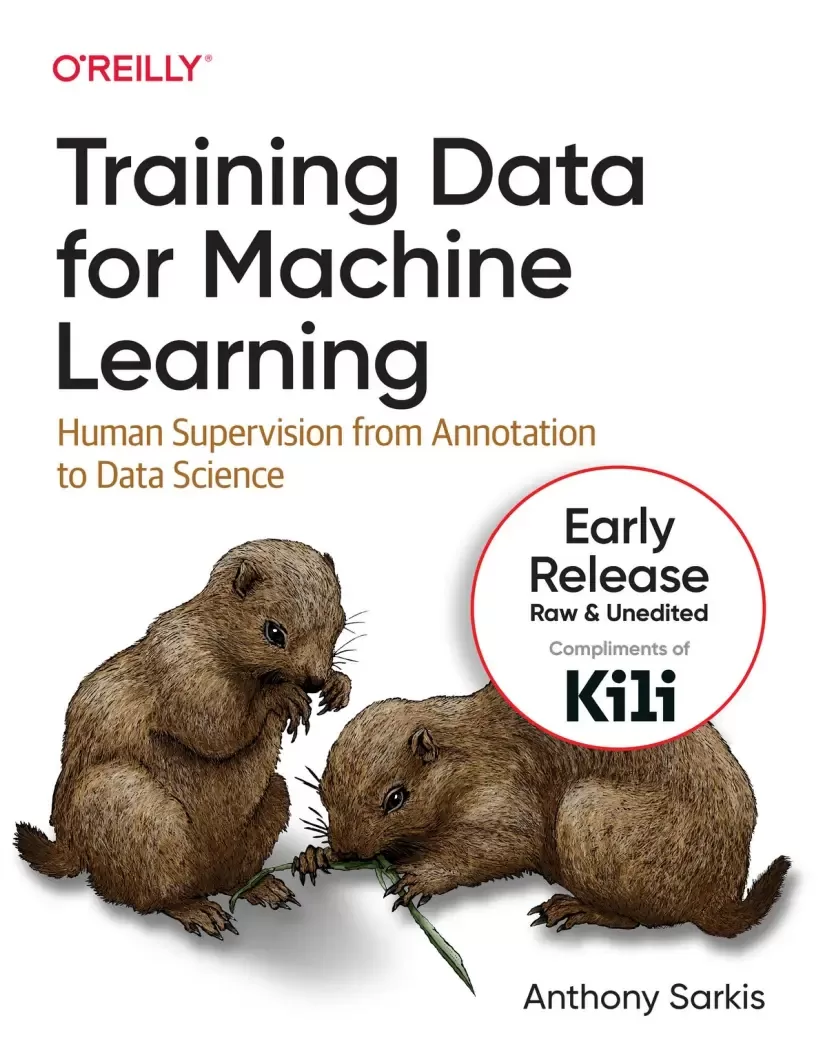
Training Data for Machine Learning: Human Supervision from Annotation to Data Science
Оглавление⌄
1. Training Data Introduction....8 Training Data Intents....10 What Can You Do With Training Data?....11 What is Training Data Most Concerned With?....12 Training Data Opportunities....23 Business Transformation....24 Training Data Efficiency....26 Tooling Proficiency....27 Common Pain Points....27 Why Training Data Matters....27 ML Applications are Becoming Mainstream....29 The Foundation of Successful AI....30 Training Data is Here to Stay....31 Training Data Controls the ML Program....32 New Types of Users....34 Training Data in the Wild....36 What Makes Training Data Difficult?....36 The Art of Supervising Machines....38 A New Thing....39 Media Types....41 ML Program Ecosystem....42 Data-Centric Machine Learning....42 Failures....43 Failing to Achieve the Desired Bias....46 What Training Data Is Not....47 Summary....48 2. Getting Up and Running....51 Introduction....51 Getting Up and Running....53 Installation....54 Annotation Setup....56 End User Setup....57 Data Setup....58 Workflow Setup....58 Data Catalog Setup....59 Initial Usage....59 Optimization....60 Tools Overview....60 Annotation....61 Catalog....61 Workflow....61 Training Data for Machine Learning....62 Growing Selection of Tools....63 People, Process, and Data....63 Embedded....64 Best Practices and Levels of Competency....65 Human Computer Supervision....65 Separation of End Concerns....66 Standards....66 Expansive Tooling....67 A Paradigm to Deliver Machine Learning Software....68 Trade-offs....69 Costs....69 Installed vs Software as a Service....70 Development System....72 Scale....74 Installation Options....82 Annotation Interfaces....85 Modeling Integration....86 Multi-User vs Single User....87 Integrations....87 Scope....88 Hidden Assumptions....95 Security....97 Open Source and Closed Source....102 History....108 Open Source Standards....108 Realizing the Need for Dedicated Tooling....109 Suite....112 Summary....113 3. Schema....116 Schema Deep Dive Introduction....116 Labels and Attributes....118 What Do We Care About?....118 Introduction to Labels....118 Attributes Introduction....120 Relationship to Spatial Types....126 Importance of What It Is....130 Technical Specifications....134 Where Is It? - Spatial Representation....143 Computer Vision Spatial Types....144 Lines and Curves....148 Types with Multiple Uses....149 Complex Spatial Types....150 Trade Offs with Types for Architecture and Creation....150 Trade Offs with Types for Usage....151 When Is It? - Relationships, Sequences, Time Series....152 Sequences and Relationships....152 When....152 Guides, Instructions....153 Judgment Calls....155 Choosing Good Names....156 Relation of Machine Learning Tasks to Training Data....156 Tasks....157 Chart - Relationship of Tasks to Training Data Types....163 General Concepts....165 Instance Concept Refresher....165 Upgrading Data Over Time....166 The Boundary Between Modeling and Training Data....167 Raw Data Concepts....169 Summary....171 4. Data Engineering....174 Introduction....174 Who Wants The Data?....176 A Game of Telephone....178 Planning A Great System....181 Naive & Training Data Centric approaches....183 Raw Data Storage....192 By Reference or by Value....193 Off-the-shelf dedicated Training Data tooling on your own hardware....195 Data storage....195 Where does the data rest?....195 Bucket connection....196 Raw Media (BLOB) Type Specific....197 Formatting & Mapping....199 User Defined Types (Compound Files)....200 Defining DataMaps....200 Ingest Wizards....201 Organizing Data and Useful Storage....202 Remote Storage....203 Versioning....204 Data Access....207 Disambiguating Storage, Ingestion, Export, and Access....208 File Based Exports....209 Streaming Data....210 Queries Introduction....212 Integrations with Ecosystem....212 Security....213 Access Control....214 Signed URLs....215 Pre-Label....219 Updating Data....219 Pre-Label Gotchas....220 Pre-Label data prep process....221 5. Annotation Automation....225 Introduction....225 Getting Started....227 Motivation: When to use these methods?....228 What do people actually use?....230 What kind of results can I expect?....232 Common Confusions....235 Risks....236 Costs Expected....237 Pre-Labeling....243 Standard Pre-Labeling....243 Micro Model Pre-Label....247 Quality Assurance Pre-Labeling....250 How to get started Pre-Labeling....251 Interactive Annotation Automation....251 Introduction....251 Interactive on Drawing Warm up....255 Interactive Capturing of a Region of Interest....258 Interactive Drawing Box to Polygon Using Grabcut....259 Full Image Model Prediction Example....260 How to get started with Interactive....262 Quality Assurance (QA) Automation....262 Using the Model to Debug The Humans....262 Automated Checklist Example....263 Checks based on looking at the data of samples....264 Data Discovery - What to Label Exploration....264 Choosing Based on Data....265 Choosing Based on MetaData....267 Simulation & Synthetic Data....268 Simulations are not perfect - Training Data still needs human review....270 Media Specific....273 What methods work with which media?....273 Video Specific....275 Polygon and Segmentation Specific....276 Language (NLP) Specific....277 Augmentation....277 Better Models are Better than Better Augmentation....278 To Augment or Not To Augment....278 Domain Specific....281 Geometry Based Labeling....281 Heuristic Based Labeling....283 6. Tools....285 Introduction....285 Why Training Data Tools....287 What do Training Data Tools Do?....288 Best practices and levels of competency....289 Human Computer Supervision....289 Tools Bring Clarity....290 Understanding the Importance of Tooling....291 Realizing the Need for Dedicated Tooling....293 More Usage, More Demands....294 Advent of New Standards....295 Journey to the Suite....297 Open Source Standards....300 A paradigm to deliver machine learning software....300 Scale....303 Why is it useful to define scale?....303 Rules of Thumb....304 Transitioning from small to medium scale....306 Build, Buy, or Customize....307 Major Scale Thoughts....307 Scope....309 Point Solutions....310 Tools in between....312 Platforms and Suites....313 Where is the Machine Learning?....316 Tooling quickstart....316 #1 Choose an open source tool to get up and running quickly.....317 #2 Try multiple, choose only one....317 #3 Use UI based wizards as much as possible.....317 Training Data Tooling Hidden Assumptions....318 True: Meet the Team....318 True: You have someone technical on your team....318 True: You have an ongoing project....319 True: You have a budget....319 True: You have time....319 False: You must use Graphics Processing Units GPUs....319 False: You must use automations....319 False: It’s all about the annotation UI....320 Security....320 Security Architecture....320 Attack Surface....321 Data Access....321 Human Access....322 Identity Access Management (IAM) bucket delegation schemes....322 In contrast with an installed solution....323 Annotator Access....323 Data Science Access....325 Root Level Access....326 Open Source and Closed Source....326 Deployment....328 Client Installed Deployment vs Software as a Service....328 Costs....330 Annotation Interfaces....330 User Experiences....332 Modeling Integration....332 Multi-User vs Single User....333 Integrations....333 Ease of Use....334 Annotator Ease of Use....334 Ergonomics of Labeling....336 Installation and organization....342 Docker....343 Docker Compose....343 Kubernetes....343 Configuration Choices....344 Storing Individual Frames (Video Specific)....345 Versioning Resolution....345 Retention Period....345 Bias in training data....346 The technical concept of Bias....346 This isn’t your grandfather’s Bias....346 Desirable Bias....347 Bias is hard to escape....348 Metadata....349 Lost Metadata....350 7. AI Transformation....352 AI Transformation Introduction....352 Getting Started....355 Seeing your Day to Day Work As Annotation....355 The Creative Revolution of Data Centric AI....359 The critical realization: you can create new data....359 You can change what data you collect....361 You can change the meaning of the data....361 You can create!....362 Think Step Function Improvement....362 Appoint a Leader: a Director of Training Data....364 Go From a Work Pool to Standard Expectation for All....364 Sometimes Proposals and Corrections, Sometimes Replacement....367 Upstream Producers and Downstream Consumers....368 Reading this Chart....377 Spectrum of Training Data Team Engagement....378 Dedicated Producers and Other Teams....378 Organizing Producers from Other Teams....379 Securing your AI Future....384 Use Case Discovery....384 Rubric for Good Use Cases....385 Evaluating Use Case Against the Rubric....393 Conceptual Effects of Use Cases....398 Rethink AI Annotation Talent - quality over quantity....405 Key Levers on Training Data ROI....406 Let’s think about what the Annotated Data Represents....406 Benefits of controlling your own training data....407 The Need for Hardware....407 Common Project Mistakes....408 Adopt Modern Training Data Tools....409 Business Models....410 Think Learning Curve not Perfection....410 New Training and Knowledge are Required....412 Producing And Consuming Training Data....413 Trap to Avoid: Premature Optimization in Training Data....414 No Silver Bullets....421 Culture of Training Data....422 New Engineering Principles....424 About the Author....426
Описание
Ниже — практический обзор по теме «data».
Your training data has as much to do with the success of your data project as the algorithms themselves because most failures in AI systems relate to training data. But while training data is the foundation for successful AI and machine learning, there are few comprehensive resources to help you ace the process.
In this hands-on guide, author Anthony Sarkis--lead engineer for the Diffgram AI training data software--shows technical professionals, managers, and subject matter experts how to work with and scale training data, while illuminating the human side of supervising machines. Engineering leaders, data engineers, and data science professionals alike will gain a solid understanding of the concepts, tools, and processes they need to succeed with training data.
With this book, you'll learn how to:Work effectively with training data including schemas, raw data, and annotationsTransform your work, team, or organization to be more AI/ML data-centricClearly explain training data concepts to other staff, team members, and stakeholdersDesign, deploy, and ship training data for production-grade AI applicationsRecognize and correct new training-data-based failure modes such as data biasConfidently use automation to more effectively create training dataSuccessfully maintain, operate, and improve training data systems of record
Файл доступен для загрузки ниже.
Поделиться
Частые вопросы
Можно ли скачать «Training Data for Machine Learning: Human Supervision from Annotation to Data Science» бесплатно?
Да, «Training Data for Machine Learning: Human Supervision from Annotation to Data Science» доступна для бесплатного скачивания на нашем сайте в формате PDF. Ссылка на файл находится на этой странице.
В каком формате и какого размера файл?
Книга предоставляется в формате PDF, размер файла 1,9 МБ.
Кто автор и когда вышла книга?
автор — Sarkis Anthony, издательство O’Reilly Media, Inc., год выпуска 2023, 426 страниц.
О чём книга «Training Data for Machine Learning: Human Supervision from Annotation to Data Science»?
Your training data has as much to do with the success of your data project as the algorithms themselves because most failures in AI systems relate to training data.
Похожие материалы
 Big Data Analytics
 Exploratory Data Analysis with Python Cookbook: Over 50 recipes to analyze, visualize, and extract insights from structured and unstructured data
 Наука о данных: Базовый курс
 Learning Spark: Lightning-Fast Data Analytics. 2 Ed
 Data Science. Наука о данных с нуля. 2 изд
 Mathematical Statistics with Applications in R. 3 Ed
 Рекомендательные системы на практике
 Анализ данных в науке и технике