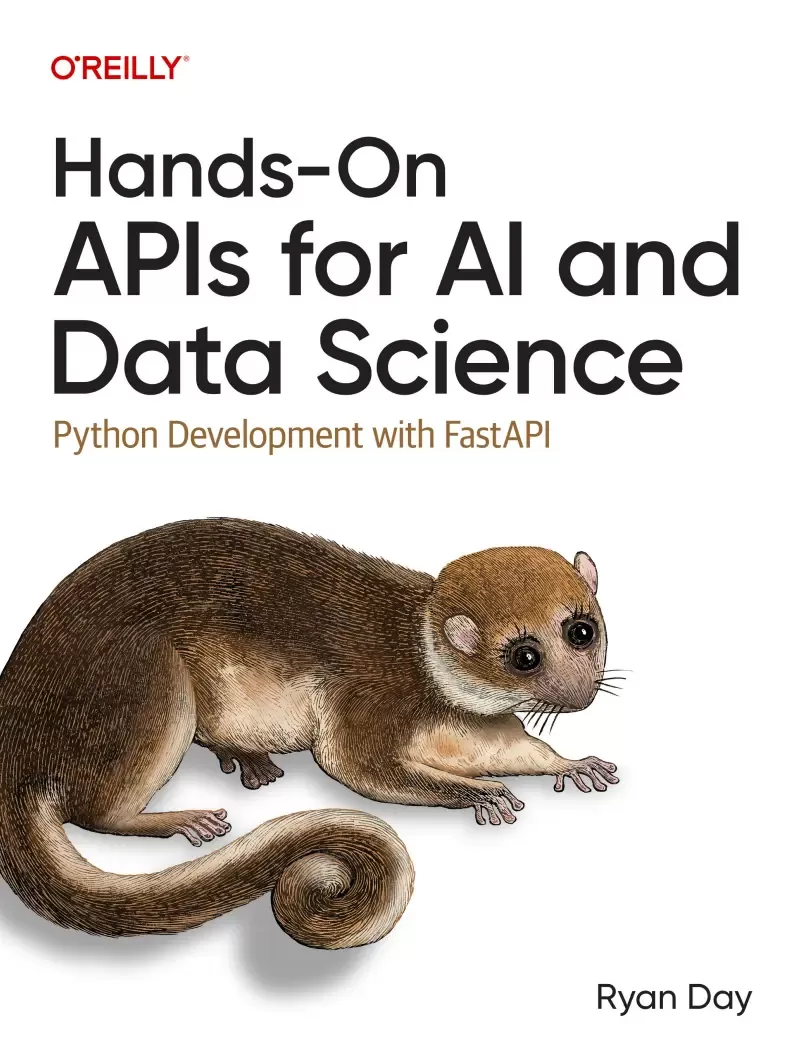
Hands-On APIs for AI and Data Science: Python Development with FastAPІ
Оглавление⌄
Cover....1 Copyright....8 Table of Contents....11 Preface....19 Why Should You Read This Book?....19 Who This Book Is For....19 Data Scientists....19 API Developers and Designers....20 Job Seekers and Role Changers....20 Creating Portfolio Projects....20 Using This Book....21 What This Book Is Not....21 Why Fantasy Football?....22 Get More Tips on APIs, AI, and Data Science....23 Conventions Used in This Book....23 Using Code Examples....24 O’Reilly Online Learning....24 How to Contact Us....25 Acknowledgments....25 Part I. Building APIs for Data Science....27 Chapter 1. Creating APIs That Data Scientists Will Love....29 How Do Data Scientists Use APIs?....29 What Tools Do Data Scientists Use?....30 Designing APIs for Data Scientists....31 Introducing Your Part I Portfolio Project....32 Every API Has a Story....32 Meeting Your Company: SportsWorldCentral....33 SWC Needs an API....35 Selecting the First API Products....36 Identifying Potential Users....36 Creating User Stories....37 Additional Resources....39 Summary....39 Chapter 2. Selecting Your API Architecture....41 API Architectural Styles....41 Representational State Transfer (REST)....42 Graph Query Language (GraphQL)....43 gRPC....43 Your Choice: REST....44 Technology Architecture....45 Software Used in This Chapter....47 Python....47 GitHub....47 Getting Started with Your GitHub Codespace....48 Creating Your GitHub Account....48 Cloning the Part I Repository....48 Launching Your GitHub Codespace....49 Touring Your New Codespace....50 Making Your First Commit....51 Additional Resources....53 Summary....54 Chapter 3. Creating Your Database....55 Components of Your API....55 Software Used in This Chapter....56 SQLite....56 SQLAlchemy....57 pytest....57 Creating Your SQLite Database....58 Creating Database Tables....58 Understanding Table Structure....61 Loading Your Data....62 Accessing Your Data Using Python....63 Installing SQLAlchemy in Your Environment....63 Creating Python Files for Database Access....65 Creating the Database Configuration File....70 Creating SQLAlchemy Helper Functions....71 Installing pytest in Your Environment....75 Testing Your SQLAchemy Code....75 Additional Resources....78 Summary....79 Chapter 4. Developing the FastAPI Code....81 Continuing Your Portfolio Project....81 Software Used in This Chapter....82 FastAPI....82 HTTPX....83 Pydantic....83 Uvicorn....84 Copying Files from Chapter 3....84 Installing the New Libraries in Your Codespace....85 Creating Python Files for Your API....85 Creating Pydantic Schemas....85 Creating Your FastAPI Controller....90 Testing Your API....96 Launching Your API....99 Additional Resources....101 Summary....102 Chapter 5. Documenting Your API....103 Sending a Signal of Trust....103 Making Great API Docs....104 Core Features....104 Extra Features....105 Reviewing Examples of API Documentation....106 Sleeper App....106 MyFantasyLeague....107 Yahoo! Fantasy Football....109 Viewing Your API’s Built-in Documentation....109 Copying Files from Chapter 4....110 Documentation Option 1: Swagger UI....111 Documentation Option 2: Redoc....117 Working with Your OpenAPI Specification File....118 Continuing Your Portfolio Project....121 Adding Details to the OAS info Object....122 Adding Tags to Categorize Your Paths....123 Adding More Details to Individual Endpoints....123 Adding Parameter Descriptions....124 Viewing the Changes in Swagger UI....125 Regression-Testing Your API....126 Updating Your README.md....127 Additional Resources....129 Summary....130 Chapter 6. Deploying Your API to the Cloud....131 Benefits and Responsibilities of Cloud Deployment....131 Benefits....132 Responsibilities....132 Choosing a Cloud Host for Your Project....133 Setting Up Your Project Directory....134 Using GitHub Codespaces as a Cloud Host....134 Deploying to Render....135 Signing Up for Render....136 Creating a New Web Service....136 Auto-Deploying a Change to Your API....138 Shipping Your Application in a Docker Container....139 Verifying Docker Installation....140 Creating a Dockerfile....140 Creating a .dockerignore File....141 Building a Container Image....142 Running Your Container Image Locally....142 Deploying to AWS....143 Creating a Lightsail Container Service....143 Installing the AWS CLI....145 Installing the Amazon Lightsail Container Services Plug-in....145 Configuring Your Login Credentials....145 Pushing Your Container Image to Lightsail....145 Creating a Lightsail Deployment....147 Updating Your API Documentation....151 Additional Resources....151 Summary....152 Chapter 7. Batteries Included: Creating a Python SDK....153 SDKs Bridge the Gap....154 Picking a Language for Your SDK....157 Starting with a Minimum Viable SDK....158 Expert Tip: Making Your SDK Easy to Install....158 Expert Tip: Making the SDK Consistent and Idiomatic....160 Building a Feature-Rich SDK....162 Expert Tip: Using Sane Defaults....163 Expert Tip: Providing Rich Functionality....165 Expert Tip: Performing Logging....170 Expert Tip: Hiding Your API’s Complicated Details....172 Expert Tip: Supporting Bulk Downloads....174 Expert Tip: Documenting Your SDK....177 Testing Your SDK....179 Expert Tip: Supporting Every Task the API Supports....183 Completing Your Part I Portfolio Project....184 Additional Resources....186 Summary....187 Part II. Using APIs in Your Data Science Project....189 Chapter 8. What Data Scientists Should Know About APIs....191 Using a Variety of API Styles....191 HTTP Basics....193 How to Consume APIs Responsibly....195 Separation of Concerns: Using SDKs or Creating API Clients....196 How to Build APIs....198 How to Test APIs....198 API Deployment and Containerization....199 Using Version Control....199 Introducing Your Part II Portfolio Project....200 Getting Started with Your GitHub Codespace....200 Cloning the Part II Repository....200 Launching Your GitHub Codespace....201 Running the SportsWorldCentral (SWC) API Locally....202 Additional Resources....203 Summary....204 Chapter 9. Using APIs for Data Analytics....205 Custom Metrics for Sports Analytics....205 Using APIs as Data Sources for Fantasy Custom Metrics....206 Creating a Custom Metric: The Shark League Score....208 Software Used in This Chapter....209 httpx....209 Jupyter Notebooks....209 pandas....210 Installing the New Libraries in Your Codespace....210 Launching Your API in Codespaces....210 Creating an API Client File....211 Creating Your Jupyter Notebook....212 Adding General Configuration to Your Notebook....214 Working with Your API Data....215 Calculating the League Balance Score....218 Calculating the League Juice Score....219 Creating the Shark League Score....221 Additional Resources....222 Summary....222 Chapter 10. Using APIs in Data Pipelines....223 Types of Data Sources for Data Pipelines....224 Planning Your Data Pipeline....224 Orchestrating the Data Pipeline with Apache Airflow....225 Installing Apache Airflow in GitHub Codespaces....226 Creating Your Local Analytics Database....230 Launching Your API in Codespaces....231 Configuring Airflow Connections....231 Creating Your First DAG....232 Coding a Shared Function....235 Running Your DAG....237 Summary....239 Chapter 11. Using APIs in Streamlit Data Apps....241 Engaging Users with Interactive Visualizations....241 Software Used in This Chapter....242 nfl_data_py....243 Streamlit....243 Installing Streamlit and nfl_data_py....243 Launching Your API in Codespaces....243 Reusing the Chapter 9 API Client File....244 Creating Your Streamlit App....244 Updating the Entrypoint File....245 Running Your Streamlit App....246 Creating the Team Rosters Page....247 Creating the Team Stats Page....250 Deploying Your Streamlit App....254 Completing Your Part II Portfolio Project....254 Additional Resources....255 Summary....256 Part III. Using APIs with Artificial Intelligence....257 Chapter 12. Using APIs with Artificial Intelligence....259 The Overlap of AI and APIs....259 Designing APIs to Use with Generative AI and LLMs....261 Defining Artificial Intelligence....263 Generative AI and Large Language Models (LLMs)....264 Creating Agentic AI Applications....264 Introducing Your Part III Portfolio Project....266 Getting Started with Your GitHub Codespace....266 Cloning the Part III Repository....266 Launching Your GitHub Codespace....267 Additional Resources....268 Summary....268 Chapter 13. Deploying a Machine Learning API....269 Training Machine Learning Models....270 New Software Used in This Chapter....272 ONNX Runtime....272 scikit-learn....272 sklearn-onnx....272 Installing the New Libraries in Your Codespace....273 Using the CRISP-DM Process....273 Business Understanding....274 Data Understanding....275 Data Preparation....277 Modeling....277 Evaluation....280 Deployment....280 Additional Resources....289 Summary....289 Chapter 14. Using APIs with LangChain....291 Calling AI Using APIs (via LangChain)....292 Creating a LangGraph Agent....293 Signing Up for Anthropic....294 Launching Your GitHub Codespace....295 Installing the New Libraries in Your Codespace....296 Creating Your Jupyter Notebook....296 Chatting with the LangGraph Agent....299 Running the SportsWorldCentral (SWC) API Locally....301 Installing the swcpy Software Development Kit (SDK)....302 Creating a LangChain Toolkit....302 Calling APIs Using AI (with LangGraph)....306 Chatting with Your Agent (with Tools)....308 Additional Resources....309 Summary....310 Chapter 15. Using ChatGPT to Call Your API....311 Architecture of Your Application....311 Getting Started with ChatGPT....312 Creating a Custom GPT....313 Launching Your GitHub Codespace....316 Running the SportsWorldCentral (SWC) API in GitHub Codespaces....317 Adding the Servers Section to Your OAS File....318 Creating a GPT Action....319 Testing the APIs in Your GPT....321 Chatting with Your Custom GPT....322 Completing Your Part III Portfolio Project....324 Summary....326 Index....327 About the Author....352 Colophon....352
Описание
В этом материале разберём тему: data.
A great place to start is learning to build and use APIs in real-world data and AI projects. Are you ready to grow your skills in AI and data science? API skills have become essential for AI and data science success, because they are used in a variety of ways in these fields. With this practical book, data scientists and software developers will gain hands-on experience developing and using APIs with the Python programming language and popular frameworks like FastAPI and StreamLit.
As you complete the chapters in the book, you'll be creating portfolio projects that teach you how to:Design APIs that data scientists and AIs loveDevelop APIs using Python and FastAPIDeploy APIs using multiple cloud providersCreate data science projects such as visualizations and models using APIs as a data sourceAccess APIs using generative AI and LLMs
На этом основные моменты по теме закрыты.
Поделиться
Частые вопросы
Можно ли скачать «Hands-On APIs for AI and Data Science: Python Development with FastAPІ» бесплатно?
Да, «Hands-On APIs for AI and Data Science: Python Development with FastAPІ» доступна для бесплатного скачивания на нашем сайте в формате PDF. Ссылка на файл находится на этой странице.
В каком формате и какого размера файл?
Книга предоставляется в формате PDF, размер файла 3,4 МБ.
Кто автор и когда вышла книга?
автор — Day Ryan, издательство O’Reilly Media, Inc., год выпуска 2025, 353 страниц.
О чём книга «Hands-On APIs for AI and Data Science: Python Development with FastAPІ»?
Are you ready to grow your skills in AI and data science?
Похожие материалы
 Big Data Analytics
 Exploratory Data Analysis with Python Cookbook: Over 50 recipes to analyze, visualize, and extract insights from structured and unstructured data
 Наука о данных: Базовый курс
 Learning Spark: Lightning-Fast Data Analytics. 2 Ed
 Data Science. Наука о данных с нуля. 2 изд
 Mathematical Statistics with Applications in R. 3 Ed
 Рекомендательные системы на практике
 Анализ данных в науке и технике