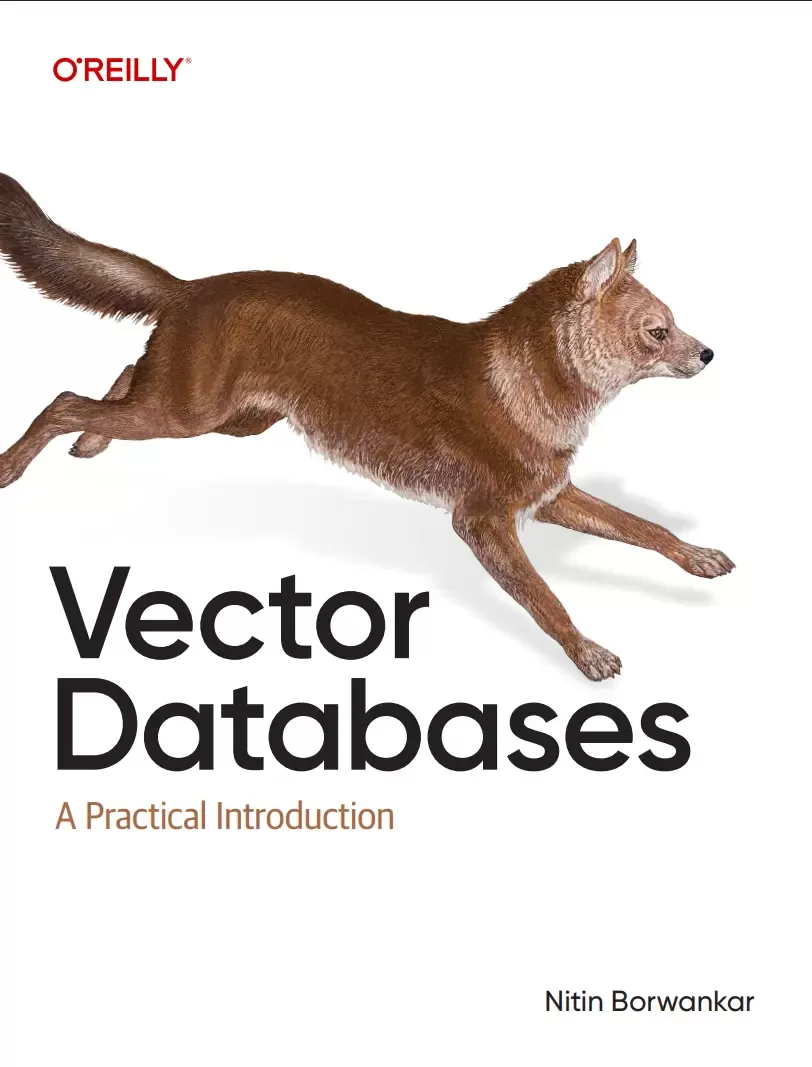
Vector Databases: A Practical Introduction
Оглавление⌄
Cover....1 Copyright....3 Table of Contents....4 Preface....12 Whats in This Book....13 Who This Book Is For....16 How to Use This Book....16 Software, Environment, and Resource Requirements....17 Conventions Used in This Book....17 Using Code Examples....18 OReilly Online Learning....18 How to Contact Us....19 Acknowledgments....19 Chapter 1. Introduction to Vector Databases....20 Why Do You Need Vector Databases?....20 A New Data Type: Vector....21 Similarity Search....22 Whats Different About the Vector Type?....25 Where Do You Use Vector Databases?....27 SQL Versus Vector Databases....28 The Foundation of Business Math: Accounting Arithmetic....28 Vector Representation in a Relational Database Management System....29 The Need for Vector-Specific Capabilities....30 NoSQL Versus Vector Databases....30 NoSQL Databases and Vector Storage....30 Limitations of Vector Extensions in NoSQL Databases....31 When to Choose NoSQL with Vector Extensions....31 Hybrid Approaches: Combining Structured and Vector Data....32 The Need for Both Vector Data and Metadata....32 Limitations of Pure Vector Storage....32 Hybrid Database Architecture....33 Example of a Hybrid Query....33 Benefits of the Hybrid Approach....34 Conclusion....34 Chapter 2. Embeddings....36 Understanding Vector Embeddings: Why We Need Them....36 Word2Vec: The Breakthrough That Changed Everything....38 Doc2Vec: From Words to Documents....39 From Embeddings to Modern Language Models: The Transformer Connection....42 Encoder-Only Transformers (BERT and Its Variants)....43 Decoder-Only Transformers (GPT Family)....43 Encoder-Decoder Transformers (T5, BART)....44 Embedding Models: The Specialized Vector Generators....45 Distinction from Traditional Models....45 Role in Modern LLM Applications....46 Practical Applications and Use Cases....47 Simple RAG Pipeline....47 The sentence-transformers Library: The Swiss Army Knife of Text Embeddings....50 Best Practices for Using SentenceTransformers: A Detailed Guide....54 The Embedding Layer: The Gateway to Zero-Shot Learning....59 Anatomy of Transformer Embeddings....59 Connection to Zero-Shot Learning....61 Key Characteristics That Enable Zero-Shot Learning....62 Limitations and Considerations....64 Latest Developments and Trends....65 Vector Arithmetic with Word2Vec: A Hands-On Guide....65 Step 1: Setup and Installation....65 Step 2: Load Pretrained Word2Vec Model....65 Step 3: Implement Vector Arithmetic Functions....66 Step 4: Classic King–Queen Analogy....67 Step 5: More Interesting Analogies....68 Step 6: Interactive Exploration Tool....68 Final Words on Vector Arithmetic....69 Conclusion....70 Chapter 3. Similarity Search with FAISS....72 Foundations....72 Vector Representations....74 Distance Metrics....75 Selection Heuristics....77 FAISS Indexes....77 Flat Indexes (Brute Force)....77 IVF-Based Indexes....78 LSH-Based Indexes....79 HNSW-Based Indexes....80 Other Specialized Indexes....80 Composite and Transformative Indexes....81 Choosing the Right Index....81 Quantization....84 SQ....84 PQ....86 The ANN Problem....90 The Problem....91 Avoid Computational Cost....91 Key ANN Techniques in FAISS....92 Choosing an Index in FAISS....94 Code Example....94 Understanding HNSW Indexes....95 What Is HNSW?....96 How HNSW Works....97 Key Parameters Explained....98 Practical Example: Building a Similarity Search System....99 Performance Characteristics....100 Best Practices....101 FAISS Architecture and Components....102 Foundation....102 Core Concepts....104 Key Components....104 Common Workflow....106 Illustrative Example....106 Key Takeaways....107 Further Exploration....107 Conclusion....108 Chapter 4. Semantic Search with SQLite3....110 Understanding the SQLite Vector Similarity Search Extension....110 Core Capabilities....111 Architecture Overview....112 Limitations....112 Setting Up the Development Environment....113 Installing Dependencies....113 Verifying the Installation....114 Operational Pragmas....115 Designing the Database Schema....115 Schema Requirements....115 Table Definitions....115 Schema Design Decisions....117 Connecting to Reddit with the Python Reddit API Wrapper....118 Creating Reddit API Credentials....118 PRAW Client Implementation....118 Usage Example....121 Content Extraction and Preprocessing....121 Text Cleaning Pipeline....121 Quality Filtering....124 Generating and Storing Embeddings....124 Embedding Generator....125 Database Storage....127 Batch Processing Pipeline....131 Building the Vector Index....132 Understanding VSS Indexing....132 Index Management....133 Implementing Semantic Search....136 Search Result Container....136 Search Engine....136 Putting It All Together....142 Workflow Example....143 Example Output....145 Extension: Incremental Indexing....146 Conclusion....148 Chapter 5. Building an ArXiv Paper Search System with PostgreSQL pgvector....150 The Challenge of Searching Scientific Literature....150 Why ArXiv Makes an Ideal Data Source....150 Real-World Use Cases....151 Technology Stack Rationale....151 Architecture Overview....152 System Components....152 Data Flow....153 Design Philosophy....154 Environment Setup and Dependencies....155 PostgreSQL and pgvector Installation....155 Python Environment Configuration....156 Directory Structure and Configuration....156 Verification and Testing....157 Database Design for Scientific Papers....158 Schema Design Principles....158 Core Tables Structure....159 Vector Storage Strategy....163 Indexing Strategy....163 ArXiv Integration and PDF Management....164 ArXiv API Client Implementation....165 PDF Download Pipeline....166 Batch Processing System....167 PDF Text Extraction and Processing....169 PDF Extraction Challenges....169 Intelligent Text Chunking....171 Embedding Generation and Storage....172 Embedding Model Strategy....173 Batch Processing Pipeline....174 Similarity Search Implementation....175 Interactive Application and UI....177 Docker Packaging for Local Deployment....179 Container Architecture....180 Docker Compose Configuration....180 Database Initialization Scripts....182 Development Workflow....183 Cloud-Ready Design....183 Basic Performance Tuning....184 Index Configuration....184 Query Performance....184 Resource Management....184 Next Steps....184 Current Limitations....184 Enhancement Ideas....185 What We Did....185 System Achievements....185 Technical Skills Gained....186 Practical Research Tool....186 Foundation for Advanced Systems....186 Future Potential....186 Conclusion....186 Chapter 6. Building a Retrieval-Augmented Generation System with SQLite VSS and Ollama....188 System Architecture Overview....189 Database Foundation with Vector Support....190 Setting Up the Vector-Enabled Database....190 Schema Design for RAG....191 Creating Search Indexes....192 Text Processing and Embedding Generation....193 Embedding Model Management....193 Intelligent Text Chunking....194 Storing Content with Embeddings....195 Hybrid Search Implementation....196 Hybrid Search Algorithm....196 Semantic Search Component....197 Keyword Search Component....198 Score Fusion and Ranking....199 LLM Integration with Ollama....200 Ollama API Client....200 Health Check Function....201 The RAG Pipeline....201 Context Formatting....201 Question-Answering Pipeline....202 Demonstration and Testing....204 Sample Data Loading....204 Main Demonstration Function....205 Interactive Q&A Interface....206 Quick Testing Utility....207 Next Steps: Extending the System....207 Missing Reddit Data Features....207 Performance Optimizations....209 Production Considerations....209 Advanced RAG Patterns....210 Conclusion....210 Chapter 7. Building a Scientific RAG System with PostgreSQL and pgvector....212 System Goals and Capabilities....213 Architecture Overview....213 Database Foundation with pgvector....215 Database Configuration and Setup....216 Schema Design for Scientific Papers....216 High-Performance Vector Indexes....218 Embedding Generation Strategy....218 ArXiv Integration and PDF Processing....219 Paper Discovery with ArXiv API....219 Intelligent PDF Text Extraction....220 Advanced Text Chunking....222 Storage Pipeline with Embeddings....223 Multilevel Semantic Search....225 Abstract-Level Search....225 Section-Level Search....226 The RAG Pipeline: Deep Dive....227 Local LLM Integration with Ollama....228 Health Check and Model Discovery....229 Intelligent Context Retrieval....229 Scientific Prompt Engineering....230 Complete RAG Execution Pipeline....231 Demonstration and Interactive Interface....232 Main Demonstration Flow....232 Search Demonstrations....233 RAG Demonstration....234 Interactive Search Interface....235 Entry Point with Mode Selection....236 Technical Note on HNSW....236 How to Evaluate Your Results....238 Next Steps: Extending the Scientific RAG System....239 Conclusion....242 Chapter 8. Building a Complete Conversation Search and RAG System....244 System Goals and Capabilities....245 System Architecture Overview....246 What Well Build Together....248 Database Foundation for Conversation Storage....249 Designing the Conversation Schema....249 Three-Table Architecture for Optimal Performance....250 High-Performance Vector Indexing....251 Conversation Import and Data Processing Pipeline....252 Robust JSON Import with Error Handling....252 Atomic Transaction Processing....253 Timestamp Handling and Data Validation....253 Error Recovery and Logging....254 Efficient Embedding Generation and Batch Processing....255 Singleton Pattern for Model Management....255 Incremental Processing Strategy....256 Batch Processing for Optimal Performance....256 Database Insertion with Conflict Handling....257 Contextual Search with Conversational Understanding....258 Semantic Similarity Search....258 Multitable Joins for Rich Context....259 Result Formatting and Structure....259 Conversation Context Retrieval....260 Context Window Calculation....260 RAG Integration for Conversation History....261 Structured Context Management....261 Local LLM Integration with Ollama....262 Health Monitoring and Model Discovery....262 Context Retrieval and Assembly....263 Conversational Prompt Engineering....263 Complete RAG Pipeline with Performance Monitoring....264 Complete Web API with FastAPI....266 FastAPI Application Structure....266 Request Models with Validation....266 Search Endpoint Implementation....267 RAG Question-Answering Endpoint....267 System Statistics and Monitoring....267 Server Startup and Configuration....268 Demonstration and Sample Data....269 Realistic Sample Data Generation....269 Multitopic Sample Coverage....270 Sample Data Processing Pipeline....271 Comprehensive System Demonstration....271 Progressive Feature Demonstration....272 RAG Demonstration with Conditional Execution....273 Production Import Functionality....273 Application Entry Points....274 Conclusion: A Complete Personal Knowledge System....274 Chapter 9. Vector Query Language....276 Core Concepts....277 Data Model....277 Basic Syntax Structure....278 Vector Operations....279 Similarity Search....279 Hybrid Search....280 Range Search....280 Batch Operations....280 Vector Functions and Aggregations....281 Vector Functions....281 Vector Aggregations....282 Index....284 About the Author....291 Colophon....291
Описание
В этом материале разберём тему: vector.
From powering semantic search to enabling large language models (LLMs) and generative AI, vector databases are reshaping how we build applications with unstructured data like text, images, and audio. he AI revolution is here, and at its core lies a game-changing technology that most developers haven’t fully explored: vector databases. But how do you go from curious to capable with this vital technology? That’s where this book comes in.
You’ll learn about Word2vec, how to convert open source SQL databases like SQLite3 and PostgreSQL into vector databases, and integrate them into retrieval-augmented generation (RAG) applications. In this hands-on guide, author Nitin Borwankar takes you through the “why, what, and how” of vector databases, starting with the basic theory behind vector embeddings and progressing to building applications with real-world tools. Whether you’re a Python developer, data engineer, or ML practitioner, this book gives you the foundation to leverage vector databases confidently in your AI projects.
Understand the connection between vector databases, embeddings, and LLMsLearn practical approaches for transforming SQL databases into vector databasesBuild RAG applications for both personal and enterprise useApply vector databases to solve real-world AI challengesLearn how to use vector databases with LLMs to build applications
Если материал оказался полезен — сохраните страницу.
Поделиться
Частые вопросы
Можно ли скачать «Vector Databases: A Practical Introduction» бесплатно?
Да, «Vector Databases: A Practical Introduction» доступна для бесплатного скачивания на нашем сайте в формате PDF. Ссылка на файл находится на этой странице.
В каком формате и какого размера файл?
Книга предоставляется в формате PDF, размер файла 2,9 МБ.
Кто автор и когда вышла книга?
автор — Borwankar Nitin, издательство O’Reilly Media, Inc., год выпуска 2026, 293 страниц.
О чём книга «Vector Databases: A Practical Introduction»?
he AI revolution is here, and at its core lies a game-changing technology that most developers haven’t fully explored: vector databases.
Похожие материалы
 Pro T-SQL 2022: Toward Speed, Scalability, and Standardization for SQL Server Developers. 2 Ed
 Pro Encryption in SQL Server 2022: Provide the Highest Level of Protection for Your Data
 PostgreSQL Query Optimization: The Ultimate Guide to Building Efficient Queries
 SQL for Data Science: Data Cleaning, Wrangling and Analytics with Relational Databases
 SQL Interview Questions: A complete question bank to crack your ANN SQL interview with real-time examples
 T-SQL Fundamentals. 4Ed
 GETTING STARTED WITH SQL. Exercises with PhpMyAdmin and MySQL
 A Comprehensive Study of SQL: Practice and Implementation