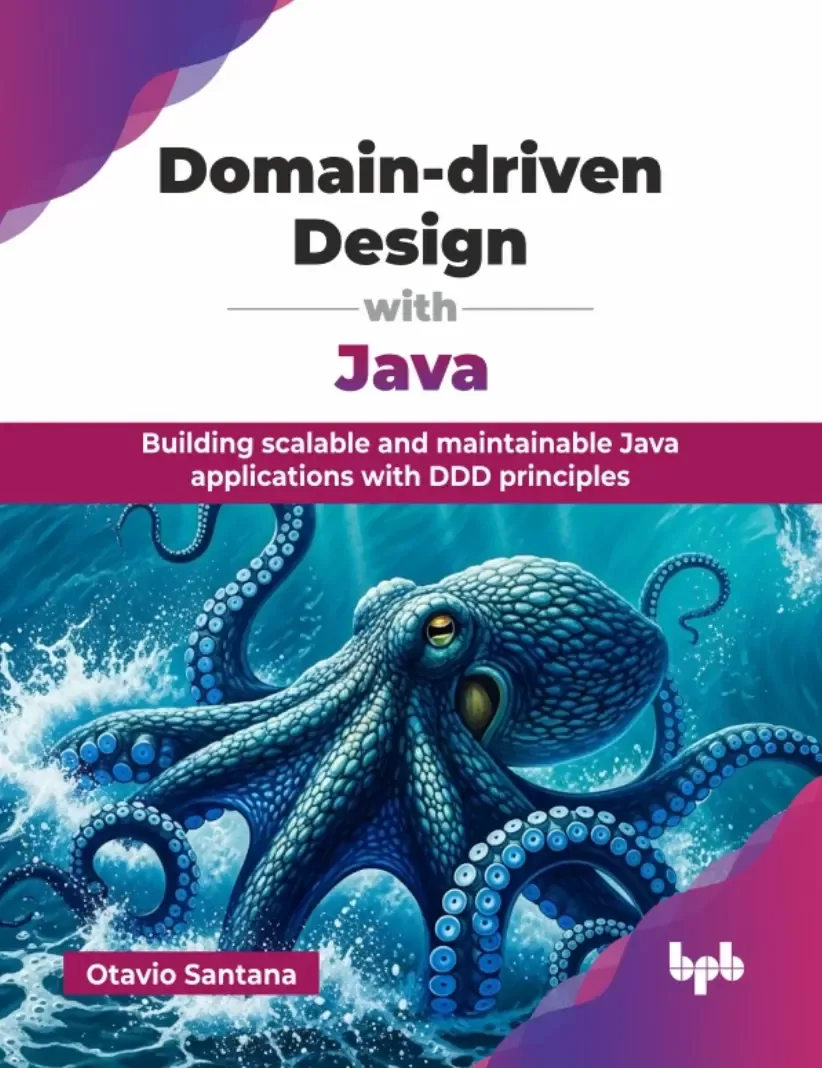
Domain-driven Design with Java: Building scalable and maintainable Java applications with DDD principles
Оглавление⌄
Cover....2 Title Page....3 Copyright Page....4 Dedication Page....5 About the Author....6 About the Reviewer....7 Acknowledgement....8 Preface....9 Table of Contents....15 1. Understanding Domain-driven Design....23 Introduction....23 Structure....24 Objectives....24 Importance of domain-driven design....25 Connecting business goals with technical implementation....27 Core concepts and methodologies....28 Strategic aspect of DDD....30 Tactical aspect of DDD....30 Conclusion....31 Points to remember....32 Multiple choice questions....32 Answers....34 References....34 2. Strategic DDD Concepts....36 Introduction....36 Structure....36 Objectives....37 Domains and subdomains....37 Example scenario with EcoTrack Logistics....39 Understanding bounded contexts....41 Context mapping techniques....44 Aligning business strategy with software design....46 Conclusion....47 Points to remember....47 Multiple choice questions....48 Answers....49 References....50 3. Tactical DDD Implementation....51 Introduction....51 Structure....51 Technical requirements....52 Objectives....52 Entities and value objects....52 Entities pitfalls....54 Builders and domain-specific language....60 Value object....62 Aggregates and aggregate roots....66 Services and their roles....69 Implementing repositories....73 Conclusion....75 Points to remember....76 Multiple choice questions....77 Answers....78 References....79 4. Testing and Validating DDD Applications....81 Introduction....81 Structure....82 Technical requirements....82 Objectives....82 Introduction to testing in DDD....83 Unit testing DDD components....83 Defining the domain components....85 Using tests to validate expected behavior....87 Enhancing your tests....93 Using ArchUnit for architectural validation....97 Conclusion....100 Points to remember....101 Multiple choice questions....102 Answers....104 References....104 5. DDD in Microservices, Monoliths, and Distributed Systems....106 Introduction....106 Structure....107 Technical requirements....107 Objectives....108 DDD in monolithic architecture....108 Creating the domain layer and organizing packages....112 Creating the application layer....117 Creating the controller layer....118 Creating the infrastructure layer....120 DDD in microservices architecture....121 Need for microservices....126 Applying DDD in distributed systems....128 Refactoring legacy code to align with DDD principles....131 Conclusion....134 Points to remember....134 Multiple choice questions....135 Answers....137 References....138 6. Integrating DDD with Clean Architecture....139 Introduction....139 Structure....139 Technical requirements....140 Objectives....140 Overview of Clean Architecture....140 Combining DDD with Clean Architecture....143 Creating well-defined boundaries with Clean Architecture and DDD....143 Creating a bridge between the core application and external systems....146 Structuring code for maintainability....149 Using and combining each approach....151 Conclusion....152 Points to remember....153 Multiple choice questions....154 Answers....156 References....156 7. DDD and Data Modeling....158 Introduction....158 Structure....158 Technical requirements....158 Objectives....159 Principles of DDD in data modeling....159 Modeling data in SQL databases....162 Jakarta Persistence in action....163 Modeling data in NoSQL databases....167 Conclusion....171 Points to remember....171 Multiple choice questions....172 Answers....175 8. Enterprise Java with Jakarta EE....176 Introduction....176 Structure....176 Technical requirements....177 Objectives....177 Applying DDD with Jakarta EE....178 Leveraging Jakarta Data for better encapsulation....180 Integrating DDD into enterprise Java applications....183 Conclusion....187 Points to remember....187 Multiple choice questions....188 Answers....191 9. Enterprise Java with Spring....192 Introduction....192 Structure....192 Technical requirements....193 Objectives....193 Overview of Spring Framework with DDD....193 Applying DDD with Spring Boot....196 Creating and setting up a new Spring Boot project....196 Defining the core domain entities....197 Shaping the repository and services....198 Exposing the service through REST endpoints....200 Polishing error handling....202 Ensuring code behavior with unit tests....204 Conclusion....208 Points to remember....208 Multiple choice questions....209 Answers....211 10. Eclipse MicroProfile and Domain-driven Design....212 Introduction....212 Structure....212 Technical requirements....213 Objectives....213 Understanding Eclipse MicroProfile and its purpose....214 Clarifying Jakarta EE and MicroProfile similarities....214 Eclipse MicroProfile architecture and specifications....215 Integrating Eclipse MicroProfile with DDD....217 Practical microservices example....219 Conclusion....229 Points to remember....230 Multiple choice questions....230 Answers....233 References....233 11. Quarkus and Domain-driven Design....235 Introduction....235 Structure....235 Technical requirements....236 Objectives....236 Quarkus, Jakarta EE, and MicroProfile integration....236 Quarkus in action....238 Creating and setting up a new project....239 Configuring the database integration....239 Panache entity and resource code generation....240 Validating the application's behavior....241 Using Active Record with Panache....242 Using the Repository pattern with Panache....246 Using Panache from a DDD perspective....251 Conclusion....253 Points to remember....253 Multiple choice questions....254 Answers....256 References....257 12. Code Design and Best Practices for DDD....258 Introduction....258 Structure....259 Objectives....259 Anemic model vs. rich model....259 Fluent API vs. Builder pattern in DDD....264 Exception handling and logging in DDD....268 Defining the exceptions hierarchy....268 Creating trackable exception messages....270 Handling exceptions and logs securely....270 Long-term code quality and sustainability....274 Conclusion....276 Points to remember....277 Multiple choice questions....278 Answers....281 References....281 13. Final Considerations....282 Introduction....282 Structure....282 Technical requirements....283 Objectives....283 Introduction to domain storytelling....283 Purpose and benefits of domain storytelling....284 Differences between domain storytelling and agile brainstorming....285 Exploring domain storytelling....287 Further reading and continued exploration....292 Conclusion....292 Points to remember....293 References....294 Index....295
Описание
Ниже — практический обзор по теме «systems».
Domain-driven Design (DDD) continues to shape how modern software systems are built by bridging the gap between technical teams and business needs. Its emphasis on modeling the domain with precision and clarity is especially relevant in today’s fast-paced, complex software landscape.
It explores the tactical Java implementation detailing entities, value objects, services, aggregates, and repositories. This book begins with DDD fundamentals, including core principles, a shared language, and the distinction between strategic and tactical approaches, progressing to strategic concepts like bounded contexts, context mapping, and domain events. The book also explores testing strategies and architectural validation using ArchUnit/jMolecules. It thoroughly covers applying DDD within Jakarta EE, Spring, Eclipse MicroProfile, and Quarkus. Further, it explores DDD across microservices, monoliths, and distributed systems, integrating with Clean Architecture and SQL/NoSQL data modeling to prevent impedance mismatch.
By the end, you will be equipped to model business logic more effectively, design systems that reflect real-world domains, and integrate DDD seamlessly into enterprise applications. You will gain clarity, confidence, and the tools needed to build software that delivers business value.
What you will learnApply DDD from strategic to tactical design.Model aggregates, entities, and value objects in Java.Use DDD in monoliths, microservices, and distributed systems.Integrate DDD with Spring and Jakarta EE frameworks.Apply Clean Architecture principles alongside DDD.Structure data modeling for SQL and NoSQL systems.Apply bounded contexts, context mapping, and domain events for architecture.Unit/integration testing, validate design with ArchUnit/jMolecules.Build responsive microservices with Quarkus extensions, reactive programming.Who this book is forThis book is ideal for Java developers, software architects, tech leads, and backend engineers. It is especially valuable for professionals designing scalable enterprise systems or applying DDD in modern software architecture.
Файл доступен для загрузки ниже.
Поделиться
Частые вопросы
Можно ли скачать «Domain-driven Design with Java: Building scalable and maintainable Java applications with DDD principles» бесплатно?
Да, «Domain-driven Design with Java: Building scalable and maintainable Java applications with DDD principles» доступна для бесплатного скачивания на нашем сайте в формате PDF. Ссылка на файл находится на этой странице.
В каком формате и какого размера файл?
Книга предоставляется в формате PDF, размер файла 1,5 МБ.
Кто автор и когда вышла книга?
автор — Santana Otavio, издательство BPB Publications, год выпуска 2026, 299 страниц.
О чём книга «Domain-driven Design with Java: Building scalable and maintainable Java applications with DDD principles»?
Domain-driven Design (DDD) continues to shape how modern software systems are built by bridging the gap between technical teams and business needs.
Похожие материалы
 Гид Java-разработчика
 Quick Java
 Java Programming Made Easy: Unlock Your Coding Potential from Scratch
 Core Java: Made Simple
 Learning Java: An Introduction to Real-World Programming with Java. 6 Ed
 Functional Programming in Java: Harness the Power of Streams and Lambda Expressions. 2 Ed
 Основы программирования с Java
 Pro Spring 6: An In-Depth Guide to the Spring Framework. 6 Ed