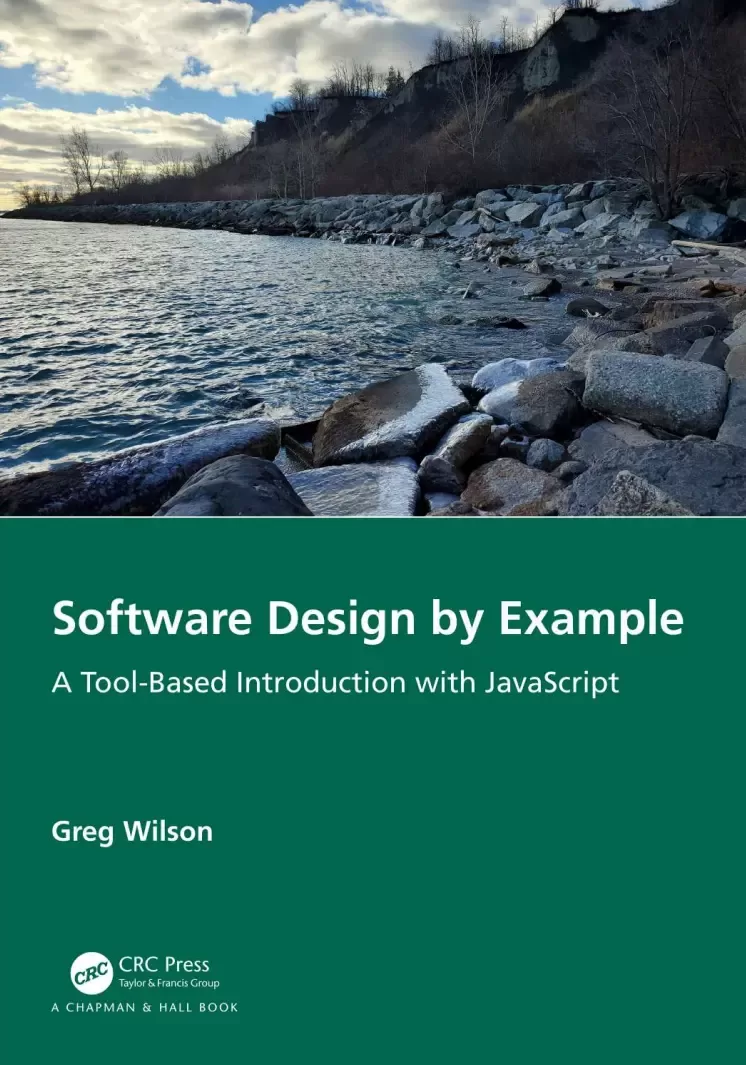
Software Design by Example: A Tool-Based Introduction with JavaScript
Оглавление⌄
Cover....1 Half Title....2 Title Page....4 Copyright Page....5 Dedication....6 Contents....8 1. Introduction....12 1.1. Who is our audience?....12 1.2. What tools and ideas do we cover?....13 1.3. How are these lessons laid out?....14 1.4. How did we get here?....14 1.5. How can people use and contribute to this material?....15 1.6. Who helped us?....16 2. Systems Programming....18 2.1. How can we list a directory?....19 2.2. What is a callback function?....20 2.3. What are anonymous functions?....23 2.4. How can we select a set of files?....24 2.5. How can we copy a set of files?....27 2.6. Exercises....30 3. Asynchronous Programming....34 3.1. How can we manage asynchronous execution?....34 3.2. How do promises work?....37 3.3. How can we chain operations together?....38 3.4. How are real promises different?....40 3.5. How can we build tools with promises?....42 3.6. How can we make this more readable?....45 3.7. How can we handle errors with asynchronous code?....47 3.8. Exercises....48 4. Unit Testing....52 4.1. How should we structure unit testing?....52 4.2. How can we separate registration, execution, and reporting?....53 4.3. How should we structure test registration?....54 4.4. How can we build a command-line interface for testing?....57 4.5. Exercises....59 5. File Backup....64 5.1. How can we uniquely identify files?....64 5.2. How can we back up files?....67 5.3. How can we track which files have already been backed up?....70 5.4. How can we test code that modifies files?....72 5.5. Exercises....76 6. Data Tables....80 6.1. How can we implement data tables?....81 6.2. How can we test the performance of our implementations?....84 6.3. What is the most efficient way to save a table?....86 6.4. Does binary storage improve performance?....87 6.5. Exercises....89 7. Pattern Matching....94 7.1. How can we match query selectors?....94 7.2. How can we implement a simple regular expression matcher?....98 7.3. How can we implement an extensible matcher?....100 7.4. Exercises....108 8. Parsing Expressions....110 8.1. How can we break text into tokens?....111 8.2. How can we turn a list of tokens into a tree?....114 8.3. Exercises....119 9. Page Templates....122 9.1. What will our system look like?....123 9.2. How can we keep track of values?....124 9.3. How do we handle nodes?....125 9.4. How do we implement node handlers?....128 9.5. How can we implement control flow?....132 9.6. How did we know how to do all of this?....134 9.7. Exercises....135 10. Build Manager....138 10.1. What’s in a build manager?....139 10.2. Where should we start?....139 10.3. How can we specify that a file is out-of-date?....144 10.4. How can we update out-of-date files?....145 10.5. How can we add generic build rules?....147 10.6. What should we do next?....153 10.7. Exercises....153 11. Layout Engine....156 11.1. How can we size rows and columns?....157 11.2. How can we position rows and columns?....160 11.3. How can we render elements?....162 11.4. How can we wrap elements to fit?....165 11.5. What subset of CSS will we support?....167 11.6. Exercises....172 12. File Interpolator....176 12.1. How can we evaluate JavaScript dynamically?....176 12.2. How can we manage files?....180 12.3. How can we find files?....182 12.4. How can we interpolate pieces of code?....184 12.5. What did we do instead?....186 12.6. Exercises....186 13. Module Loader....190 13.1. How can we implement namespaces?....190 13.2. How can we load a module?....192 13.3. Do we need to handle circular dependencies?....193 13.4. How can a module load another module?....196 13.5. Exercises....199 14. Style Checker....202 14.1. How can we parse JavaScript to create an AST?....202 14.2. How can we find things in an AST?....204 14.3. How can we apply checks?....206 14.4. How does the AST walker work?....207 14.5. How else could the AST walker work?....209 14.6. What other kinds of analysis can we do?....212 14.7. Exercises....215 15. Code Generator....218 15.1. How can we replace a function with another function?....218 15.2. How can we generate JavaScript?....220 15.3. How can we count how often functions are executed?....222 15.4. How can we time function execution?....224 15.5. Exercises....226 16. Documentation Generator....230 16.1. How can we extract documentation comments?....230 16.2. What input will we try to handle?....233 16.3. How can we avoid duplicating names?....237 16.4. Code is Data....241 16.5. Exercises....242 17. Module Bundler....244 17.1. What will we use as test cases?....244 17.2. How can we find dependencies?....246 17.3. How can we safely combine several files into one?....250 17.4. How can files access each other?....252 17.5. Exercises....257 18. Package Manager....260 18.1. What is semantic versioning?....260 18.2. How can we find a consistent set of packages?....261 18.3. How can we satisfy constraints?....263 18.4. How can we do less work?....265 18.5. Exercises....269 19. Virtual Machine....272 19.1. What is the architecture of our virtual machine?....272 19.2. How can we execute these instructions?....274 19.3. What do assembly programs look like?....277 19.4. How can we store data?....281 19.5. Exercises....283 20. Debugger....286 20.1. What is our starting point?....286 20.2. How can we make a tracing debugger?....288 20.3. How can we make the debugger interactive?....292 20.4. How can we test an interactive application?....294 20.5. Exercises....299 21. Conclusion....302 A. License....304 B. Code of Conduct....308 C. Contributing....310 D. Bibliography....312 E. Glossary....314 Index....336
Описание
В этом материале разберём тему: design.
Software Design by Example: A Tool-Based Introduction with JavaScript therefore builds small versions of the things programmers use in order to demystify them and give some insights into how experienced programmers think. The best way to learn design in any field is to study examples, and some of the best examples of software design come from the tools programmers use in their own work. From a file backup system and a testing framework to a regular expression matcher, a browser layout engine, and a very small compiler, we explore common design patterns, show how making code easier to test also makes it easier to reuse, and help readers understand how debuggers, profilers, package managers, and version control systems work so that they can use them more effectively.
Each chapter has a set of exercises ranging in size and difficulty from half a dozen lines to a full day’s work. This material can be used for self-paced study, in an undergraduate course on software design, or as the core of an intensive weeklong workshop for working programmers. Readers should be familiar with the basics of modern JavaScript, but the more advanced features of the language are explained and illustrated as they are introduced.
All the written material in this project can be freely reused under the terms of the Creative Commons - Attribution license, while all of the software is made available under the terms of the Hippocratic License. All proceeds from sale of this book will go to support the Red Door Family Shelter in Toronto.
FeaturesTeaches software design by showing programmers how to build the tools they use every dayEach chapter includes exercises to help readers check and deepen their understandingAll the example code can be downloaded, re-used, and modified under an open license
Файл доступен для загрузки ниже.
Поделиться
Частые вопросы
Можно ли скачать «Software Design by Example: A Tool-Based Introduction with JavaScript» бесплатно?
Да, «Software Design by Example: A Tool-Based Introduction with JavaScript» доступна для бесплатного скачивания на нашем сайте в формате PDF. Ссылка на файл находится на этой странице.
В каком формате и какого размера файл?
Книга предоставляется в формате PDF, размер файла 4,2 МБ.
Кто автор и когда вышла книга?
автор — Wilson Greg, издательство CRC Press is an imprint of Taylor & Francis Group, LLC, год выпуска 2023, 340 страниц.
О чём книга «Software Design by Example: A Tool-Based Introduction with JavaScript»?
The best way to learn design in any field is to study examples, and some of the best examples of software design come from the tools programmers use in their own work.
Похожие материалы
 JavaScript. Рецепты для разработчиков. 3 изд
 Become A Ninja With Angular
 Mastering jQuery: A Beginner’s Guide
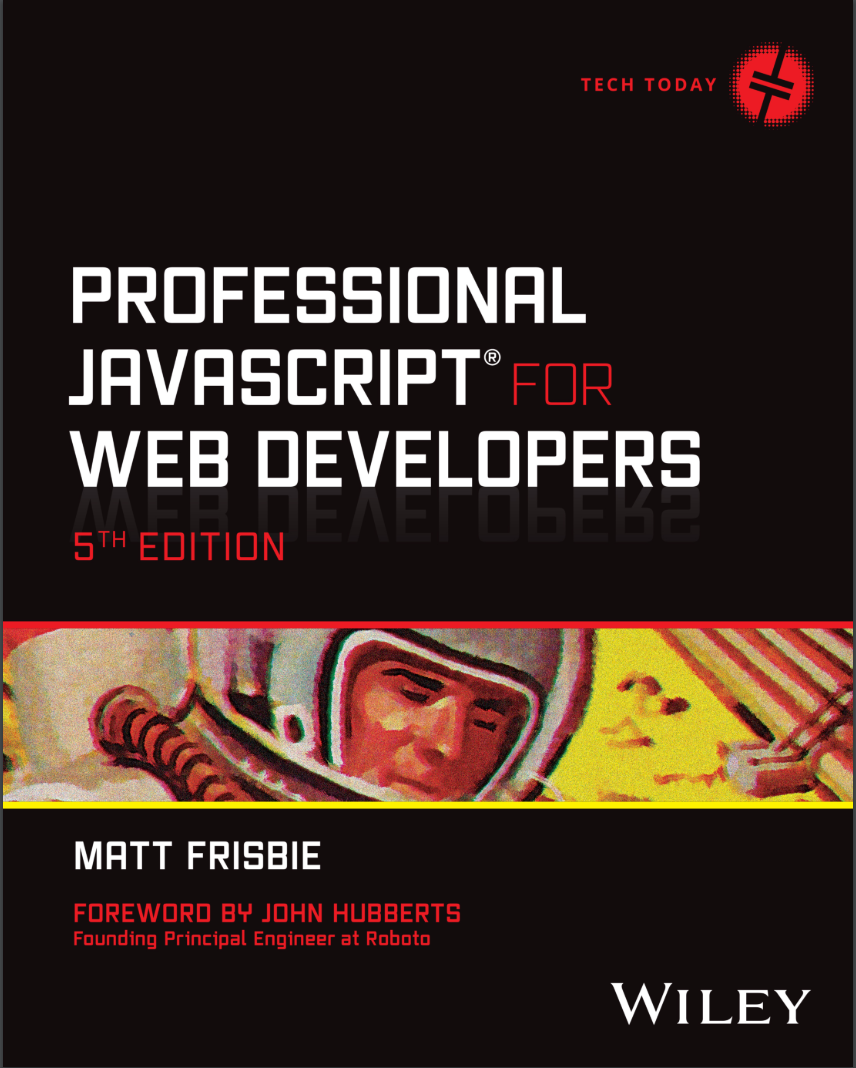 Professional JavaScript for Web Developers. 5 Ed
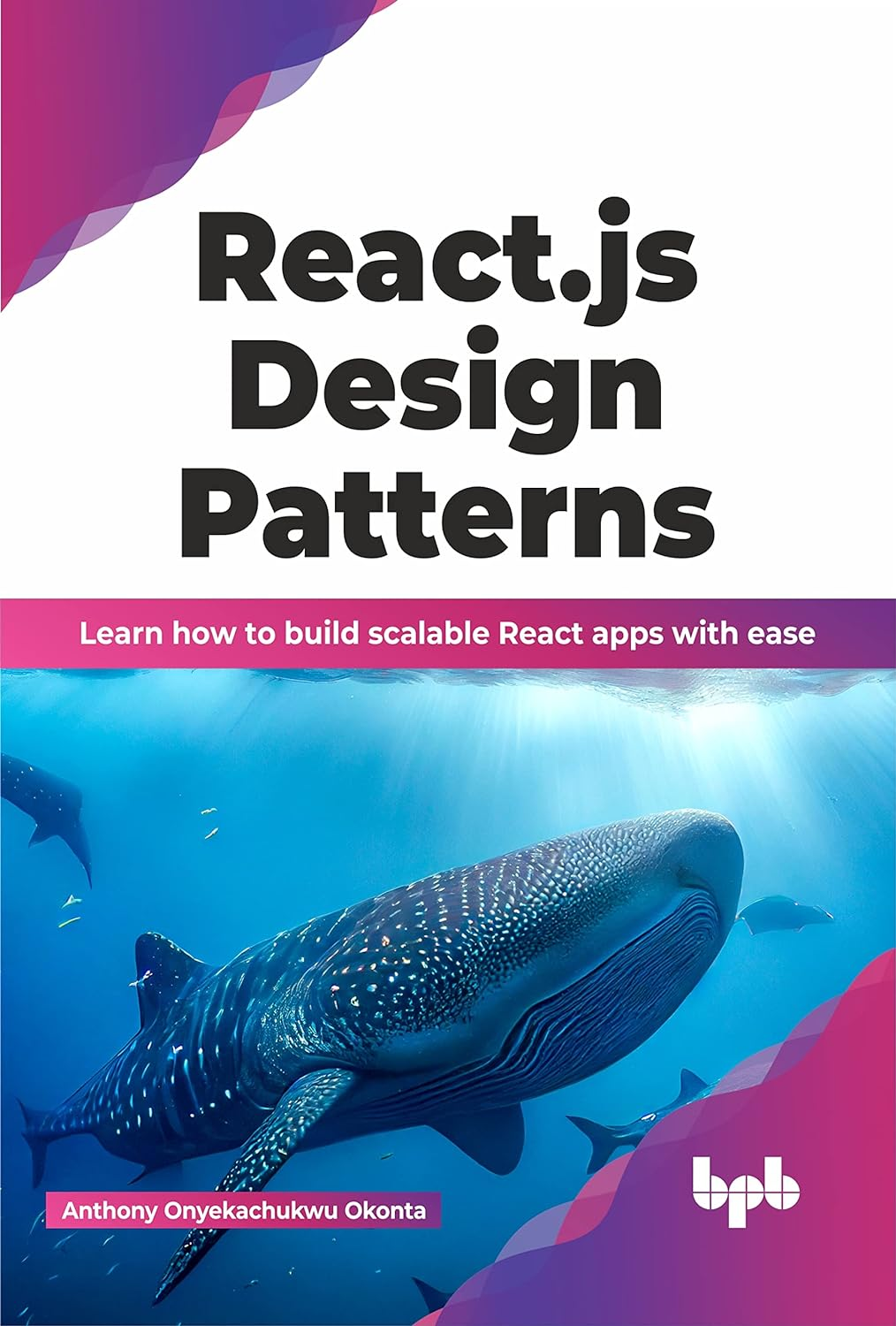 React.js Design Patterns: Learn how to build scalable React apps with ease
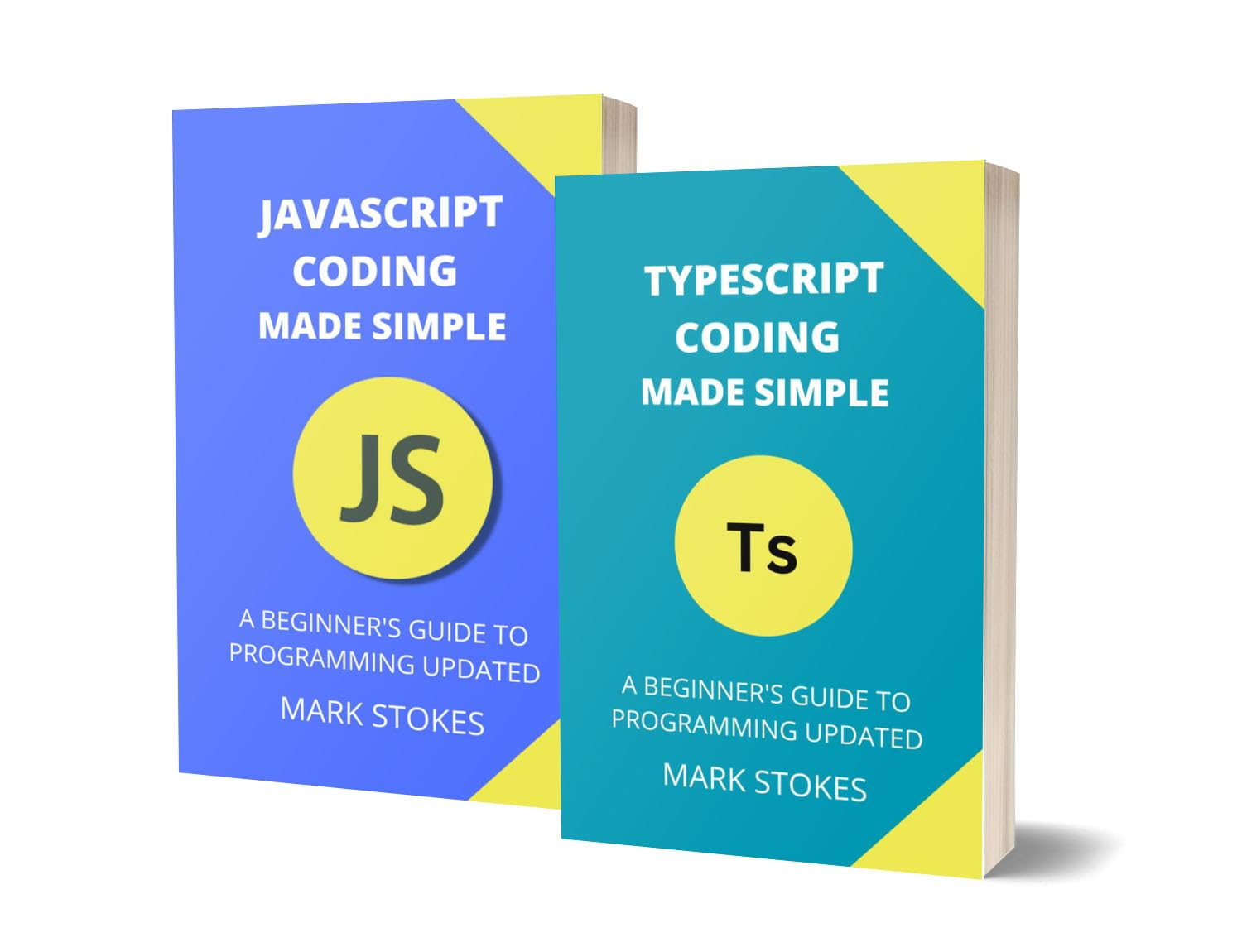 Typescript and JavaScript Coding Made Simple 2 Books in 1: A Beginner’s Guide to Programming
 React. Сборник рецептов. Практические приемы работы с фреймворком React
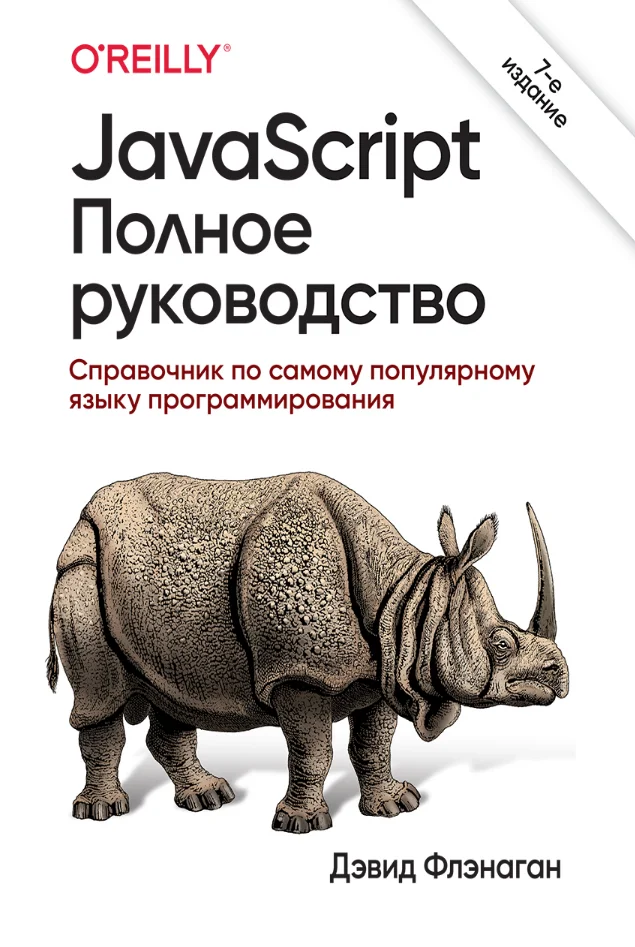 JavaScript. Полное руководство: Справочник по самому популярному языку программирования. 7 изд