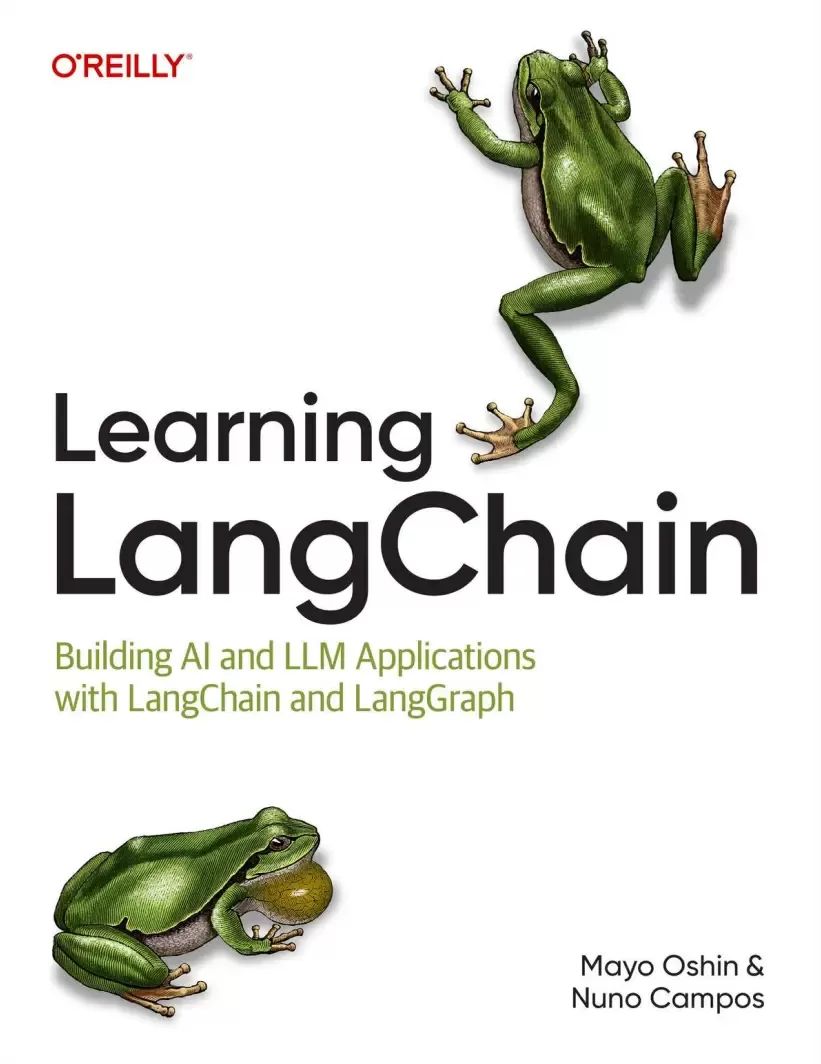
Learning LangChain: Building AI and LLM Applications with LangChain and LangGraph
Оглавление⌄
PrefaceBrief Primer on LLMsInstruction-Tuned LLMsDialogue-Tuned LLMsFine-Tuned LLMsBrief Primer on PromptingZero-Shot PromptingChain-of-ThoughtRetrieval-Augmented GenerationTool CallingFew-Shot PromptingLangChain and Why It’s ImportantWhat to Expect from This BookConventions Used in This BookUsing Code ExamplesO’Reilly Online LearningHow to Contact UsAcknowledgments1. LLM Fundamentals with LangChainGetting Set Up with LangChainUsing LLMs in LangChainMaking LLM Prompts ReusableGetting Specific Formats out of LLMsJSON OutputOther Machine-Readable Formats with Output ParsersAssembling the Many Pieces of an LLM ApplicationUsing the Runnable InterfaceImperative CompositionDeclarative CompositionSummary2. RAG Part I: Indexing Your DataThe Goal: Picking Relevant Context for LLMsEmbeddings: Converting Text to NumbersEmbeddings Before LLMsLLM-Based EmbeddingsSemantic Embeddings ExplainedConverting Your Documents into TextSplitting Your Text into ChunksGenerating Text EmbeddingsStoring Embeddings in a Vector StoreGetting Set Up with PGVectorWorking with Vector StoresTracking Changes to Your DocumentsIndexing OptimizationMultiVectorRetrieverRAPTOR: Recursive Abstractive Processing for Tree-Organized RetrievalColBERT: Optimizing EmbeddingsSummary3. RAG Part II: Chatting with Your DataIntroducing Retrieval-Augmented GenerationRetrieving Relevant DocumentsGenerating LLM Predictions Using Relevant DocumentsQuery TransformationRewrite-Retrieve-ReadMulti-Query RetrievalRAG-FusionHypothetical Document EmbeddingsQuery RoutingLogical RoutingSemantic RoutingQuery ConstructionText-to-Metadata FilterText-to-SQLSummary4. Using LangGraph to Add Memory to Your ChatbotBuilding a Chatbot Memory SystemIntroducing LangGraphCreating a StateGraphAdding Memory to StateGraphModifying Chat HistoryTrimming MessagesFiltering MessagesMerging Consecutive MessagesSummary5. Cognitive Architectures with LangGraphArchitecture #1: LLM CallArchitecture #2: ChainArchitecture #3: RouterSummary6. Agent ArchitectureThe Plan-Do LoopBuilding a LangGraph AgentAlways Calling a Tool FirstDealing with Many ToolsSummary7. Agents IIReflectionSubgraphs in LangGraphCalling a Subgraph DirectlyCalling a Subgraph with a FunctionMulti-Agent ArchitecturesSupervisor ArchitectureSummary8. Patterns to Make the Most of LLMsStructured OutputIntermediate OutputStreaming LLM Output Token-by-TokenHuman-in-the-Loop ModalitiesMultitasking LLMsSummary9. Deployment: Launching Your AI Application into ProductionPrerequisitesInstall DependenciesLarge Language ModelVector StoreBackend APICreate a LangSmith AccountUnderstanding the LangGraph Platform APIData ModelsFeaturesDeploying Your AI Application on LangGraph PlatformCreate a LangGraph API ConfigTest Your LangGraph App LocallyDeploy from the LangSmith UILaunch LangGraph StudioSecuritySummary10. Testing: Evaluation, Monitoring, and Continuous ImprovementTesting Techniques Across the LLM App Development CycleThe Design Stage: Self-Corrective RAGThe Preproduction StageCreating DatasetsDefining Your Evaluation CriteriaRegression TestingEvaluating an Agent’s End-to-End PerformanceProductionTracingCollect Feedback in ProductionClassification and TaggingMonitoring and Fixing ErrorsSummary11. Building with LLMsInteractive ChatbotsCollaborative Editing with LLMsAmbient ComputingSummaryIndexAbout the Authors
Описание
В этом материале разберём тему: applications.
LangChain is used by several leading companies, including Zapier, Replit, Databricks, and many more. If you're looking to build production-ready AI applications that can reason and retrieve external data for context-awareness, you'll need to master--;a popular development framework and platform for building, running, and managing agentic applications. This guide is an indispensable resource for developers who understand Python or JavaScript but are beginners eager to harness the power of AI.
Authors Mayo Oshin and Nuno Campos demystify the use of LangChain through practical insights and in-depth tutorials. Starting with basic concepts, this book shows you step-by-step how to build a production-ready AI agent that uses your data.
Harness the power of retrieval-augmented generation (RAG) to enhance the accuracy of LLMs using external up-to-date dataDevelop and deploy AI applications that interact intelligently and contextually with usersMake use of the powerful agent architecture with LangGraphIntegrate and manage third-party APIs and tools to extend the functionality of your AI applicationsMonitor, test, and evaluate your AI applications to improve performanceUnderstand the foundations of LLM app development and how they can be used with LangChain
На этом основные моменты по теме закрыты.
Поделиться
Частые вопросы
Можно ли скачать «Learning LangChain: Building AI and LLM Applications with LangChain and LangGraph» бесплатно?
Да, «Learning LangChain: Building AI and LLM Applications with LangChain and LangGraph» доступна для бесплатного скачивания на нашем сайте в формате PDF. Ссылка на файл находится на этой странице.
В каком формате и какого размера файл?
Книга предоставляется в формате PDF, размер файла 3,1 МБ.
Кто автор и когда вышла книга?
автор — Campos Nuno , Oshin Mayo, издательство O’Reilly Media, Inc., год выпуска 2025, 598 страниц.
О чём книга «Learning LangChain: Building AI and LLM Applications with LangChain and LangGraph»?
If you're looking to build production-ready AI applications that can reason and retrieve external data for context-awareness, you'll need to master--;a popular development framework and platform for building, running, and managing agentic a
Похожие материалы
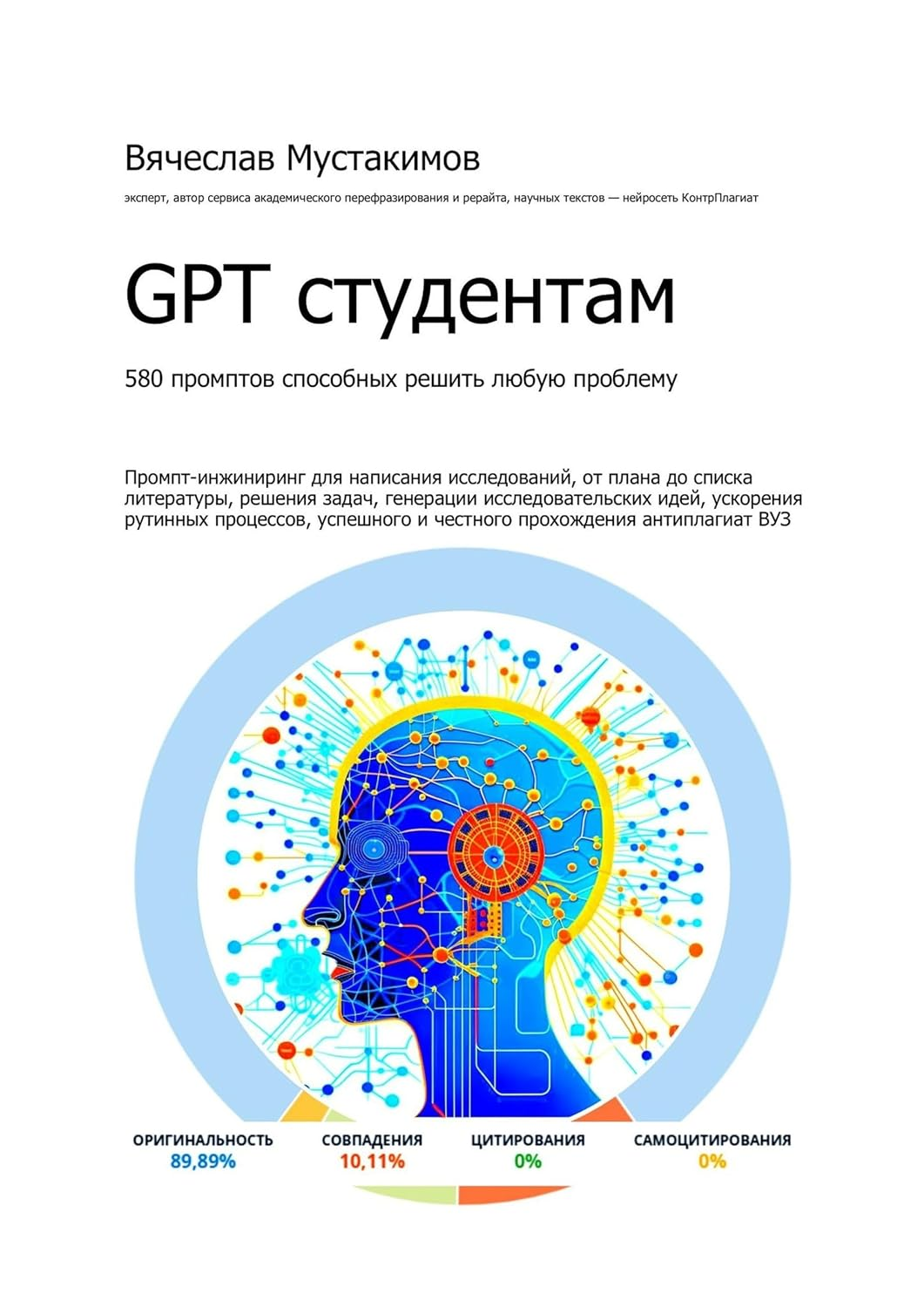 GPT студентам
 ChatGPT для саморазвития
 Всё об ИИ чат-боте ChatGPT
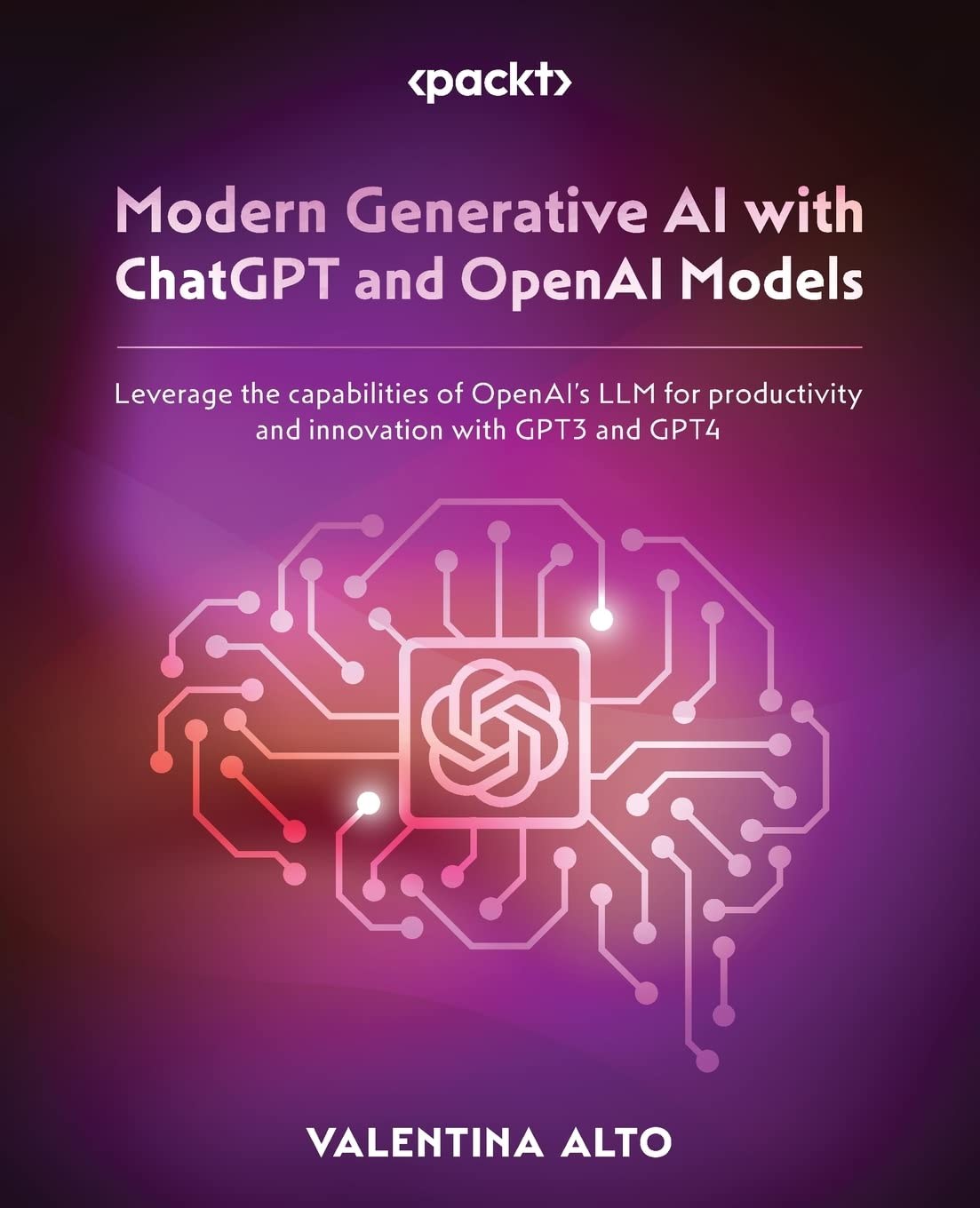 Modern Generative AI with ChatGPT and OpenAI Models
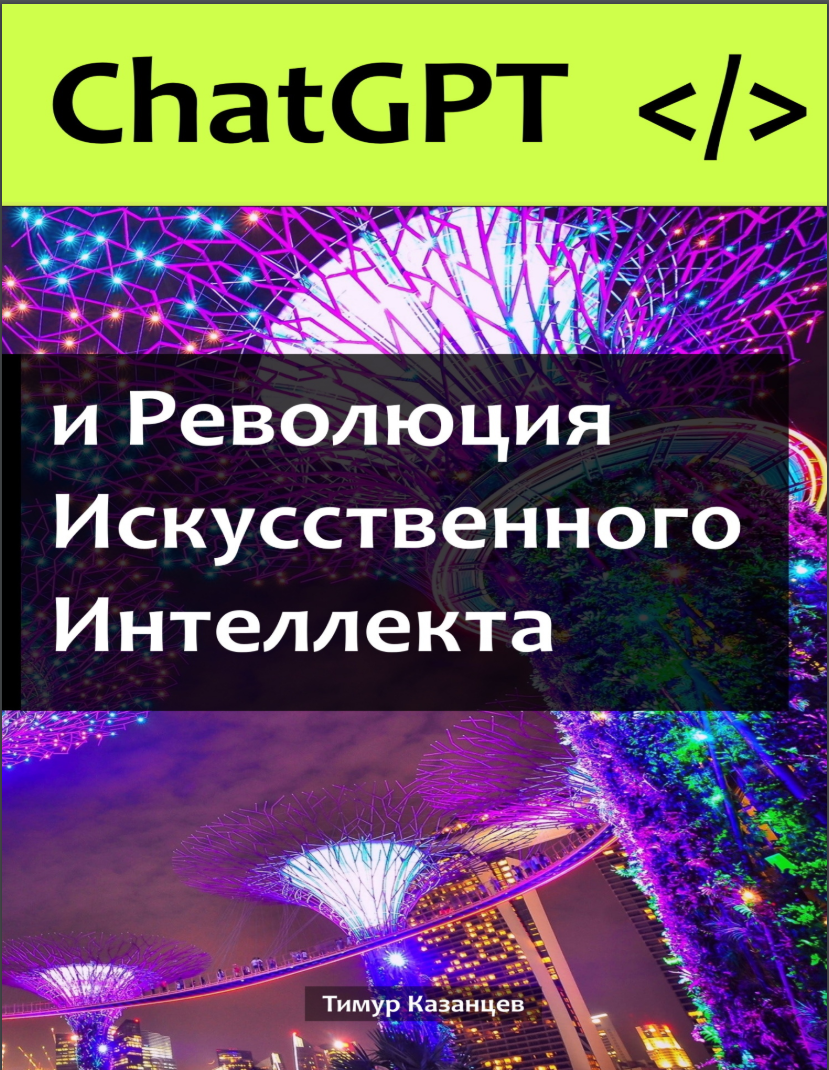 ChatGPT и Революция Искусственного Интеллекта
 ChatGPT для чайников
 ChatGPT and Bard for Business Automation
 Building AI Applications with ChatGPT APIs: Master ChatGPT, Whisper, and DALL-E APIs by building ten innovative AI projects