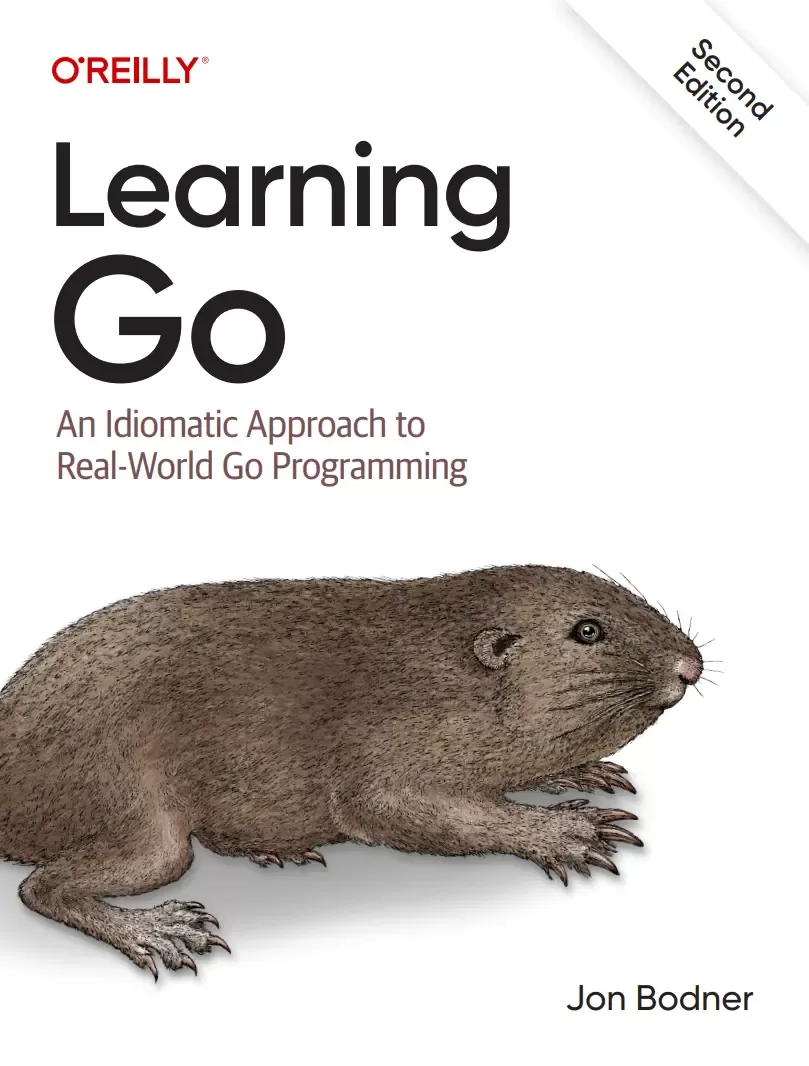
Learning Go: An Idiomatic Approach to Real-World Go Programming. 2 Ed
Оглавление⌄
Copyright....8 Table of Contents....9 Preface....19 Who Should Read This Book....20 Conventions Used in This Book....20 Using Code Examples....21 O’Reilly Online Learning....22 How to Contact Us....22 Acknowledgments for the 2nd Edition....23 Acknowledgments for the 1st Edition....23 Chapter 1. Setting Up Your Go Environment....25 Installing the Go Tools....25 Troubleshooting Your Go Installation....26 Go Tooling....26 Your First Go Program....27 Making a Go Module....27 go build....28 go fmt....29 go vet....31 Choose Your Tools....32 Visual Studio Code....32 GoLand....33 The Go Playground....34 Makefiles....36 The Go Compatibility Promise....37 Staying Up-to-Date....38 Exercises....38 Wrapping Up....39 Chapter 2. Predeclared Types and Declarations....41 The Predeclared Types....41 The Zero Value....41 Literals....42 Booleans....43 Numeric Types....44 A Taste of Strings and Runes....49 Explicit Type Conversion....50 Literals Are Untyped....51 var Versus :=....52 Using const....54 Typed and Untyped Constants....56 Unused Variables....56 Naming Variables and Constants....57 Exercises....59 Wrapping Up....60 Chapter 3. Composite Types....61 Arrays—Too Rigid to Use Directly....61 Slices....63 len....65 append....65 Capacity....66 make....67 Emptying a Slice....68 Declaring Your Slice....69 Slicing Slices....70 copy....73 Converting Arrays to Slices....74 Converting Slices to Arrays....75 Strings and Runes and Bytes....76 Maps....80 Reading and Writing a Map....81 The comma ok Idiom....82 Deleting from Maps....83 Emptying a Map....83 Comparing Maps....83 Using Maps as Sets....84 Structs....85 Anonymous Structs....87 Comparing and Converting Structs....88 Exercises....89 Wrapping Up....90 Chapter 4. Blocks, Shadows, and Control Structures....91 Blocks....91 Shadowing Variables....92 if ....95 for, Four Ways....96 The Complete for Statement....96 The Condition-Only for Statement....97 The Infinite for Statement....98 break and continue....99 The for-range Statement....100 Labeling Your for Statements....106 Choosing the Right for Statement....107 switch....108 Blank Switches....111 Choosing Between if and switch....113 goto—Yes, goto....113 Exercises....116 Wrapping Up....116 Chapter 5. Functions....117 Declaring and Calling Functions....117 Simulating Named and Optional Parameters....118 Variadic Input Parameters and Slices....119 Multiple Return Values....120 Multiple Return Values Are Multiple Values....121 Ignoring Returned Values....121 Named Return Values....122 Blank Returns—Never Use These!....123 Functions Are Values....124 Function Type Declarations....127 Anonymous Functions....127 Closures....129 Passing Functions as Parameters....131 Returning Functions from Functions....132 defer....133 Go Is Call by Value....138 Exercises....140 Wrapping Up....141 Chapter 6. Pointers....143 A Quick Pointer Primer....143 Don’t Fear the Pointers....147 Pointers Indicate Mutable Parameters....149 Pointers Are a Last Resort....153 Pointer Passing Performance....154 The Zero Value Versus No Value....155 The Difference Between Maps and Slices....155 Slices as Buffers....159 Reducing the Garbage Collector’s Workload....160 Tuning the Garbage Collector....163 Exercises....165 Wrapping Up....165 Chapter 7. Types, Methods, and Interfaces....167 Types in Go....167 Methods....168 Pointer Receivers and Value Receivers....169 Code Your Methods for nil Instances....172 Methods Are Functions Too....173 Functions Versus Methods....174 Type Declarations Aren’t Inheritance....174 Types Are Executable Documentation....175 iota Is for Enumerations—Sometimes....176 Use Embedding for Composition....178 Embedding Is Not Inheritance....180 A Quick Lesson on Interfaces....181 Interfaces Are Type-Safe Duck Typing....182 Embedding and Interfaces....186 Accept Interfaces, Return Structs....186 Interfaces and nil....188 Interfaces Are Comparable....189 The Empty Interface Says Nothing....190 Type Assertions and Type Switches....191 Use Type Assertions and Type Switches Sparingly....194 Function Types Are a Bridge to Interfaces....197 Implicit Interfaces Make Dependency Injection Easier....198 Wire....202 Go Isn’t Particularly Object-Oriented (and That’s Great)....202 Exercises....202 Wrapping Up....203 Chapter 8. Generics....205 Generics Reduce Repetitive Code and Increase Type Safety....205 Introducing Generics in Go....208 Generic Functions Abstract Algorithms....211 Generics and Interfaces....212 Use Type Terms to Specify Operators....214 Type Inference and Generics....217 Type Elements Limit Constants....217 Combining Generic Functions with Generic Data Structures....218 More on comparable....220 Things That Are Left Out....222 Idiomatic Go and Generics....223 Adding Generics to the Standard Library....225 Future Features Unlocked....225 Exercises....225 Wrapping Up....226 Chapter 9. Errors....227 How to Handle Errors: The Basics....227 Use Strings for Simple Errors....229 Sentinel Errors....229 Errors Are Values....232 Wrapping Errors....234 Wrapping Multiple Errors....236 Is and As....238 Wrapping Errors with defer....241 panic and recover....242 Getting a Stack Trace from an Error....244 Exercises....245 Wrapping Up....245 Chapter 10. Modules, Packages, and Imports....247 Repositories, Modules, and Packages....247 Using go.mod....248 Use the go Directive to Manage Go Build Versions....249 The require Directive....250 Building Packages....251 Importing and Exporting....251 Creating and Accessing a Package....251 Naming Packages....254 Overriding a Package’s Name....254 Documenting Your Code with Go Doc Comments....255 Using the internal Package....258 Avoiding Circular Dependencies....259 Organizing Your Module....260 Gracefully Renaming and Reorganizing Your API....262 Avoiding the init Function if Possible....263 Working with Modules....264 Importing Third-Party Code....264 Working with Versions....269 Minimal Version Selection....271 Updating to Compatible Versions....272 Updating to Incompatible Versions....272 Vendoring....274 Using pkg.go.dev....275 Publishing Your Module....275 Versioning Your Module....276 Overriding Dependencies....278 Retracting a Version of Your Module....279 Using Workspaces to Modify Modules Simultaneously....279 Module Proxy Servers....283 Specifying a Proxy Server....283 Using Private Repositories....284 Additional Details....284 Exercises....285 Wrapping Up....285 Chapter 11. Go Tooling....287 Using go run to Try Out Small Programs....287 Adding Third-Party Tools with go install....288 Improving Import Formatting with goimports....290 Using Code-Quality Scanners....291 staticcheck....292 revive....293 golangci-lint....294 Using govulncheck to Scan for Vulnerable Dependencies....296 Embedding Content into Your Program....298 Embedding Hidden Files....301 Using go generate....302 Working with go generate and Makefiles....305 Reading the Build Info Inside a Go Binary....305 Building Go Binaries for Other Platforms....307 Using Build Tags....308 Testing Versions of Go....309 Using go help to Learn More About Go Tooling....310 Exercises....310 Wrapping Up....310 Chapter 12. Concurrency in Go....311 When to Use Concurrency....311 Goroutines....313 Channels....315 Reading, Writing, and Buffering....315 Using for-range and Channels....316 Closing a Channel....316 Understanding How Channels Behave....317 select....318 Concurrency Practices and Patterns....321 Keep Your APIs Concurrency-Free....321 Goroutines, for Loops, and Varying Variables....322 Always Clean Up Your Goroutines....323 Use the Context to Terminate Goroutines....324 Know When to Use Buffered and Unbuffered Channels....325 Implement Backpressure....326 Turn Off a case in a select....328 Time Out Code....328 Use WaitGroups....330 Run Code Exactly Once....332 Put Your Concurrent Tools Together....333 When to Use Mutexes Instead of Channels....337 Atomics—You Probably Don’t Need These....341 Where to Learn More About Concurrency....341 Exercises....341 Wrapping Up....342 Chapter 13. The Standard Library....343 io and Friends....343 time....348 Monotonic Time....350 Timers and Timeouts....351 encoding/json....351 Using Struct Tags to Add Metadata....351 Unmarshaling and Marshaling....353 JSON, Readers, and Writers....354 Encoding and Decoding JSON Streams....355 Custom JSON Parsing....356 net/http....360 The Client....360 The Server....361 ResponseController....366 Structured Logging....368 Exercises....371 Wrapping Up....371 Chapter 14. The Context....373 What Is the Context?....373 Values....376 Cancellation....382 Contexts with Deadlines....387 Context Cancellation in Your Own Code....391 Exercises....392 Wrapping Up....393 Chapter 15. Writing Tests....395 Understanding the Basics of Testing....395 Reporting Test Failures....397 Setting Up and Tearing Down....397 Testing with Environment Variables....400 Storing Sample Test Data....400 Caching Test Results....401 Testing Your Public API....401 Using go-cmp to Compare Test Results....402 Running Table Tests....404 Running Tests Concurrently....406 Checking Your Code Coverage....408 Fuzzing....410 Using Benchmarks....417 Using Stubs in Go....421 Using httptest....426 Using Integration Tests and Build Tags....429 Finding Concurrency Problems with the Data Race Detector....430 Exercises....432 Wrapping Up....432 Chapter 16. Here Be Dragons: Reflect, Unsafe, and Cgo....433 Reflection Lets You Work with Types at Runtime....434 Types, Kinds, and Values....435 Make New Values....439 Use Reflection to Check If an Interface’s Value Is nil....441 Use Reflection to Write a Data Marshaler....441 Build Functions with Reflection to Automate Repetitive Tasks....446 You Can Build Structs with Reflection, but Don’t....447 Reflection Can’t Make Methods....448 Use Reflection Only if It’s Worthwhile....448 unsafe Is Unsafe....449 Using Sizeof and Offsetof....450 Using unsafe to Convert External Binary Data....452 Accessing Unexported Fields....456 Using unsafe Tools....457 Cgo Is for Integration, Not Performance....457 Exercises....462 Wrapping Up....462 Index....465 About the Author....493 Colophon....493
Описание
Коротко и по делу о том, что важно знать про language.
Plenty of tutorials are available to teach Go's syntax to developers with experience in other programming languages, but tutorials aren't enough. Go has rapidly become the preferred language for building web services. They don't teach Go's idioms, so developers end up recreating patterns that don't make sense in a Go context. This practical guide provides the essential background you need to write clear and idiomatic Go.
Author Jon Bodner introduces the design patterns experienced Go developers have adopted and explores the rationale for using them. No matter your level of experience, you'll learn how to think like a Go developer. This updated edition also shows you how Go's generics support fits into the language.
This book helps you:Write idiomatic code in Go and design a Go projectUnderstand the reasons behind Go's design decisionsSet up a Go development environment for a solo developer or teamLearn how and when to use reflection, unsafe, and cgoDiscover how Go's features allow the language to run efficientlyKnow which Go features you should use sparingly or not at allUse Go's tools to improve performance, optimize memory usage, and reduce garbage collectionLearn how to use Go's advanced development tools
Файл доступен для загрузки ниже.
Поделиться
Частые вопросы
Можно ли скачать «Learning Go: An Idiomatic Approach to Real-World Go Programming. 2 Ed» бесплатно?
Да, «Learning Go: An Idiomatic Approach to Real-World Go Programming. 2 Ed» доступна для бесплатного скачивания на нашем сайте в формате PDF. Ссылка на файл находится на этой странице.
В каком формате и какого размера файл?
Книга предоставляется в формате PDF, размер файла 2,2 МБ.
Кто автор и когда вышла книга?
автор — Bodner Jon, издательство O’Reilly Media, Inc., год выпуска 2024, 494 страниц.
О чём книга «Learning Go: An Idiomatic Approach to Real-World Go Programming. 2 Ed»?
Go has rapidly become the preferred language for building web services.
Похожие материалы
 Облачный Go. Создание надежных служб в ненадежных окружениях
 Pro Go. Полное руководство по программированию надежного и эффективного программного обеспечения с использованием Golang
 Learning Go: An Idiomatic Approach to Real-World Go Programming
 Software Development with Go: Cloud-Native Programming using Golang with Linux and Docker
 Efficient Go: Data-Driven Performance Optimization
 Black Hat Go: Программирование для хакеров и пентестеров
 Microservices with Go: Building scalable and reliable microservices with Go
 Concurrency in Go: Tools and Techniques for Developers