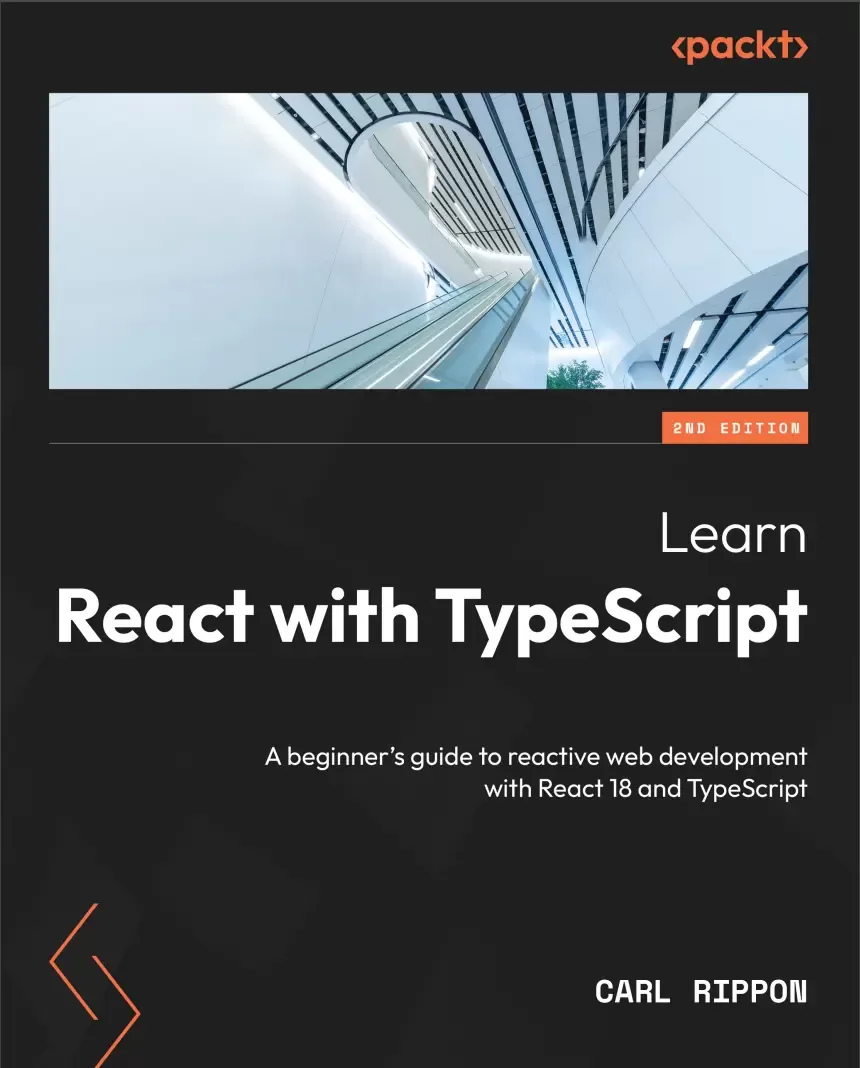
Learn React with TypeScript: A beginner's guide to reactive web development with React 18 and TypeScript. 2 Ed
Оглавление⌄
Preface....14 Part 1: Introduction....20 Chapter 1: Introducing React....22 Technical requirements....23 Understanding the benefits of React....23 Understanding JSX....24 Creating a component....27 Creating a CodeSandbox project....27 Understanding the React entry point....28 Understanding the React component tree....29 Creating a basic alert component....30 Understanding imports and exports....33 Understanding the importance of modules....33 Using export statements....33 Using import statements....35 Adding Alert to the App component....35 Using props....37 Understanding props....37 Adding props to the alert component....38 Using state....41 Understanding state....41 Implementing a visible state in the alert component....42 Adding a close button to Alert....43 Using events....46 Understanding events....46 Implementing a close button click handler in the alert....47 Implementing an alert close event....48 Summary....51 Questions....51 Answers....53 Chapter 2: Introducing TypeScript....56 Technical requirements....56 Understanding the benefits of TypeScript....57 Understanding TypeScript....57 Catching type errors early....58 Improving developer experience and productivity with IntelliSense....60 Understanding JavaScript types....61 Using basic TypeScript types....63 Using type annotations....63 Using type inference....65 Using the Date type....66 Using the any type....68 Using the unknown type....68 Using the void type....71 Using the never type....72 Using arrays....74 Creating TypeScript types....75 Using object types....75 Creating type aliases....77 Creating interfaces....79 Creating classes....80 Creating enumerations....83 Creating union types....85 Using the TypeScript compiler....87 Summary....91 Questions....92 Answers....92 Chapter 3: Setting Up React and TypeScript....94 Technical requirements....94 Creating a project with webpack....95 Introducing webpack....95 Creating the folder structure....95 Creating package.json....95 Adding a web page....96 Adding TypeScript....96 Adding React....98 Adding Babel....100 Adding webpack....102 Creating a project with Create React App....107 Using Create React App....107 Adding linting to Visual Studio Code....108 Adding code formatting....110 Starting the app in development mode....113 Producing a production build....115 Creating a React and TypeScript component....116 Adding a props type....116 Adding a state type....118 Using React DevTools....119 Summary....123 Questions....123 Answers....124 Chapter 4: Using React Hooks....126 Technical requirements....126 Using the effect Hook....127 Understanding the effect Hook parameters....127 The rules of Hooks....128 Effect cleanup....130 Creating the project....131 Fetching data using the effect Hook....133 Using state Hooks....136 Using useState....137 Understanding useReducer....140 Using useReducer....141 Using the ref Hook....144 Understanding the ref Hook....144 Using the ref Hook....145 Using the memo Hook....148 Understanding the memo Hook....148 Using the memo Hook....149 Using the callback Hook....151 Understanding the callback Hook....151 Understanding when a component is re-rendered....152 Using the callback Hook....153 Summary....158 Questions....159 Answers....162 Part 2: App Fundamentals....164 Chapter 5: Approaches to Styling React Frontends....166 Technical requirements....166 Using plain CSS....167 Creating the project....167 Understanding how to reference CSS....167 Using plain CSS in the alert component....169 Experiencing CSS clashes....173 Using CSS modules....174 Understanding CSS modules....174 Using CSS modules in the alert component....175 Using CSS-in-JS....178 Understanding CSS-in-JS....179 Using Emotion in the alert component....180 Using Tailwind CSS....184 Understanding Tailwind CSS....184 Installing and configuring Tailwind CSS....186 Using Tailwind CSS....187 Using SVGs....191 Understanding how to use SVGs in React....191 Adding SVGs to the alert component....192 Summary....194 Questions....194 Answers....196 Chapter 6: Routing with React Router....198 Technical requirements....199 Introducing React Router....199 Creating the project....199 Understanding React Router....199 Installing React Router....200 Declaring routes....200 Creating the products list page....200 Understanding React Router’s router....203 Declaring the products route....204 Creating navigation....206 Using the Link component....207 Using the NavLink component....210 Using nested routes....211 Understanding nested routes....211 Using nested routes in the app....214 Using route parameters....216 Understanding route parameters....216 Using route parameters in the app....217 Creating an error page....222 Understanding error pages....222 Adding an error page....223 Using index routes....226 Understanding index routes....226 Using an index route in the app....226 Using search parameters....228 Understanding search parameters....228 Adding search functionality to the app....229 Navigating programmatically....233 Using form navigation....235 Implementing lazy loading....237 Understanding React lazy loading....237 Adding a lazy admin page to the app....238 Summary....241 Questions....241 Answers....244 Chapter 7: Working with Forms....246 Technical requirements....246 Using controlled fields....247 Creating the project....247 Creating a contact form....248 Using uncontrolled fields....255 Using React Router Form....257 Using native validation....262 Using React Hook Form....265 Understanding React Hook Form....265 Using React Hook Form....268 Adding validation....271 Summary....277 Questions....277 Answers....280 Part 3: Data....282 Chapter 8: State Management....284 Technical requirements....284 Creating the project....285 Using prop drilling....289 Using React context....293 Understanding React context....293 Using React context....295 Using Redux....301 Understanding Redux....301 Installing Redux....304 Using Redux....304 Summary....310 Questions....311 Answers....312 Chapter 9: Interacting with RESTful APIs....314 Technical requirements....314 Creating the project....315 Setting up the project....315 Understanding the component structure....315 Creating a REST API....316 Using the effect hook with fetch....318 Getting blog posts using fetch....318 Strongly typing response data....319 Creating a blog posts list component....322 Creating a blog posts page component....323 Posting data with fetch....327 Creating new blog posts using fetch....327 Creating a blog post form component....329 Using React Router....335 Understanding React Router data loading....335 Using React Router for data loading....336 Deferred React Router data fetching....338 Using React Query....341 Installing React Query....341 Adding the React Query provider....341 Getting data using React Query....342 Updating data using React Query....346 Using React Router with React Query....349 Summary....352 Questions....352 Answers....353 Chapter 10: Interacting with GraphQL APIs....356 Technical requirements....356 Understanding the GraphQL syntax....357 Returning flat data....357 Returning hierarchical data....360 Specifying query parameters....362 GraphQL mutations....363 Setting up the project....365 Creating the project....365 Creating a PAT for the GitHub GraphQL API....365 Creating environment variables....366 Using React Query with fetch....367 Creating the header....367 Creating the repository page....373 Using Apollo Client....385 Understanding Apollo Client....385 Installing Apollo Client....385 Refactoring the App component....385 Refactoring the Header component....386 Refactoring the repository page....387 Summary....390 Questions....390 Answers....392 Part 4: Advanced React....394 Chapter 11: Reusable Components....396 Technical requirements....396 Creating the project....397 Using generic props....397 Understanding generics....397 Creating a basic list component....399 Using props spreading....403 Using render props....406 Understanding the render props pattern....406 Adding a renderItem prop....407 Adding checked functionality....410 Creating custom hooks....413 Understanding custom hooks....413 Extracting checked logic into a custom hook....414 Allowing the internal state to be controlled....417 Understanding how the internal state can be controlled....417 Allowing checkedIds to be controlled....419 Summary....424 Questions....425 Answers....428 Chapter 12: Unit Testing with Jest and React Testing Library....432 Technical requirements....433 Testing pure functions....433 Understanding a Jest test....433 Testing isChecked....435 Testing exceptions....436 Running tests....438 Testing components....441 Understanding React Testing Library....442 Implementing checklist component tests....444 Using test IDs....446 Simulating user interactions....448 Understanding fireEvent and user-event....449 Implementing checklist tests for checking items....449 Getting code coverage....453 Running code coverage....454 Understanding the code coverage report....454 Gaining full coverage on the checklist component....457 Ignoring files in the coverage report....458 Summary....459 Questions....460 Answers....461 Index....462 Other Books You May Enjoy....471
Описание
Ниже — практический обзор по теме «typescript».
Reading, navigating, and debugging a large frontend codebase is a major issue faced by frontend developers. This book is designed to help web developers like you learn about ReactJS and TypeScript, both of which power large-scale apps for many organizations.
This second edition of Learn React with TypeScript is updated, enhanced, and improved to cover new features of React 18 including hooks, state management libraries, and features of TypeScript 4. The book will enable you to create well-structured and reusable React components that are easy to read and maintain, leveraging modern design patterns.
You’ll also learn how to manage complex states using Redux and how to interact with a GraphQL web API. You’ll be able to ensure that all your components are type-safe, making the most of TypeScript features, including some advanced types. Finally, you’ll discover how to write robust unit tests for React components using Jest.
By the end of the book, you’ll be well-equipped to use both React and TypeScript.
What you will learnGain first-hand experience of TypeScript and its productivity featuresUnderstand how to transpile your TypeScript code into JavaScript for running in a browserBuild a React frontend codebase with hooksInteract with REST and GraphQL web APIsDesign and develop strongly typed reusable componentsCreate automated component testsWho this book is forThis book is for experienced frontend developers looking to build large scale web applications using React and TypeScript. Intermediate knowledge of JavaScript, HTML and CSS is a prerequisite.
Если материал оказался полезен — сохраните страницу.
Поделиться
Частые вопросы
Можно ли скачать «Learn React with TypeScript: A beginner's guide to reactive web development with React 18 and TypeScript. 2 Ed» бесплатно?
Да, «Learn React with TypeScript: A beginner's guide to reactive web development with React 18 and TypeScript. 2 Ed» доступна для бесплатного скачивания на нашем сайте в формате PDF. Ссылка на файл находится на этой странице.
В каком формате и какого размера файл?
Книга предоставляется в формате PDF, размер файла 3,3 МБ.
Кто автор и когда вышла книга?
автор — Rippon Carl, издательство Packt Publishing Limited, год выпуска 2023, 474 страниц.
О чём книга «Learn React with TypeScript: A beginner's guide to reactive web development with React 18 and TypeScript. 2 Ed»?
Reading, navigating, and debugging a large frontend codebase is a major issue faced by frontend developers.
Похожие материалы
 JavaScript. Рецепты для разработчиков. 3 изд
 Become A Ninja With Angular
 Mastering jQuery: A Beginner’s Guide
 Professional JavaScript for Web Developers. 5 Ed
 React.js Design Patterns: Learn how to build scalable React apps with ease
 Typescript and JavaScript Coding Made Simple 2 Books in 1: A Beginner’s Guide to Programming
 React. Сборник рецептов. Практические приемы работы с фреймворком React
 JavaScript. Полное руководство: Справочник по самому популярному языку программирования. 7 изд