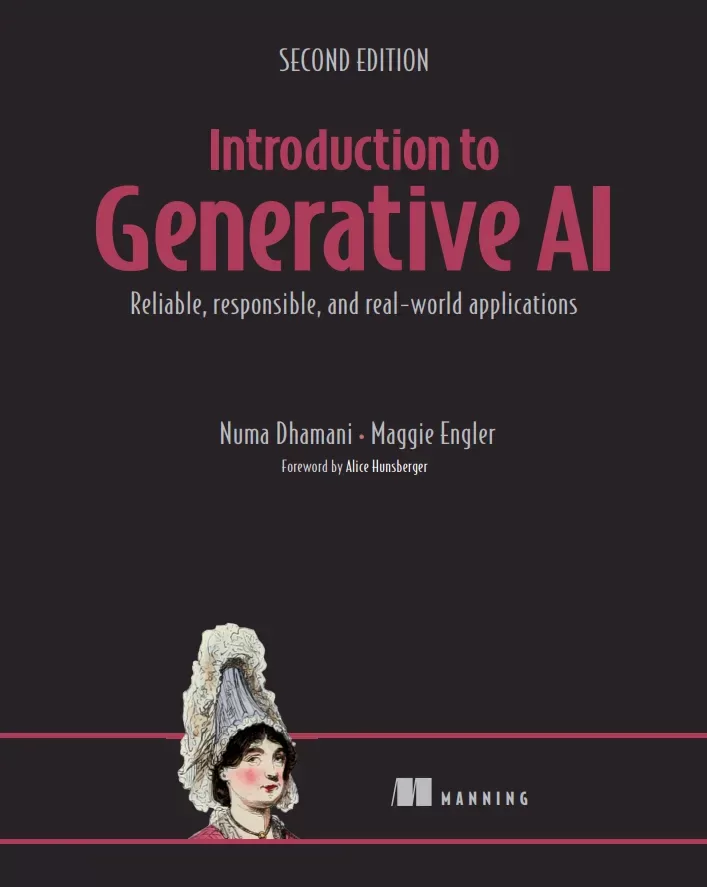
Introduction to Generative AI: Reliable, responsible, and real-world applications. 2 Ed
Оглавление⌄
Introduction to Generative AI, Second Edition....1 brief contents....5 contents....6 foreword....13 preface....15 acknowledgments....17 about this book....19 Who should read this book....20 How this book is organized: A road map....20 liveBook discussion forums....22 Other online resources....22 about the authors....23 about the cover illustration....25 1 Large language models: The foundation of generative AI....26 The evolution of natural language processing....28 The birth of LLMs....32 The explosion of LLMs....34 What are LLMs used for?....36 Language modeling....36 Question answering....38 Coding....39 Content generation....40 Logical reasoning....42 Other natural language tasks....43 Where do LLMs fall short?....44 Training data and bias....44 Limitations in controlling machine outputs....47 Sustainability of LLMs....49 Major players in generative AI....50 OpenAI....51 Google....53 Meta....54 Microsoft ....55 Anthropic....56 Other notable players....57 Conclusion....59 2 Training large language models: Learning at scale....61 How are LLMs trained?....62 Exploring open web data collection....63 Demystifying autoregression and bidirectional token prediction....65 Training multimodal LLMs....66 Transferring knowledge for efficient models....69 Mixture of Experts and sparse models....71 Reasoning models....73 Techniques for post-training LLMs....76 Supervised fine-tuning....77 Reinforcement learning from human feedback....78 Direct preference optimization....79 Reinforcement learning from AI feedback....80 Emergent properties of LLMs....81 Learning with a few examples....82 Is emergence an illusion?....85 Conclusion....86 3 Data privacy and safety: Technical ....88 What’s in the training data?....89 Encoding bias....89 Linguistic diversity....94 Sensitive information....97 Safety-focused improvements for LLM generations....102 Post-processing detection algorithms....103 Content filtering or conditional pretraining....105 Safety post-training....106 Machine unlearning....109 Navigating user privacy and commercial risks....111 Inadvertent data leakage....111 Best practices when interacting with LLMs....114 Data protection and privacy in the age of AI....114 International standards and data protection laws....115 Are generative AI systems GDPR-compliant?....119 Privacy regulations in academia....122 Corporate policies....123 Governing data in an AI-driven world....125 Conclusion....128 4 AI and the creative economy: Innovation and intellectual property....130 The rise of synthetic media....131 Techniques for creating synthetic media....132 The opportunities and risks of synthetic media....137 Detecting synthetic media....139 Transforming creative workflows....144 Marketing and media applications....145 Visual and digital art....148 Filmmaking....149 Music....150 Intellectual property in the LLM era....152 Copyright law and fair use....153 Open source and licenses ....161 Creator’s rights and data licensing ....164 Conclusion....166 5 Misuse and adversarial attacks: Challenges and responsible testing....168 Intentional misuse....169 Cybersecurity and social engineering....170 Illicit and harmful applications....177 Adversarial narratives....185 Political manipulation and electioneering....194 Hallucinations....199 Why do LLMs hallucinate?....199 Misuse of LLMs in the professional world....207 Red teaming LLMs....214 Conclusion....219 6 Machine-augmented work: Productivity, education, and economy....222 Using LLMs in the professional space....223 LLMs assisting doctors with administrative tasks....223 LLMs for legal research, discovery, and documentation....225 LLMs augmenting financial investing and bank customer service....229 LLMs as a programming partner....232 LLMs in daily life....236 Generative AI in education....243 Detecting machine-generated text....249 Generative AI and the labor market....255 Conclusion....260 7 Prompt engineering: Strategies for guiding and evaluating LLMs....262 What is prompt engineering?....263 Prompting techniques and frameworks....269 Overview of common prompting techniques....270 Structuring prompts to guide model behavior....271 Prompting frameworks for structured output....277 Evolving practices in prompt engineering....279 Evaluating AI-generated outputs....283 Identifying evaluation metrics....283 Assembling evaluation datasets....284 Scoring model responses....286 Prompting vs. post-training....291 Conclusion....293 8 AI agents: The rise of autonomous AI systems....295 What is an AI agent?....296 How are AI agents being used?....297 Personal assistants....298 Enterprise workflows....300 Research and discovery....302 Software development....303 Cybersecurity....307 Physical environments....308 Multi-agent systems....309 Toward agentic collaboration....310 How are AI agents trained and enabled?....311 Agent architectures....315 Retrieval-augmented generation....317 Model Context Protocol....320 GUI-native agents....322 Evaluating agents....324 Risks and considerations unique to agents....326 Autonomy and misalignment....327 Memory and state persistence....328 Tool access and real-world consequences....329 Emergent behaviors in multi-agent systems....330 Security and adversarial risks....332 Human factors and decision delegation....333 Evaluation, monitoring, and oversight....334 The road ahead....336 The future of AI agents....336 Conclusion....339 9 Human connections: The social role of chatbots....341 The rise of human–chatbot relationships....342 Why humans are turning to chatbots for relationships....349 The loneliness epidemic....349 Emotional attachment in human–chatbot relationships....352 The benefits and risks of human–chatbot relationships....356 Toward healthier human–chatbot relationships....365 Conclusion....372 10 The future of responsible AI: Risks, practices, and policy....374 Where are LLM developments headed?....375 Language as the universal interface....376 From tools to agentic systems....378 The rise of personalized AI....380 On the horizon....382 Sociotechnical risks of generative AI....384 Bias, toxicity, and representational harms....384 Hallucinations and fabrications....385 Autonomy and emergent agentic risks....387 Misuse across domains....387 Dependency, emotional harm, and relationship risks....388 Labor and economic disruption....389 A holistic view of harm....389 Best practices for responsible AI development and use....390 Curating datasets and standardizing documentation....391 Protecting data privacy....393 Explainability, transparency, and bias....395 Design interventions and architectures....398 Model training strategies for safety....401 Red teaming and evaluation....404 Detecting and tracing synthetic media....405 Platform responsibility and user safeguards....408 Humans in the loop....410 Education and digital literacy....412 Toward responsible generative AI....413 AI regulations in practice....414 The United States....414 The European Union....419 China....424 Corporate self-governance....427 Toward an AI governance framework....430 Conclusion....433 11 Frontiers of AI: Open questions and global trends....435 The quest for artificial general intelligence....436 AI sentience and consciousness....445 The carbon footprint of LLMs....451 The open source movement ....458 Global investment in AI....466 Conclusion....470 references....472 index....503
Описание
Ниже — практический обзор по теме «generative».
Get a free eBook (PDF or ePub) from Manning as well as access to the online liveBook format (and its AI assistant that will answer your questions in any language) when you purchase the print book.
They’ve also spawned a storm of misinformation, hype, and doomsaying that makes it tough to understand exactly what Generative AI actually is and what it can really do. AI tools like ChatGPT and Gemini, automated coding tools like Cursor and Copilot, and countless LLM-powered agents have become a part of daily life. This book delivers a clear, well-written survey of generative AI fundamentals along with the techniques and strategies you need to use AI safely and effectively.
It guides you from your first eye-opening interaction with tools like ChatGPT to how AI tools can transform your personal and professional life safely and responsibly. AI moves fast—and so this second edition has been completely revised to reflect the latest developments in the field.
They can also produce poetry, realistic images or videos, and even generate computer code. In this easy-to-read introduction, you’ll learn:How large language models (LLMs) workHow to apply AI across personal and professional workThe social, legal, and policy landscape around generative AIEmerging trends like reasoning models and vibe codingAbout the technologyGenerative AI tools like ChatGPT, Gemini, and Claude can draft emails, generate marketing copy, and prototype product designs. But how do they do all that? This accessible book reveals how generative AI works in plain, jargon-free language, so you can use it safely and effectively.
You’ll understand the latest innovations in AI, AI agents, multimodal training, reasoning models, retrieval-augmented generation (RAG), and more. About the bookIntroduction to Generative AI, Second Edition is a completely revised and updated guide to the capabilities, risks, and limitations of generative AI. Along the way, you’ll explore how AI is impacting the world, with an expert-level look at AI in industry, education, and society.
What's insideHow AI and foundation models workApplications across daily life and workBalancing innovation with responsibilityAbout the readerNo technical experience required.
Файл доступен для загрузки ниже.
Поделиться
Частые вопросы
Можно ли скачать «Introduction to Generative AI: Reliable, responsible, and real-world applications. 2 Ed» бесплатно?
Да, «Introduction to Generative AI: Reliable, responsible, and real-world applications. 2 Ed» доступна для бесплатного скачивания на нашем сайте в формате PDF. Ссылка на файл находится на этой странице.
В каком формате и какого размера файл?
Книга предоставляется в формате PDF, размер файла 39,2 МБ.
Кто автор и когда вышла книга?
автор — Dhamani Numa , Engler Maggie, издательство Manning Publications Co., год выпуска 2026, 511 страниц.
О чём книга «Introduction to Generative AI: Reliable, responsible, and real-world applications. 2 Ed»?
Get a free eBook (PDF or ePub) from Manning as well as access to the online liveBook format (and its AI assistant that will answer your questions in any language) when you purchase the print book.AI tools like ChatGPT and Gemini, automated
Похожие материалы
 GPT студентам
 ChatGPT для саморазвития
 Всё об ИИ чат-боте ChatGPT
 Modern Generative AI with ChatGPT and OpenAI Models
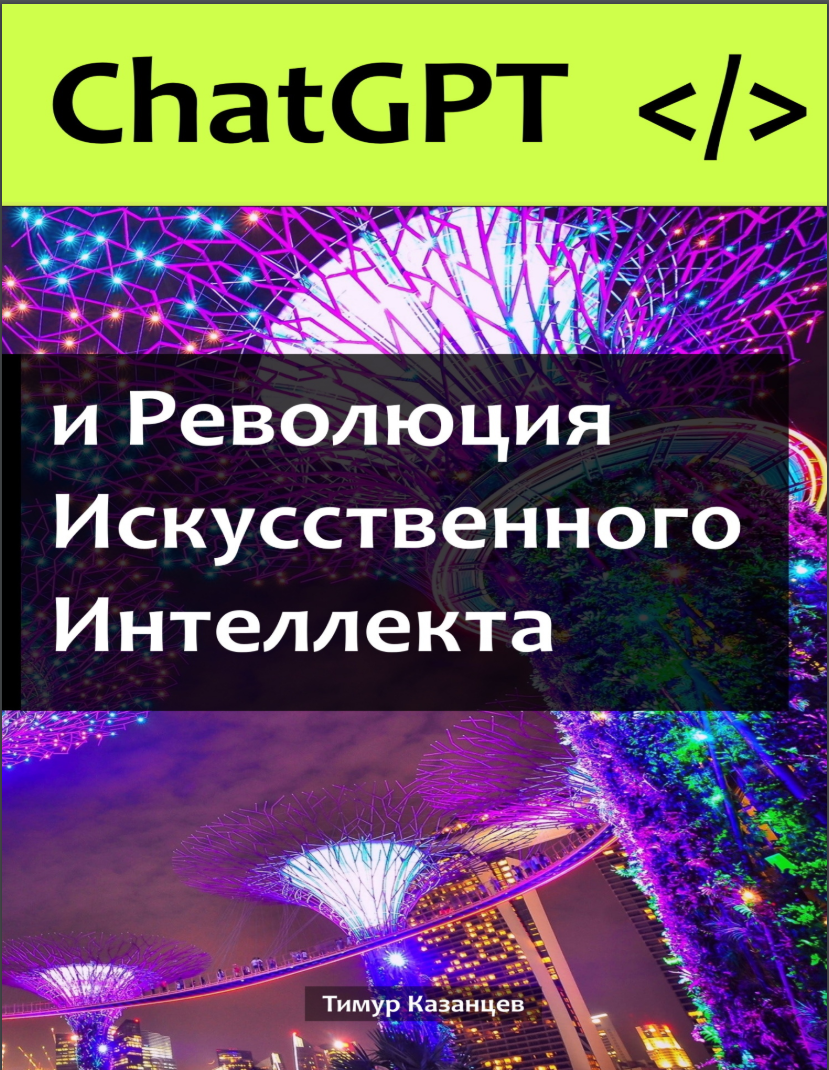 ChatGPT и Революция Искусственного Интеллекта
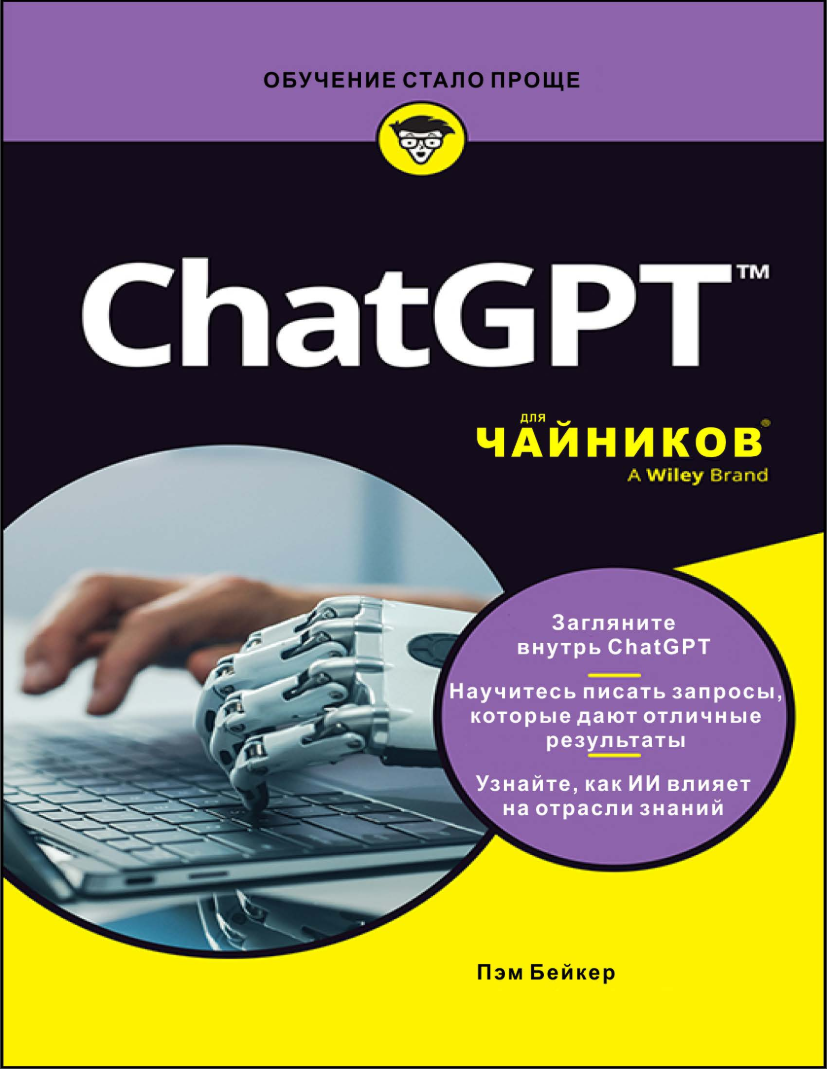 ChatGPT для чайников
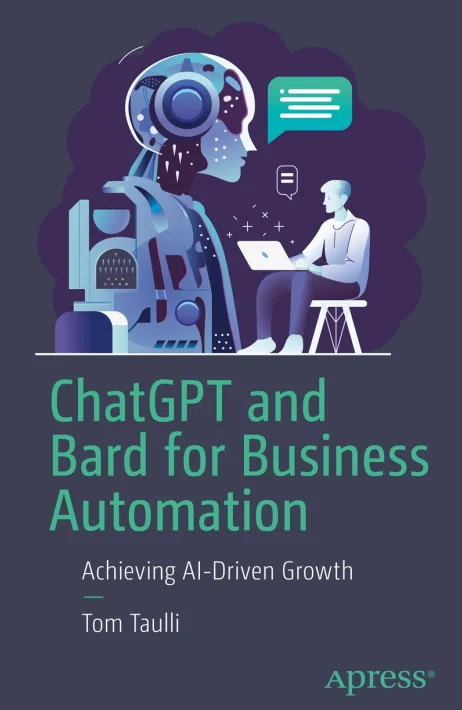 ChatGPT and Bard for Business Automation
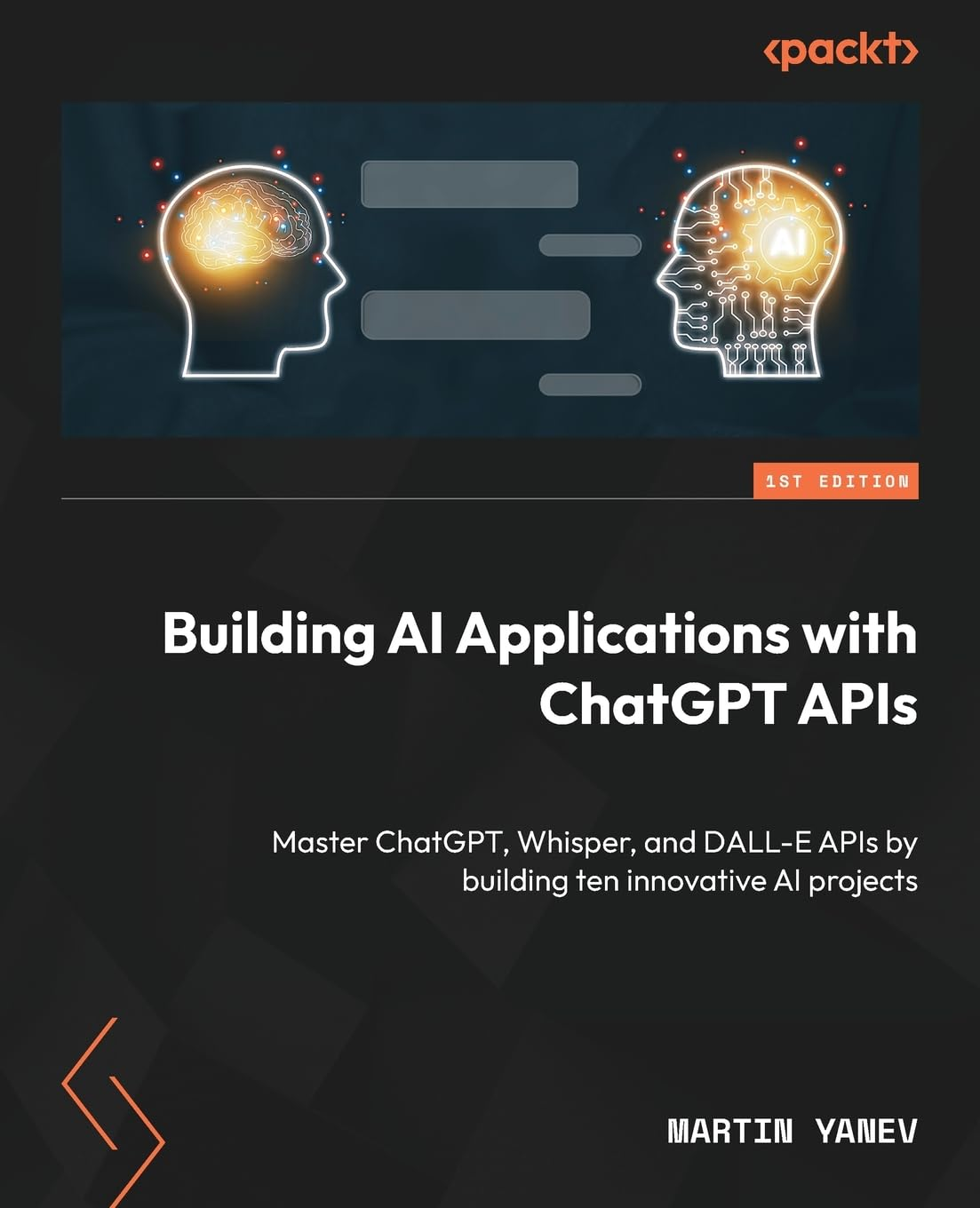 Building AI Applications with ChatGPT APIs: Master ChatGPT, Whisper, and DALL-E APIs by building ten innovative AI projects