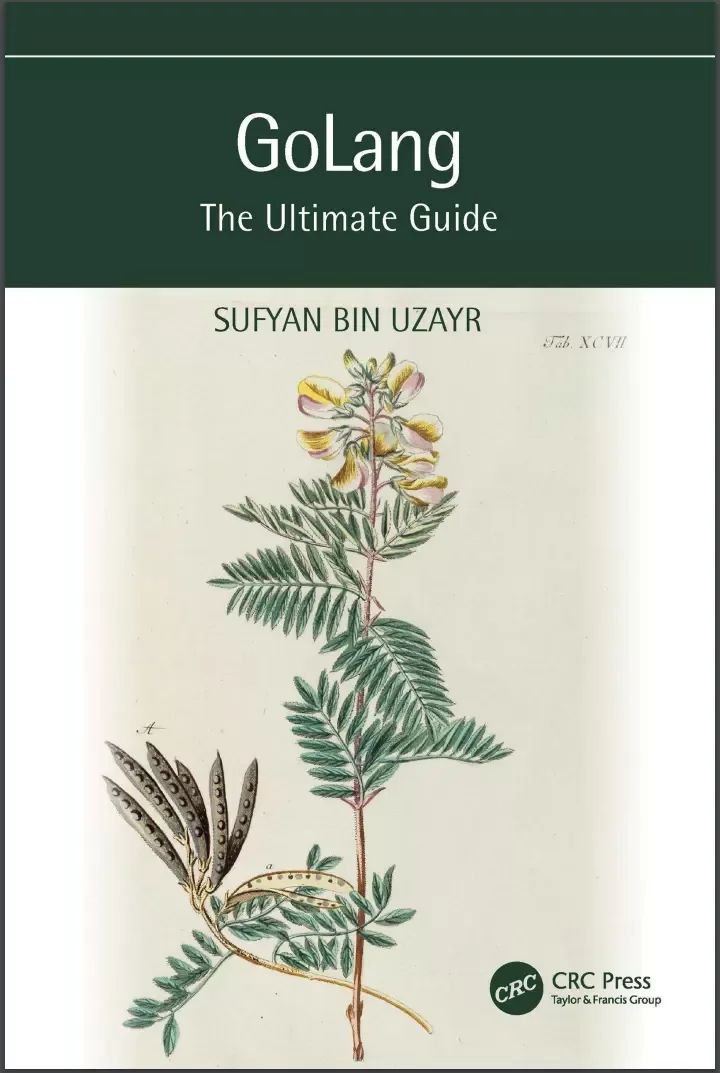
GoLang: The Ultimate Guide
Оглавление⌄
Cover....1 Half Title....2 Title Page....4 Copyright Page....5 Contents....6 Acknowledgments....20 About the Author....22 CHAPTER 1: Crash Course in GoLang....24 IS IT REFERRED TO AS Go OR GoLang?....25 WHAT IS THE PURPOSE OF GoLang?....25 WHY IS Go SO POPULAR?....25 Other Programming Languages vs. Go....26 Python vs. Go....26 But How Does Go Stack Up against Python?....26 SHOULD WE STUDY Go?....27 Go PROGRAMMING FEATURES....27 WHAT MAKES GoLang SUPERIOR TO OTHER COMPUTER LANGUAGES?....28 GoLang’s Core Capability....28 Multithreading and Concurrency....29 From within, Go Empowers Hardware....29 Unmatched Simplicity of Go....30 Built-in Testing and Profiling Framework....30 Easy Learning Curve....30 BEGINNING WITH Go....31 Text Editor....31 Finding a Go Compiler....31 INSTALL Go ON WINDOWS....31 How Can We Know Which Go Language Version Is Preinstalled?....32 Downloading and Installing Go....32 WRITING THE FIRST Go PROGRAM....33 Why Is There a “Go Language”?....34 What Is Missing in Go That the Other Languages Have?....34 Hardware Restrictions....35 The Upsides and Downsides of the Go Language....35 TERMINAL....36 The Open Terminal Tool Window....36 Start the New Session....37 INSTALL Go ON Mac....37 Making Our First Program....39 Implement a Go Program....39 Do Go Programs Interact with Programs Written in C/C++?....40 HOW CAN WE CREATE AN EMPTY FILE IN GoLang?....40 HOW TO MAKE A DIRECTORY IN Go....42 HOW TO READ AND WRITE A Go Program....43 HOW DO WE RENAME AND TRANSFER A FILE IN GoLang?....46 HOW TO READ A FILE LINE BY LINE AND CONVERT IT TO A STRING....47 BASIC SYNTAX....48 Tokens....48 Line Separator....48 Comments....48 Identifiers....49 Keywords....49 Whitespace....50 DATA TYPES IN Go....50 Numbers....51 Booleans....53 Strings....53 VARIABLES IN Go....54 Declaring a Variable....55 Employing the var Keyword....55 Using the Short Variable Declaration....58 CONSTANTS....61 How Should We Declare?....62 Untyped and Typed Numeric Constants....62 Numeric Constant....62 String Literals....64 Boolean Constant....65 VARIABLE SCOPE IN Go....66 Local Variables....66 Global Variables....67 DECLARATION OF MULTIPLE VARIABLES....69 SHORTHAND DECLARATION....71 OPERATORS IN Go....72 Arithmetic Operators....73 Relational Operators....74 Logical Operators....76 Bitwise Operators....76 Assignment Operators....77 Misc Operators....79 CONTROL STATEMENTS....80 if Statement....80 if…else Statement....81 Nested if Statement....83 if..else..if Ladder....84 SWITCH STATEMENT....86 Expression Switch....86 Type Switch....87 ARRAYS....88 Creating and Using an Array....88 Using var Keyword....88 Using a Shorthand Declaration....89 Multidimensional Array....90 How Do You Copy an Array into Another Array?....91 How Can We Pass an Array to a Function?....92 SLICES....93 Slice Declaration....93 Slice Components....94 How Do We Create and Begin a Slice?....95 Using Slice Literal....95 Using an Array....95 Using an Existing Slice....96 Using the make() Function....97 How to Iterate over a Slice....98 Using the for Loop....98 Using Range in a for Loop....99 Using a Blank Identifier in a for Loop....99 Slice Composite Literal....100 How to Sort a Slice of ints....100 Ints....101 IntsAreSorted....101 How Do We Trim a Slice of Bytes in GoLang?....102 How Do We Split a Slice of Bytes?....104 STRING....105 String Literals....106 Using Double Quotes (“”)....106 Using Backticks(“)....106 How Do We Trim a String?....107 Trim....107 TrimLeft....108 TrimRight....109 TrimSpace....110 TrimSuffix....111 TrimPrefix....112 How to Split a String....113 Split....113 SplitAfter....114 SplitAfterN....115 MAPS....116 How Do We Create and Initialize Maps?....117 Simple....117 Using the make() Function....118 WHAT IS A BLANK IDENTIFIER (underscore)?....119 DEFER KEYWORD....120 PANIC IN GoLang....121 RECOVER....122 CLOSURES....123 RECURSION....124 POINTERS....125 What Are Points Used For?....125 Pointers Declaration and Initialization....126 Declaring a Pointer....126 Pointer Initialization....126 Dereferencing a Pointer....127 In GoLang, How Can We Instantiate a Struct Using the New Keyword?....128 Pointers to a Function....129 Create a Pointer and Pass It to the Function....129 Passing an Address of the Variable to Function Call....130 Pointer to a Struct....131 Pointer to Pointer in Go....132 How to Declare a Pointer to a Pointer....132 Comparing Pointers....133 == operator....133 != operator....134 GoLang STRUCTURES....135 Pointers to a Struct....137 GoLang’s NESTED STRUCTURE....137 GoLang METHODS....138 Method with the Struct Type Receiver....139 Method with the Non-Struct Type Receiver....139 Methods with the Pointer Receiver....140 INTERFACES....141 How Do We Make an Interface?....142 How to Implement Interfaces....142 Why Are Go Interfaces Wonderful?....143 Redundant Functions....143 INHERITANCE....144 POLYMORPHISM USING INTERFACES....146 CHAPTER 2: Test-Driven Development....148 DEVELOPING A NEW PROJECT....149 MAKING Go FILES....149 RUN TESTS....150 A TEST THAT FAILED....150 THE FUNCTION BEING TESTED....152 WRITING A TEST-FIRST FUNCTION....152 REFACTORING Go WITH Go/ANALYSIS....154 Invoke the Refactoring Command....154 Conflicts Resolve....154 Configure the Refactoring Options....154 My Top Four Go Refactoring Approaches....155 Method of Extraction....155 Method of Move....156 Create a Parameter Object....158 Replace Symbolic Constant with Magic Number....159 REFACTORING OUR FIRST Go CODE....160 Include a Parameter Check....161 Add String Formatting....161 Take Out the Code....162 Write a Test....162 GoLang ERROR HANDLING....163 Errors in GoLang....163 Creating Our Own Mistakes....164 Errors Caused by Strings....164 Data Custom Mistakes....165 Handling Errors in Functions....166 Defer....167 Panic....169 Recover....172 Error Wrapping....173 Casting Errors....175 WRITE UNIT TESTING IN Go....176 Beginning....176 Unique to Go....177 Setup and Teardown....178 Testing within the Same Package....179 Five Basic Techniques and Strategies for Developing GoLang Unit Tests....180 CHAPTER 3: Packaging in GoLang....186 PACKAGES IN GoLang....186 Workspace....186 Main Package....187 Import Packages....188 Install Third-Party Packages....188 Init Function....189 Important Considerations....190 Giving the Packages Names....192 Code Exported....193 Essential Go Packages and Libraries....195 Awesome Go....195 GoLang-Set....195 Color....197 Now....198 Gen....199 Gorm....201 Goose....203 Glide....203 Ginkgo....204 Etcd....204 NSQ....205 Docker....207 Kubernetes....207 DEPENDENCY MANAGEMENT....207 Versioning....207 Modules....208 Installing Dependencies....209 Dependencies Must Authenticate....210 Remove Unused Dependencies....210 Installing Dependencies That Are Missing....211 Updating the Versions of Dependencies....211 Listing Dependencies....213 Module vs. Package....213 Naming....213 Fetching Packages....214 CHAPTER 4: Handling Concurrency....216 CONCURRENCY....216 Illustration of the Sleeping Barber Issue....218 Example of a Producer-Consumer Problem....221 Goroutines – CONCURRENCY IN GoLang....224 Go Concurrent Programming....224 Issues with Multithreading....224 How to Create a Goroutine....225 MULTIPLE Goroutines....225 What Is the Difference between Parallelism and Concurrency?....227 Goroutines Provide Several Advantages over Threads....227 COMMUNICATE TO SHARE MEMORY....227 HOW TO USE Goroutines TO ACCESS SHARED RESOURCES....230 Access Shared Resources Using Goroutines....230 Using Mutual Exclusion to Get Access to Shared Resources....230 Using Atomic Counters to Get Access to Shared Resources....232 Concurrency Issues....233 Concurrency Disadvantages....234 Benefits of Concurrency....234 Problems with Concurrency....234 CHAPTER 5: GoLang for JavaScript Developers....236 FLOW CONTROL....236 Loop Control Statements in Go....242 Break Statement....243 Goto Statement....243 Continue Statement....244 TYPES....245 Basic Types....245 Numbers....245 Booleans....247 Strings....248 Type Conversion....249 Type Assertion....249 Structs....251 Initializing....253 Composition vs. Inheritance....253 HOW DO YOU MAKE MODULES IN GoLang?....258 Adding Dependencies to the Go Module....260 PACKAGE MANAGEMENT USING Go MODULES....260 What Exactly Is the Go Module?....261 Starting Out....262 Module Initializing....262 Setting Up Dependencies....262 Eliminating Unnecessary Dependencies....262 Updating a Dependency Version....263 ERROR HANDLING....263 Error Type Representation....264 Various Approaches to Getting More Information from an Error....265 Don’t Ignore Errors....269 IN GoLang, THERE ARE SEVERAL TECHNIQUES TO COMPARE STRINGS....270 Making Use of Comparison Operators....270 Using the Compare() Method....272 FUNCTIONS IN Go....273 Function Declaration....273 Function Calling....274 Function Arguments....275 FUNCTION RETURNING MULTIPLE VALUES....276 Giving Names to the Return Values....277 VARIADIC FUNCTIONS....278 ANONYMOUS FUNCTION....279 GoLang main AND init FUNCTIONS....279 main() Function....280 init() Function....280 CHAPTER 6: Code Optimization....282 A PATTERN FOR OPTIMIZING Go....282 Why Is Code Optimization Necessary?....290 Code Base That Is Cleaner....291 Improved Consistency....291 Pages That Load Faster....291 Improved Code Readability....292 More Efficient Refactoring....292 Easier to Understand Debugging....292 Enhanced Workflow....292 Code Upkeep Is Now Easier....293 Improved Feature Development....293 The Ultimate Guide to GoLang Performance Optimization....293 GoLang Performance Hints That Have Been Proven and Tested....293 Optimization of Resource Efficiency....293 Optimization of Latency in GoLang....294 Efficiency of Algorithms....294 Patterns of GoLang Application Performance....294 Use Goroutines Sparingly....294 CPU Work Should Parallelize....295 Asynchronous I/O Operations....295 Keep an Eye on Our Timeouts....295 Memory Should Not Allocate in Hot Spots....295 Make Use of Lock-Free Algorithms....295 Prefer Read-Only Locks....295 Reduce or Eliminate the Use of ‘cgo’....295 Make Use of Buffered I/O....296 Use Binary Instead....296 StringBuffer and StringBuilder Are Preferable....296 Make Use of Regular Expressions....296 Slices Should Preallocate....296 Select Protocol Buffers and MessagePack as Our Options....296 For Maps, Use int Rather Than a String....296 GoLang FOR SECURE CODING....296 Stuck in a Rut with Manual Security....296 With Go, There Is a Need for Integrated, Automated Security....297 How Does Instrument-Based Security Work in the Go Pipeline?....298 Contrast Goes Above and Beyond with Modern Application Security....299 Go Security Best Practices....299 Verify the Input Entries....300 Make Use of HTML Templates....301 Protect Ourselves against SQL Injections....301 Encrypt Any Sensitive Data....302 Make HTTPS Communication Mandatory....303 Be Cautious of Mistakes and Logs....305 BEST PRACTICES FOR GoLang....306 Syntax....307 Assign Datatypes to Newly Created Variables....307 Do Not Declare a Variable or Import a Package That We Do Not Require....307 Follow Proper Naming Conventions....307 Make Use of Comments to Help in Knowledge Transfer....308 Simple, Readable, and Maintainable Code....308 Avoid Nesting by Dealing with Mistakes First....308 Avoid Utility Repeats....308 To Address Exceptional Circumstances, Use the Type Switch....308 Go Code Organization....309 For Use in CI/CD Workflows....309 Make Use of Go Modules....309 Ensure Immutability and Availability Using GOPROXY....310 CHAPTER 7: GoLang Tutorials and Projects....312 WEB APPLICATION TO GENERATE QR CODE IN GoLang....312 Install the Necessary Package....313 Development....313 Main.go Source Code....313 Generator.html Source Code....314 Implementation....314 SETTING UP THE Go HTTP CLIENT....314 HTTP Client in GoLang....315 POST and GET Requests....316 Adding Request Headers....317 Our Requests Are Being Authorized....319 WHAT IS THE GoLang REST API?....320 Using GoLang to Consume a REST API....322 Project Setup....322 Imports....322 Example of a Response....323 Struct....323 Code....323 Run the Project....324 APPRAISAL....326 CHEAT SHEET....342 BIBLIOGRAPHY....352 INDEX....356
Описание
В этом материале разберём тему: language.
Go is a general purpose programming language with a straightforward syntax and a large standard library. Go, also known as GoLang, is a Google-developed open-source, compiled, and statically typed computer language. The building of highly accessible and scalable web apps is one of the primary areas where GoLang is widely used. It may also be used to develop command-line programs, desktop applications, and even mobile apps.
It was developed as a replacement for popular server-side languages like Java and C++. Go was designed from the ground up for networking and infrastructure-related applications. The Go programming language aims to combine the efficiency and safety of a statically typed, compiled language with the simplicity of programming of an interpreted, dynamically typed language. It also aspires to be cutting edge, with networked and multicore computer capabilities.
Why Should You Learn GoLang?GoLang is becoming one of the most popular languages, which means that learning it can open up new doors of opportunity and even help you land a job at various companies that use Go extensively.
Ease of writing concurrent programs, fast compilation, simple syntax, and static linking are some of the features that make Go an ideal candidate for developing various applications.
This Book Includes:A step-by-step approach to problem solving and skill developmentA quick run-through of the basic concepts, in the form of a "Crash Course"Advanced, hands-on core concepts, with a focus on real-world problemsIndustry-level coding paradigms, and a practice-oriented explanatory approachSpecial emphasis on writing clean and optimized code, with additional chapters focused on coding methodology
Файл доступен для загрузки ниже.
Поделиться
Частые вопросы
Можно ли скачать «GoLang: The Ultimate Guide» бесплатно?
Да, «GoLang: The Ultimate Guide» доступна для бесплатного скачивания на нашем сайте в формате PDF. Ссылка на файл находится на этой странице.
В каком формате и какого размера файл?
Книга предоставляется в формате PDF, размер файла 1,4 МБ.
Кто автор и когда вышла книга?
автор — Bin Uzayr Sufyan, издательство CRC Press is an imprint of Taylor & Francis Group, LLC, год выпуска 2023, 366 страниц.
О чём книга «GoLang: The Ultimate Guide»?
Go, also known as GoLang, is a Google-developed open-source, compiled, and statically typed computer language.
Похожие материалы
 Облачный Go. Создание надежных служб в ненадежных окружениях
 Pro Go. Полное руководство по программированию надежного и эффективного программного обеспечения с использованием Golang
 Learning Go: An Idiomatic Approach to Real-World Go Programming
 Software Development with Go: Cloud-Native Programming using Golang with Linux and Docker
 Efficient Go: Data-Driven Performance Optimization
 Black Hat Go: Программирование для хакеров и пентестеров
 Microservices with Go: Building scalable and reliable microservices with Go
 Concurrency in Go: Tools and Techniques for Developers