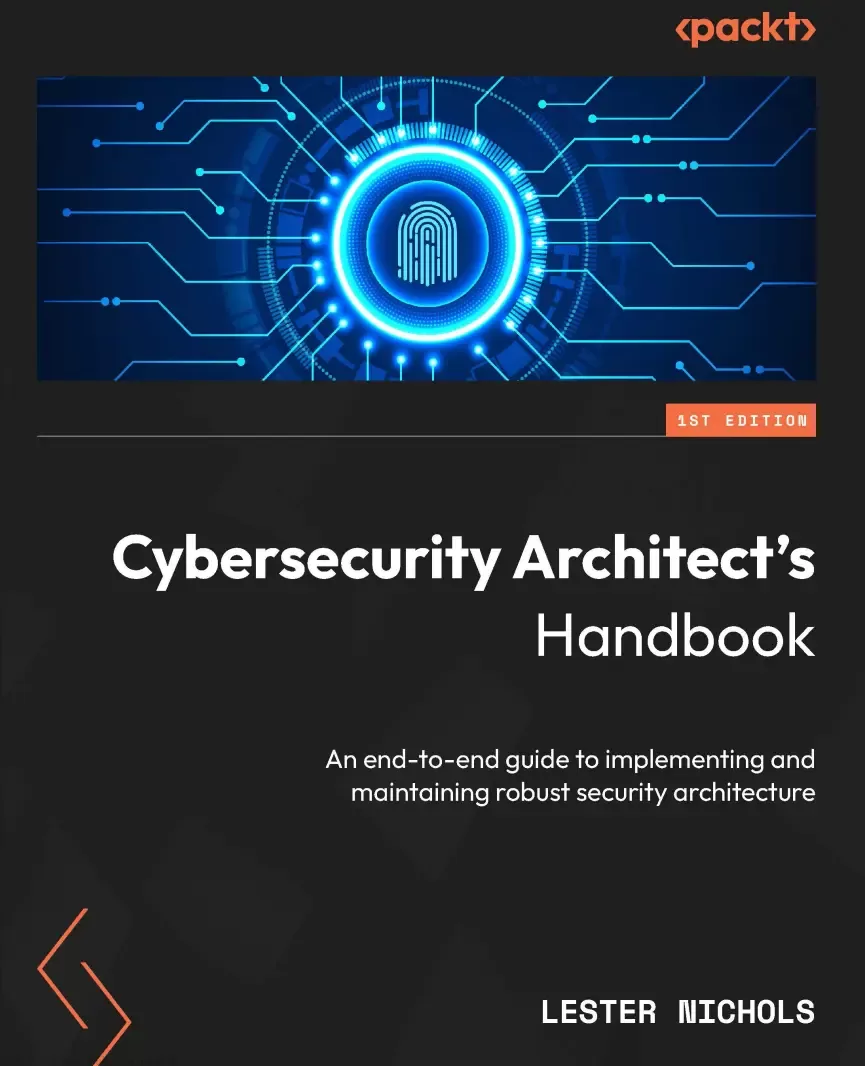
Cybersecurity Architect's Handbook: An end-to-end guide to implementing and maintaining robust security architecture
Оглавление⌄
Cover....1 Title Page....2 Copyright and Credit....3 Dedicated....4 Contributors....5 Table of Contents ....8 Preface....16 Part 1: Foundations....24 Chapter 1: Introduction to Cybersecurity....26 What is cybersecurity?....27 Access control....29 Secure software development....29 Business continuity planningdisaster recovery (BCPDR)....29 Cryptography....29 Information security governancerisk management....29 Legalregulatorycompliance and investigations....30 Security operations....31 Physical and environmental security....31 Security architecture....32 Telecommunicationsnetwork security....32 Confidentialityintegrityavailability....33 Confidentiality....34 Integrity....34 Availability....35 Non-repudiation....35 Networking and operating systems....36 Networking fundamentals....37 Operating systems in cybersecurity....37 Cybersecurity considerations for networking and operating systems....38 Applications....41 Understanding applications....42 Importance of application security....42 Common application security challenges....43 Secure development life cycle....43 Governance, regulations, and compliance (GRC)....44 Governance....44 Regulations....45 Compliance....45 The role of GRC in organizations....45 Summary....46 Further reading....47 Chapter 2: Cybersecurity Foundation....50 Access control....51 Access control fundamentals....53 Aligning access control with the business....53 Collaboration with operational teams....54 Examples of how you can implement access control measures within an enterprise....54 Access control lab....57 Network and communication security....62 Network security fundamentals....62 Network security technologies....62 Securing network communications....63 Network access control....63 Collaboration with operational teams....64 Network security lab....69 Cryptography....77 Cryptography fundamentals....77 Cryptography in practice....78 Collaboration with business and operational teams....79 Cryptography lab....85 BCPDRP....90 BCP....90 DRP....91 Integration with risk management and security....91 Compliance and regulatory considerations....92 BCPDRP lab....92 Physical security....94 Access control....95 Surveillance systems....95 Intrusion detection and alarm systems....95 Physical barriers and deterrents....95 Security personnel and guards....96 Security policies and procedures....96 Incident response and emergency preparedness....96 Environmental controls....96 Inventory and asset management....97 Perimeter security....97 Collaboration with law enforcement and first responders....97 Physical security audits and assessments....97 Why implement physical security controls?....97 Physical security lab....99 Summary....102 Chapter 3: What Is a Cybersecurity Architect and What Are Their Responsibilities?....104 Understanding the role and environment....105 What is a cybersecurity architect?....105 Areas of focus....107 Threat landscape analysis and modeling....108 Security framework development....109 Network security....111 Application security....113 Cloud security....115 Mobile security....117 Vendor and third-party risk management....118 Emerging technologies evaluation....119 Other areas of focus....120 Cybersecurity architect as a part of the bigger team....121 Responsibilities....122 Scope of vision....123 Summary....123 Part 2: Pathways....124 Chapter 4: Cybersecurity Architecture Principles, Design, and Analysis....126 Principles....127 The importance of cybersecurity architecture....128 The key principles of cybersecurity architecture....128 Implementing the key principles of cybersecurity architecture....130 Best practices for maintaining cybersecurity architecture....131 Challenges and considerations in implementing cybersecurity architecture....132 Cybersecurity architecture frameworks....133 Examples of successful cybersecurity architecture implementations....134 Business considerations for cybersecurity architecture....135 Resources for learning more about cybersecurity architecture....136 Design....136 How does cybersecurity architecture design work?....137 The key aspects of cybersecurity architecture design....138 Cybersecurity architecture design for cloud, enterprise application, and network....142 Analysis....143 Business goals....144 Leveraging governance documents to understand organizational goals....145 Applying documentation to the framework....146 Risk tolerance....147 Assessing risk tolerance....148 Summary....154 Chapter 5: Threat, Risk, and Governance Considerations as an Architect....156 Threats....157 Understanding the threat landscape....157 The imperative for a proactive cybersecurity posture....159 Elaborating on security objectives....161 Identification and evaluation of security risks....161 Continual monitoring and revision....162 Imperative for architectural agility in contemporary digital environments....163 Regulatory compliance as an intrinsic outcome....164 Threat considerations – examples....165 Summarizing threats....167 Risks....167 Risk cybersecurity architecture – an overview....168 Implementing a risk cybersecurity architecture....169 Managing risk with cybersecurity engineering....169 Role of continuous monitoring in risk management....169 Risk considerations – an in-depth analysis with practical exercises....170 Summarizing risks....172 Governance....172 The imperative of cybersecurity governance....172 The multifaceted components of a cybersecurity governance framework....174 Best practices for implementing and augmenting cybersecurity governance....175 Supplementary considerations....175 Governance considerations – practical scenarios and exercises....176 Summarizing governance....179 How it all relates to the business....179 Understanding the concepts – threats, risks, and governance....179 The interplay of threats, risks, and governance....180 Identifying and classifying risks....181 Initial and residual risk assessment....181 Risk mitigation strategies....182 Monitoring and reviewing risks....182 The role of enterprise architecture in risk management....182 The role of governance in risk management....183 Navigating regulatory and compliance risks....183 Summarizing the business perspective....183 CSAs balancing act....184 Understanding the role of CSA....184 The art of risk management in cybersecurity....185 The framework of governance in cybersecurity....185 The role of compliance in cybersecurity....186 Striking a balance – security versus innovation....187 Security architecture – design and implementation....189 The importance of continuous monitoring and improvement....189 The role of training and awareness in cybersecurity....190 The future of cybersecurity architecture and GRC....190 Summary....191 Chapter 6: Documentation as a Cybersecurity Architect – Valuable Resources and Guidance for a Cybersecurity Architect Role....194 Why document?....196 What is documentation?....196 Additional information....198 Types of documentation....198 Policies and procedures....199 System architecture diagrams....202 Threat models....204 Risk assessments....212 Security requirements....213 Logical architecture diagrams....214 Physical architecture diagrams....217 Solution design documents (SDDs)....220 Configuration documents....222 Documentation tools....225 Categories of documentation tools....225 Comparative analysis....228 Team approaches to documentation....229 Division of responsibilities....229 Collaborative platforms for a team-based approach....231 Documentation life cycle management....231 Comparative analysis....232 Summary....232 Chapter 7: Entry-Level- to-Architect Roadmap....234 The journey....235 Entry level – starting in a technology field....237 Mid-level – transitioning to cybersecurity....242 Advanced level – becoming a cybersecurity specialist....247 Senior level – becoming a CSA....252 The big picture....256 Where to start....257 A bit of history....258 The OODA Loop....259 Applying lessons learned....260 Entry level – analysts....260 Mid-level – security engineers....260 Advanced level – principal consultants....261 CSA-to-CISO level....261 The cold open....262 Taking inventory of your skills....262 Building hands-on skills....262 Preparing for interviews....263 Continuing to upskill....263 The transfer....264 How to expand....265 Pivoting to cybersecurity....265 Cultivating specialized expertise....265 Ascending to CSA....266 Summary....266 Chapter 8: The Certification Dilemma....268 Certifications landscape....269 CompTIA....269 EC-Council....278 Information Systems Audit and Control Association (ISACA)....280 The International Information System Security Certification Consortium (ISC2)....282 Global Information Assurance Certification (GIAC)....286 Cloud Vendor – Amazon Web ServicesAzureGoogle Cloud Platform....292 Why get certified?....299 Certification considerations....301 Industry variations....301 Government requirements....301 Cost considerations....302 Summary....302 Part 3: Advancements....304 Chapter 9: Decluttering the Toolset – Part 1....306 Technical requirements....307 Whats in the toolbox?....308 Threat modeling and risk assessment tools....308 Network defense and monitoring tools....309 Endpoint protection tools....310 Identity and access management (IAM) tools....311 Data protection tools....312 Vulnerability management tools....313 Security configuration and patch management tools....314 Incident response and forensics tools....315 Application security tools....315 Cloud security tools....316 Cybersecurity governance and compliance tools....317 Penetration testing and red team tools....318 Automation and orchestration tools....319 Summary....320 Chapter 10: Decluttering the Toolset – Part 2....322 What tool to use?....323 Clearly define requirements....323 Assess organizational risk profile....324 Map to core security frameworks....324 Right-size investment....325 Evaluate ease of use....325 Incorporate future plans....325 Leverage trials and proof of concepts (POCs)....326 Business considerations....326 Total cost of ownership (TCO)....326 Alignment to business initiatives....327 Impact on users....327 Executive mandates....327 Vendor viability and support....327 Interoperability and integration....328 Scalability needs....328 Resource constraints....328 Summary....329 Chapter 11: Best Practices....332 Least privilege....334 Understanding least privilege....334 Best practices for implementing least privilege....335 Exercise....339 Example scenarios....340 Patching and development....341 Best practices for patch management....341 Exercise....346 MFA....348 Best practices for MFA implementation....349 Exercise....353 Example scenarios....354 Security training....355 Best practices for effective security training....355 Exercise....359 Example scenarios....360 Vulnerability scanning....361 Best practices for conducting vulnerability scanning....361 Lab....366 Example scenarios....369 Summary....370 Chapter 12: Being Adaptable as a Cybersecurity Architect....372 What is adaptability?....373 The imperative of adaptability in cybersecurity....373 Cultivating adaptability in application security architecture....375 Be a reed in the wind....378 The principle of adaptive security architecture....378 Architectural flexibility in alignment with business goals....379 Adaptation to organizational changes....379 Case studies – architectural adaptability in action....380 Embracing adaptability as a cybersecurity virtue....381 The OODA loop revisited....381 Mitigation of risk....384 Foundations of risk mitigation in cybersecurity architecture....385 Strategic risk mitigation aligning with business objectives....385 Integrating risk mitigation across the organization....386 Evolving mitigation strategies in a dynamic threat landscape....386 Case studies – dynamic risk mitigation in practice....387 The harmonization of risk mitigation and business strategy....387 Finding balance....388 The art of balancing security and business objectives....388 Adaptive security architecture....389 Architectural flexibility in alignment with business goals....390 Adaptation to organizational changes....390 Achieving work-life balance as a cybersecurity architect....391 Exercise examples....393 Summary....396 Chapter 13:Architecture Considerations – Design, Development, and Other Security Strategies – Part 1....398 Technical design....400 Fundamentals of technical design....400 Technical design process....411 Implementing technical designs....422 Case studies and real-world applications....426 Life cycle....427 Conceptualization phase....428 Design phase....429 Development phase....431 Deployment phase....433 Maintenance phase....434 Summary....435 Chapter 14:Architecture Considerations – Design, Development, and Other Security Strategies – Part 2....438 Blueprinting....439 Understanding blueprints....439 Developing blueprints....440 Blueprinting process....442 Standardization and repeatability....443 Use cases and practical applications....445 Scoping....447 Understanding the importance of scoping....447 The process of scoping....448 Tools and techniques for effective scoping....449 Managing scope changes....451 Practical exercise – scoping a sample project....452 Project approach....454 Overview of project methodologies....454 Deep dive into specific methodologies....456 Selecting the right approach....458 Combining methodologies....460 Adapting to change....461 Learning from real-world applications....462 Next steps....464 Summary....466 Index....468 Other Books You May Enjoy....491
Описание
Ниже — практический обзор по теме «cybersecurity».
Master cybersecurity architecture with practical insights, best practices, and essential skills to design, implement, and maintain robust security
Key FeaturesGain insights into the cybersecurity architect role and master key skills to excel in itAcquire a diverse skill set for becoming a cybersecurity architect through up-to-date, practical examplesDiscover valuable tips and best practices to launch your career in cybersecurityPurchase of the print or Kindle book includes a free PDF eBookBook DescriptionStepping into the role of a Cybersecurity Architect (CSA) is no mean feat; it requires both upskilling and a fundamental shift in how you view cybersecurity. Written by a seasoned cybersecurity expert with over two decades of experience spanning the public and private sectors, this all-encompassing guide outlines an accessible a path for cybersecurity engineers and newcomers to evolve into architects, sharing best practices to enhance your skills.
You'll gain insights into assessing and improving your organization’s security posture, including system, hardware, and software security. After a brief introduction to the role and foundational concepts, this book will help you understand the day-to-day challenges faced by CSAs, supported by practical examples. You'll also learn how to set user and system policies and protocols through effective monitoring and enforcement, and understanding countermeasures that protect the system from unauthorized access attempts.
To prepare you for the road ahead and augment your existing skills, the book provides invaluable tips and practices that will contribute to your success as a CSA. By the end of this book, you’ll be well-equipped to take up the CSA role and execute robust security solutions.
It is also for cybersecurity professionals looking to transition into a cybersecurity architect role. What you will learnGet to grips with the foundational concepts and basics of cybersecurityUnderstand cybersecurity architecture principles through scenario-based examplesNavigate the certification landscape and understand key considerations for getting certifiedImplement zero-trust authentication with practical examples and best practicesFind out how to choose commercial and open source toolsAddress architecture challenges, focusing on mitigating threats and organizational governanceWho this book is forThis book is for cybersecurity engineers or newcomers who aspire to become cybersecurity architects. Solution architects interested in understanding the scope of the role and the necessary skills for success will also find this book useful. Anyone with a basic understanding of computer and networking technologies will be able to make the most of this book.
На этом основные моменты по теме закрыты.
Поделиться
Частые вопросы
Можно ли скачать «Cybersecurity Architect's Handbook: An end-to-end guide to implementing and maintaining robust security architecture» бесплатно?
Да, «Cybersecurity Architect's Handbook: An end-to-end guide to implementing and maintaining robust security architecture» доступна для бесплатного скачивания на нашем сайте в формате PDF. Ссылка на файл находится на этой странице.
В каком формате и какого размера файл?
Книга предоставляется в формате PDF, размер файла 4,5 МБ.
Кто автор и когда вышла книга?
автор — Nichols III Lester E., издательство Packt Publishing Limited, год выпуска 2024, 494 страниц.
О чём книга «Cybersecurity Architect's Handbook: An end-to-end guide to implementing and maintaining robust security architecture»?
Master cybersecurity architecture with practical insights, best practices, and essential skills to design, implement, and maintain robust securityKey FeaturesGain insights into the cybersecurity architect role and master key skills to excel
Похожие материалы
 Security and Privacy Vision in 6G: A Comprehensive Guide
 Ethical Hacking: A Comprehensive Beginner’s Guide to Learn and Understand the Concept of Ethical Hacking
 Kali Linux. Тестирование на проникновение и безопасность
 Защита личной информации в интернете, смартфоне и компьютере
 Хакинг. Искусство эксплойта. 2 изд
 Кибербезопасность стратегии атак и обороны. Безопасность инфраструктуры с использованием тактик Красной и Синей команд
 Секреты безопасности и анонимности в интернете
 Реагирование на компьютерные инциденты. Прикладной курс