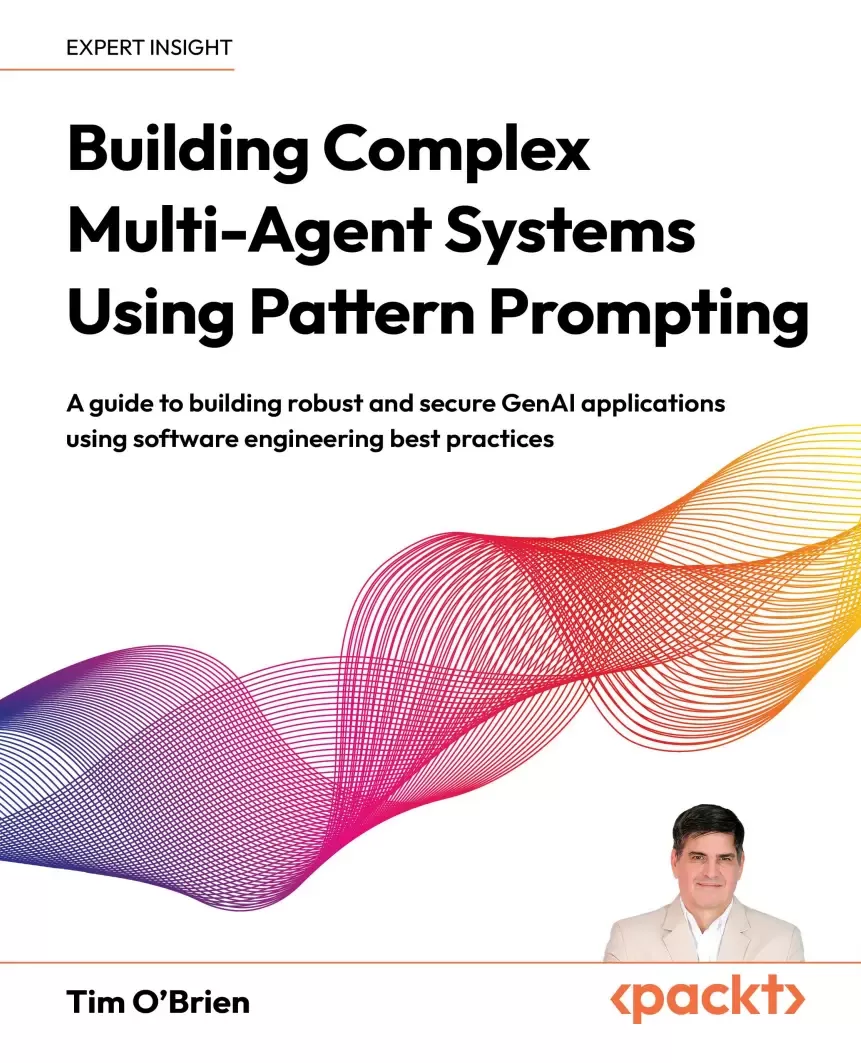
Building Complex Multi-Agent Systems Using Pattern Prompting: A guide to building robust and secure GenAI applications using software engineering best practices
Оглавление⌄
Building Complex Multi-Agent Systems Using Pattern Prompting....2 A guide to building robust and secure GenAI applications using software engineering best practices....2 Building Complex Multi-Agent Systems Using Pattern Prompting....3 Contributors....5 About the author....5 About the reviewers....6 Table of Contents....8 Preface....20 Who this book is for....21 What this book covers....21 To get the most out of this book....23 Download the example code files....25 Download the color images....25 Conventions used....25 Get in touch....26 Earn an Advanced Proof-Of-Knowledge Certificate from Quizitive....26 Free benefits with your book....27 How to Unlock....28 Share your thoughts....28 1....30 Introduction: Patterns, Abstractions, and the GenAI Landscape....30 A vocabulary bridge: GenAI terms and their IT equivalents....31 Studying GenAI....32 On the use of abstractions and patterns....34 How patterns are used in this book....35 Benefits of breaking down GenAI microarchitectures into their constituent patterns....36 What is an LLM?....37 LLM as a continuation of big data....38 LLM as a badly behaving RESTful endpoint....38 How do LLMs work?....39 What is agentic AI?....41 Summary....42 Get This Book's PDF Version and Exclusive Extras....43 2....44 Embeddings: The Language of AI....44 What are embeddings?....45 What do vectors look like?....46 What is affinity?....47 Calculating semantic similarity programmatically....50 Selecting an embedding model....51 Testing embeddings in your code....52 What are vector databases?....53 Chunking documents....55 Chunking decisions....56 Chunking strategies....57 Summary....59 Subscribe for a free eBook....60 3....62 Building with GenAI: Parameters, Tuning, and Project Phases....62 Tuning GenAI systems: principles and practices....63 Tuning the parameters of your GenAI project....64 1) Document Chunking....65 2) Chunking Retrieval....66 3) Retrieval Prompting....66 4) Model ContextTokens Prompts....66 5) Temperature ties to prompt behavior....66 Configuring a GenAI application to answer any question about the Harry Potter books....67 Chunking strategies....70 Temperature....72 Best practices for building a GenAI project....75 Project initiation....76 Intermediate goals....76 Crossing the finish line....77 Summary....78 Get This Book's PDF Version and Exclusive Extras....79 4....80 Building Your First RAG App....80 What does "production-grade" software mean?....81 Making technology choices: advantages of queues and topics....84 Why RabbitMQ for enterprise-grade GenAI systems....85 Quick tour of RabbitMQ....87 Building a production-class RAG application using RabbitMQ with integration patterns....92 Building the LLM client....96 Template Method....97 Adapter....98 Strategy....98 Generating code and deployment configuration....99 Deploying our solution....100 Summary....101 Subscribe for a free eBook....102 5....104 Starting Your Data Migration Project....104 Identifying documents to ingest into the vector database....105 Selecting the right ETL tool....106 Planning your data pipeline....109 Capacity planning and throughput....109 Handling change and continuous operations....110 Ensuring security, privacy, and compliance....111 Managing parallel pipelines and CICD....111 Testing and validation....113 Cost optimization and throttling....113 Evaluating retrieval quality....114 Knowledge structure and advanced retrieval (optional)....114 Hybrid search and the limits of pure vector retrieval....115 The importance of data cleaning in GenAI pipelines....116 Graph databases and the emergence of knowledge graphs....117 Toward integrated knowledge retrieval....118 Summary....119 Get This Book's PDF Version and Exclusive Extras....119 6....120 Ingesting Data Using Airbyte and Pinecone....120 Analysis of applicable patterns....121 Integration patterns implemented by ETL....122 Channel adapter....122 Strategy pattern....123 Strategy pattern (producer)....123 Strategy pattern (receiver)....124 Building our ETL pipeline....124 Installation of Pinecone and Airbyte....125 Analysis of documents....125 Options for configuring Airbyte....126 Configuring Airbyte using its no-code interface....127 Importing a YAML manifest....130 Summary....131 Subscribe for a free eBook....132 7....134 Tips and Best Practices....134 Tips and best practices to help make your GenAI project a success....135 Best practices for designing and operating GenAI systems....135 Have an R&D mindset....135 Don't be afraid to reason things out yourself....135 Discover your own agentic patterns....136 Lead with small POCs first – keep all POCs under 2 days....137 Set latency and throughput targets and load test frequently....137 Have a plan for managing drift....137 Don't use data produced by GenAI with your other IT systems....138 Validate your UX with extensive usability testing....138 Efficient project management....138 Security and data privacy....140 Prompt injection attacks....140 Data leakage through context windows....141 Handling PII in prompts....141 Output validation and harmful content filtering....142 Compliance considerations by industry....142 Building a security-first culture....143 Cost management and token budgeting....143 Building a cost model early....144 Choosing the right model for each task....145 Fine-tuning as a cost optimization strategy....146 Setting cost alerts, budgets, and governance....146 Vendor lock-in and model portability....147 Prompt versioning and governance....147 Treat prompts as code....148 Adopt a versioning strategy....148 Establish review and approval workflows....148 Enable prompt rollback....148 Define ownership and accountability....148 Evaluation and testing frameworks....149 Building your evaluation dataset....149 Automating evaluation pipelines....149 Red-teaming your application....149 Handling non-determinism in tests....150 Testing for drift....150 Summary....150 Get This Book's PDF Version and Exclusive Extras....151 8....152 Pattern-Guided Coding: Using Patterns as the Design Vocabulary for GenAI Systems Built on RabbitMQ....152 The need for pattern-guided coding....154 Reason 1: Communication breaks down without a shared vocabulary....155 Reason 2: Design decisions become invisible....155 Reason 3: GenAI systems fail at the integration layer....155 How pattern-guided coding works....156 Building your app in a four-step Topologos process....158 Phase 1: Clarification before design....158 Phase 2: Pattern analysis across four lenses....159 Phase 3: Iterative approval one decision at a time....160 Phase 4: Final topology output....161 Building producers and consumers with GoF patterns....164 The Strategy pattern for producer routing....164 The Command pattern for agent task messages....165 The Template Method pattern for consumer pipelines....166 The Channel Adapter pattern for external integration....166 Consumer acknowledgment and the manual ACK rule....167 The multi-tier dead-letter queue strategy....167 Generating any known GenAI pattern with a single command....169 Getting ready to deploy....169 The iterative approval loop....171 Auditing an existing system....171 Customizing your GenAI application....172 Case study: extending a single-LLM RAG to a dual-LLM Scatter-Gather....172 The before topology: single LLM....172 The Topologos session: proposing the change....173 The new queue topology: dual LLM with Scatter-Gather....175 What changed and what stayed the same....175 The Aggregator's correlation window....177 Summary....180 Subscribe for a free eBook....180 9....182 Implementing the ReAct Pattern Over RabbitMQ....182 Understanding the ReAct pattern....183 Setting up the RabbitMQ topology....184 Building the ReAct agent....194 Message schemas....194 The LLM call (_think)....194 Tool dispatch (_dispatch_tool)....195 The loop and ACK strategy....195 Implementing tool workers....206 Error handling in tool workers....207 Scaling....207 Sending commands to the agent....214 Running the system end to end....216 Setting up....216 Start the workers....217 Send a question....217 Observing the dead letter queue....218 Preparing the system for production....220 Summary....221 Get This Book's PDF Version and Exclusive Extras....222 10....224 The Future and Limitations of LLMs....224 LLMs actually do: a precise description....225 The stochastic parrot: fluency without understanding....226 Chomsky and the limits of statistical learning....227 Searle's Chinese room: syntax is not semantics....227 Penrose, Gdel, and the mathematical limits of computation....228 The reasoning gap: what LLMs cannot reliably do....229 Systematic mathematical reasoning....229 Maintain logical consistency over long contexts....229 Provide calibrated confidence in their responses....229 Produce novel insights....230 The symbol grounding problem....230 What the hype gets wrong: a taxonomy of overclaiming....230 Why hype is harmful: the engineering costs....232 What LLMs are genuinely good at....232 Thinking about the future with clear eyes....233 Practical guidance: working productively with known limitations....234 Summary....235 Subscribe for a free eBook....235 Appendix A....236 Pattern Reference: GoF, Enterprise Integration, Reliability, and GenAI Microarchitecture Patterns....236 Pattern index....237 Part 1 GoF Design Patterns....238 A.1 Strategy....238 GoF Behavioral Chapters 4, 6....238 A.2 Adapter....239 GoF Structural Chapters 4, 6....239 A.3 Template Method....239 GoF Behavioral Chapter 4....239 Part 2 Enterprise Integration Patterns....240 A.4 Message Channel....240 EIP Messaging Infrastructure Chapters 4, 6....240 A.5 Channel Adapter....241 EIP Messaging Infrastructure Chapters 4, 6....241 A.6 Publish–Subscribe Channel....241 EIP Messaging Chapter 4....241 A.7 Content Enricher....242 EIP Message Transformation Chapters 3, 4....242 A.8 Request–Reply....243 EIP Messaging Chapter 4....243 A.9 Correlation Identifier....244 EIP Messaging Chapter 4....244 A.10 Scatter–Gather....244 EIP Message Routing Chapter 4....244 A.11 Dead Letter Channel....245 EIP Messaging Chapter 4....245 A.12 Message History....246 EIP System Management Chapter 4....246 A.13 Content-Based Router....246 EIP Message Routing Chapter 4....246 A.14 Pipes and Filters....247 EIP Message Routing Chapters 5, 6....247 Part 3 Reliability Patterns....247 A.15 Circuit Breaker....247 Reliability Pattern Chapter 4....247 A.16 Retry with Exponential Backoff....248 Reliability Pattern Chapters 4, 7....248 Part 4 Microarchitecture Patterns....249 A.17 Orchestration....249 Microarchitecture Pattern Chapters 1, 4, 7....249 A.18 Choreography....249 Microarchitecture Pattern Chapters 1, 7....249 A.19 RAG Microarchitecture....250 GenAI Microarchitecture Chapters 2, 3, 4, 5....250 Hybrid retrieval....251 Chunking strategies....252 Embedding flow....252 Production query flow....253 Appendix B....254 Topologos User Manual....254 Quick start....255 Loading the prompt....255 Starting a session....255 Conversational....255 Pattern-first....255 Topology first....256 Approve decisions one at a time....256 Get your deployable artifact....256 When to use Topologos....256 Core concepts....257 The two layers – pattern versus topology....257 Cross-layer example....258 The four-phase protocol....258 Example Phase 1 acknowledgment (fast path)....259 Example Phase 3 decision....259 Command reference....260 All commands at a glance....260 Session commands....262 Example status output....262 Pattern layer commands....263 Topology layer commands....263 Definition commands....263 Operational commands....264 Example validate output....264 Example simulate tool-timeout output....264 Example cost output....265 Diagram commands....265 Modifiers....266 Auto-derived templates....267 Generating the deployable artifact....268 End-to-end workflow....268 The seven Phase 4 artifacts....268 Running deploy....269 Targets....269 Modifiers....270 Examples....270 Rendering diagrams to PNG....271 Mermaid (default)....271 Graphviz DOT....271 SVG....271 PlantUML....271 Applying the manifest to a real broker....271 Route 1 – rabbitmqadmin (CLI)....271 Route 2 – Management HTTP API....272 Route 3 – Terraform (recommended for production)....272 Generating it inline – a typical full session....272 Worked examples....273 Example A – Generating ReAct conversationally....273 Phase 2 (excerpt)....274 Phase 3 – eight decisions (selected highlights)....274 Phase 4 manifest excerpt....275 Example B – Composed pattern (ReAct Tool Use)....276 Invocation....276 What changes vs. canonical ReAct?....276 Why compose rather than extend....276 Example C – Extending a canonical pattern (critic gate)....276 Invocation....277 Phase 1 acknowledgment....277 Additional Phase 3 decisions....277 Chaining multiple extensions....277 Example D – Defining a new pattern (Debate-and-Adjudicate)....278 Step 1 – invoke define....278 Step 2 – Topologos validates and echoes a synthetic reference card....278 Step 3 – compose, extend, persist....279 When to define vs. extend vs. compose....279 Example E – Defining an organization-wide topology archetype....279 Scenario....280 Step 1 – define the queue archetype....280 Step 2 – define the DLQ topology....280 Step 3 – define the security baseline....281 Step 4 – bundle them as a topology archetype....281 Step 5 – use it and lay a pattern on top....281 Step 6 – persist across sessions....281 The payoff....282 Recipes....282 Tips and best practices....284 Troubleshooting....284 FAQs....286 Glossary....288 Canonical pattern reference....290 ReAct....290 Plan-and-Execute....290 Reflection....291 Tool Use....291 Multi-Agent Collaboration....291 RAG....291 Memory....292 Orchestrator-Subagent....292 Human-in-the-Loop....292 Tree of Thoughts....293 Topology-layer canonical primitives....293 Appendix C....296 Unlock Your Exclusive Benefits....296 Unlock this Book's Free Benefits in 3 Easy Steps....297 Step 1....297 Step 2....297 Step 3....298 Need Help....298 Why subscribe?....300 Other Books You May Enjoy....301 Packt is searching for authors like you....303 Share your thoughts....303 Index....304
Описание
Коротко и по делу о том, что важно знать про build.
Learn how to build GenAI applications using proven software engineering patterns instead of rapidly changing frameworks. This book helps engineers build secure, scalable agentic systems with familiar tools and practical, engineer-to-engineer architectural guidance.
Established GoF and enterprise design patterns help explain agentic behavior and system design, enabling you to reason about architecture rather than memorize tools. You will connect GenAI concepts such as agentic workflows, embeddings, and vector databases to enterprise patterns, including components, adapters, and microarchitectures. The book also shows you how to generate multi-agent and GenAI patterns as RabbitMQ configurations for scalable orchestration and communication.
Using language-agnostic examples and widely used messaging, orchestration, and data technologies, you will build production-ready systems that integrate with existing infrastructure without unnecessary complexity. You will also use our Topologos prompt to build, modify, and test deploy-ready multi-agent systems quickly while improving robustness and maintainability.
By the end of this book, you will be able to design reliable GenAI systems, make informed architectural decisions, and adapt confidently as tools and frameworks evolve.
На этом основные моменты по теме закрыты.
Поделиться
Частые вопросы
Можно ли скачать «Building Complex Multi-Agent Systems Using Pattern Prompting: A guide to building robust and secure GenAI applications using software engineering best practices» бесплатно?
Да, «Building Complex Multi-Agent Systems Using Pattern Prompting: A guide to building robust and secure GenAI applications using software engineering best practices» доступна для бесплатного скачивания на нашем сайте в формате PDF. Ссылка на файл находится на этой странице.
В каком формате и какого размера файл?
Книга предоставляется в формате PDF, размер файла 2,8 МБ.
Кто автор и когда вышла книга?
автор — O'Brien Tim, издательство Packt Publishing Limited, год выпуска 2026, 310 страниц.
О чём книга «Building Complex Multi-Agent Systems Using Pattern Prompting: A guide to building robust and secure GenAI applications using software engineering best practices»?
Learn how to build GenAI applications using proven software engineering patterns instead of rapidly changing frameworks.
Похожие материалы
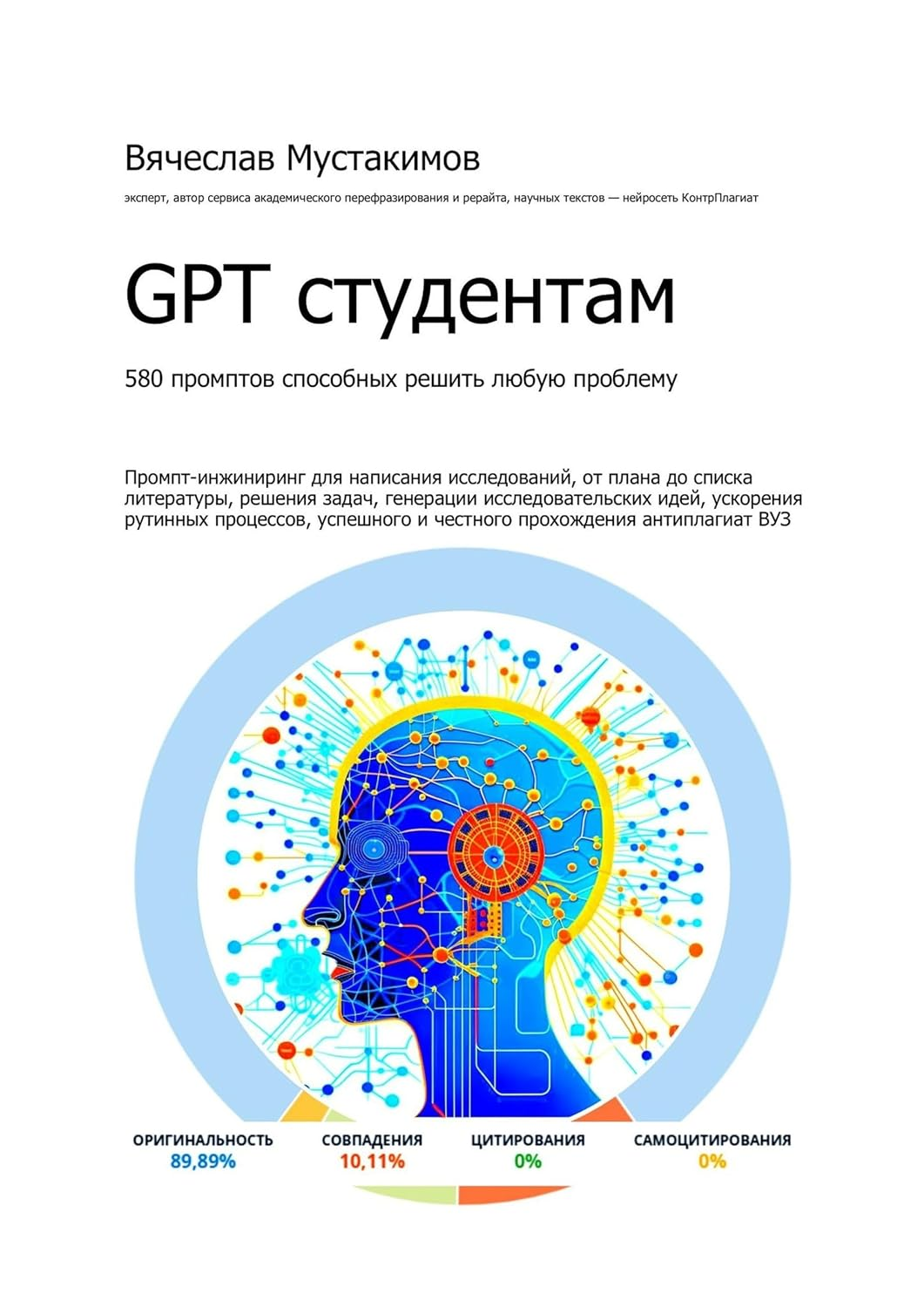 GPT студентам
 ChatGPT для саморазвития
 Всё об ИИ чат-боте ChatGPT
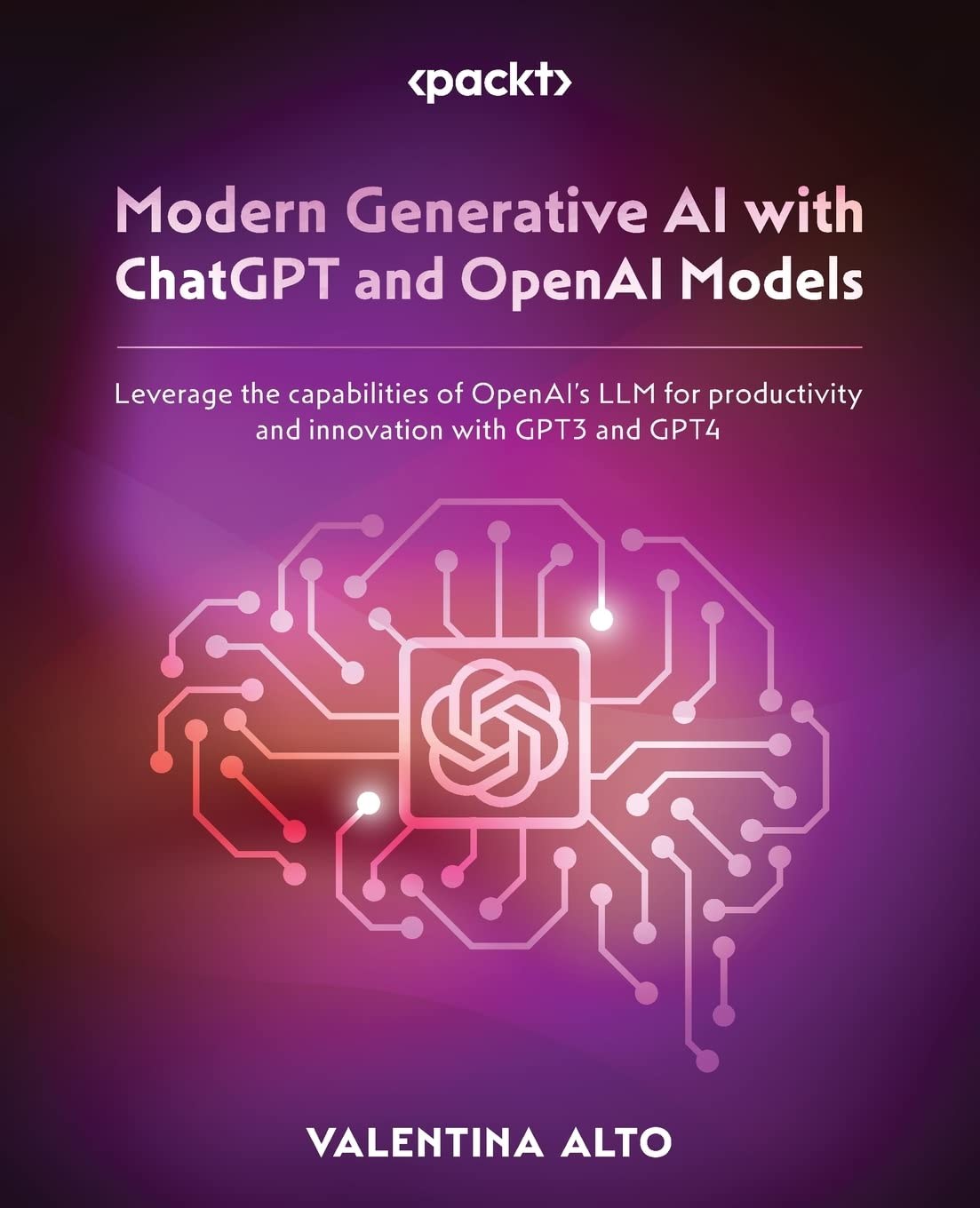 Modern Generative AI with ChatGPT and OpenAI Models
 ChatGPT и Революция Искусственного Интеллекта
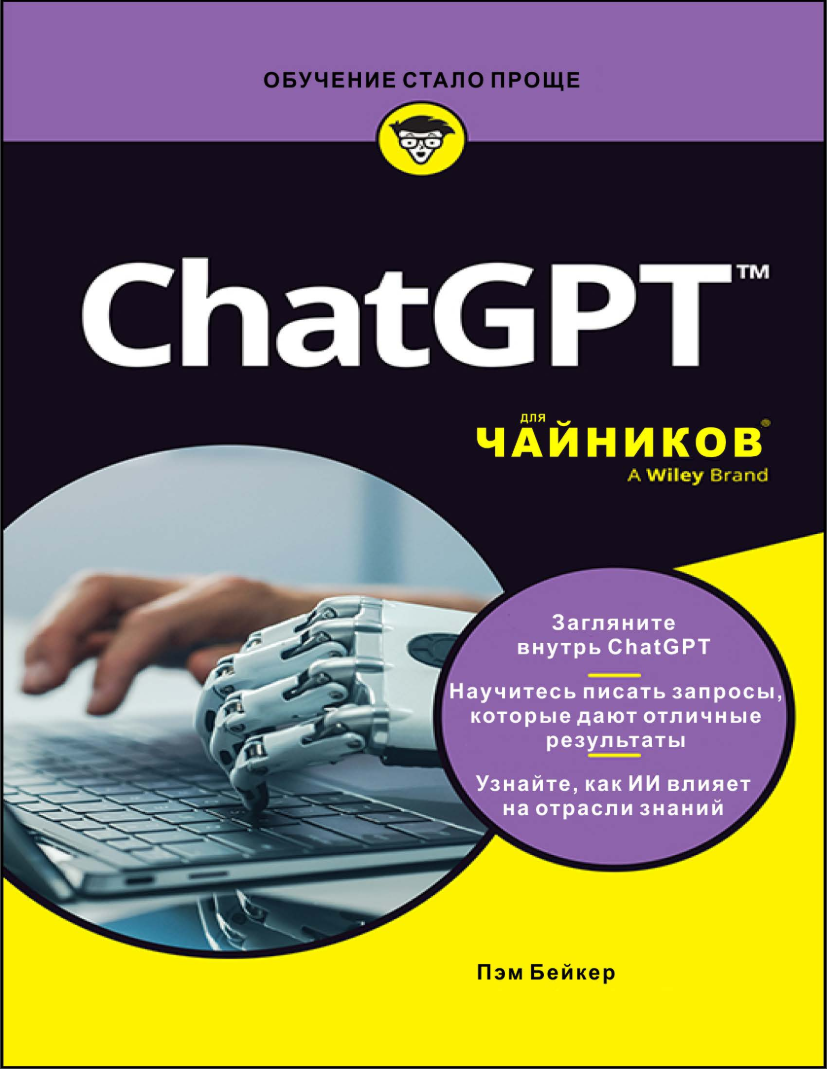 ChatGPT для чайников
 ChatGPT and Bard for Business Automation
 Building AI Applications with ChatGPT APIs: Master ChatGPT, Whisper, and DALL-E APIs by building ten innovative AI projects