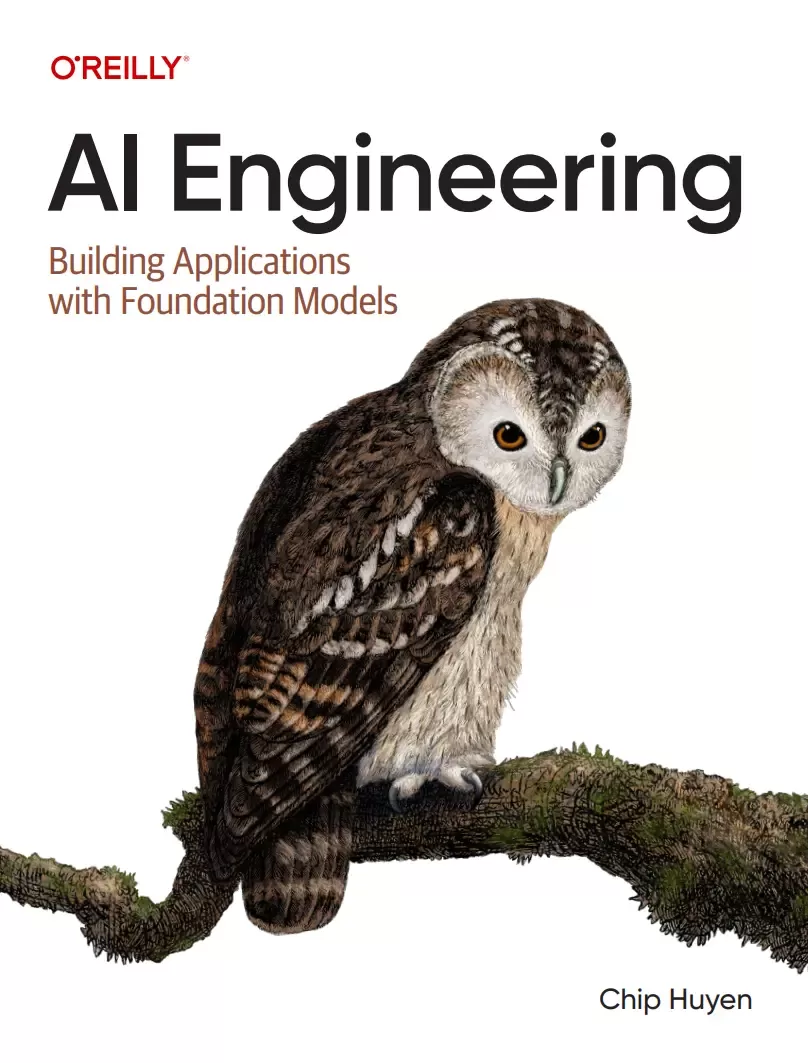
AI Engineering: Building Applications with Foundation Models
Оглавление⌄
CoverCopyrightTable of ContentsPrefaceWhat This Book Is AboutWhat This Book Is NotWho This Book Is ForNavigating This BookConventions Used in This BookUsing Code ExamplesO’Reilly Online LearningHow to Contact UsAcknowledgmentsChapter 1. Introduction to Building AI Applications with Foundation ModelsThe Rise of AI EngineeringFrom Language Models to Large Language ModelsFrom Large Language Models to Foundation ModelsFrom Foundation Models to AI EngineeringFoundation Model Use CasesCodingImage and Video ProductionWritingEducationConversational BotsInformation AggregationData OrganizationWorkflow AutomationPlanning AI ApplicationsUse Case EvaluationSetting ExpectationsMilestone PlanningMaintenanceThe AI Engineering StackThree Layers of the AI StackAI Engineering Versus ML EngineeringAI Engineering Versus Full-Stack EngineeringSummaryChapter 2. Understanding Foundation ModelsTraining DataMultilingual ModelsDomain-Specific ModelsModelingModel ArchitectureModel SizePost-TrainingSupervised FinetuningPreference FinetuningSamplingSampling FundamentalsSampling StrategiesTest Time ComputeStructured OutputsThe Probabilistic Nature of AISummaryChapter 3. Evaluation MethodologyChallenges of Evaluating Foundation ModelsUnderstanding Language Modeling MetricsEntropyCross EntropyBits-per-Character and Bits-per-BytePerplexityPerplexity Interpretation and Use CasesExact EvaluationFunctional CorrectnessSimilarity Measurements Against Reference DataIntroduction to EmbeddingAI as a JudgeWhy AI as a Judge?How to Use AI as a JudgeLimitations of AI as a JudgeWhat Models Can Act as Judges?Ranking Models with Comparative EvaluationChallenges of Comparative EvaluationThe Future of Comparative EvaluationSummaryChapter 4. Evaluate AI SystemsEvaluation CriteriaDomain-Specific CapabilityGeneration CapabilityInstruction-Following CapabilityCost and LatencyModel SelectionModel Selection WorkflowModel Build Versus BuyNavigate Public BenchmarksDesign Your Evaluation PipelineStep 1. Evaluate All Components in a SystemStep 2. Create an Evaluation GuidelineStep 3. Define Evaluation Methods and DataSummaryChapter 5. Prompt EngineeringIntroduction to PromptingIn-Context Learning: Zero-Shot and Few-ShotSystem Prompt and User PromptContext Length and Context EfficiencyPrompt Engineering Best PracticesWrite Clear and Explicit InstructionsProvide Sufficient ContextBreak Complex Tasks into Simpler SubtasksGive the Model Time to ThinkIterate on Your PromptsEvaluate Prompt Engineering ToolsOrganize and Version PromptsDefensive Prompt EngineeringProprietary Prompts and Reverse Prompt EngineeringJailbreaking and Prompt InjectionInformation ExtractionDefenses Against Prompt AttacksSummaryChapter 6. RAG and AgentsRAGRAG ArchitectureRetrieval AlgorithmsRetrieval OptimizationRAG Beyond TextsAgentsAgent OverviewToolsPlanningAgent Failure Modes and EvaluationMemorySummaryChapter 7. FinetuningFinetuning OverviewWhen to FinetuneReasons to FinetuneReasons Not to FinetuneFinetuning and RAGMemory BottlenecksBackpropagation and Trainable ParametersMemory MathNumerical RepresentationsQuantizationFinetuning TechniquesParameter-Efficient FinetuningModel Merging and Multi-Task FinetuningFinetuning TacticsSummaryChapter 8. Dataset EngineeringData CurationData QualityData CoverageData QuantityData Acquisition and AnnotationData Augmentation and SynthesisWhy Data SynthesisTraditional Data Synthesis TechniquesAI-Powered Data SynthesisModel DistillationData ProcessingInspect DataDeduplicate DataClean and Filter DataFormat DataSummaryChapter 9. Inference OptimizationUnderstanding Inference OptimizationInference OverviewInference Performance MetricsAI AcceleratorsInference OptimizationModel OptimizationInference Service OptimizationSummaryChapter 10. AI Engineering Architecture and User FeedbackAI Engineering ArchitectureStep 1. Enhance ContextStep 2. Put in GuardrailsStep 3. Add Model Router and GatewayStep 4. Reduce Latency with CachesStep 5. Add Agent PatternsMonitoring and ObservabilityAI Pipeline OrchestrationUser FeedbackExtracting Conversational FeedbackFeedback DesignFeedback LimitationsSummaryEpilogueIndexAbout the AuthorColophon
Описание
Коротко и по делу о том, что важно знать про engineering.
The model-as-a-service approach has transformed AI from an esoteric discipline into a powerful development tool that anyone can use. Recent breakthroughs in AI have not only increased demand for AI products, they've also lowered the barriers to entry for those who want to build AI products. Everyone, including those with minimal or no prior AI experience, can now leverage AI models to build applications. In this book, author Chip Huyen discusses AI engineering: the process of building applications with readily available foundation models.
The more AI is used, the more opportunities there are for catastrophic failures, and therefore, the more important evaluation becomes. The book starts with an overview of AI engineering, explaining how it differs from traditional ML engineering and discussing the new AI stack. This book discusses different approaches to evaluating open-ended models, including the rapidly growing AI-as-a-judge approach.
AI application developers will discover how to navigate the AI landscape, including models, datasets, evaluation benchmarks, and the seemingly infinite number of use cases and application patterns. You'll learn a framework for developing an AI application, starting with simple techniques and progressing toward more sophisticated methods, and discover how to efficiently deploy these applications.
Previously, she was with Snorkel AI and NVIDIA, founded an AI infrastructure startup, and taught Machine Learning Systems Design at Stanford. Understand what AI engineering is and how it differs from traditional machine learning engineeringLearn the process for developing an AI application, the challenges at each step, and approaches to address themExplore various model adaptation techniques, including prompt engineering, RAG, fine-tuning, agents, and dataset engineering, and understand how and why they workExamine the bottlenecks for latency and cost when serving foundation models and learn how to overcome themChoose the right model, dataset, evaluation benchmarks, and metrics for your needsChip Huyen works to accelerate data analytics on GPUs at Voltron Data. She's the author of the book Designing Machine Learning Systems, an Amazon bestseller in AI.AI Engineering builds upon and is complementary to Designing Machine Learning Systems (O'Reilly).
Если материал оказался полезен — сохраните страницу.
Поделиться
Частые вопросы
Можно ли скачать «AI Engineering: Building Applications with Foundation Models» бесплатно?
Да, «AI Engineering: Building Applications with Foundation Models» доступна для бесплатного скачивания на нашем сайте в формате PDF. Ссылка на файл находится на этой странице.
В каком формате и какого размера файл?
Книга предоставляется в формате PDF, размер файла 31,9 МБ.
Кто автор и когда вышла книга?
автор — Huyen Chip, издательство O’Reilly Media, Inc., год выпуска 2025, 535 страниц.
О чём книга «AI Engineering: Building Applications with Foundation Models»?
Recent breakthroughs in AI have not only increased demand for AI products, they've also lowered the barriers to entry for those who want to build AI products.
Похожие материалы
 GPT студентам
 ChatGPT для саморазвития
 Всё об ИИ чат-боте ChatGPT
 Modern Generative AI with ChatGPT and OpenAI Models
 ChatGPT и Революция Искусственного Интеллекта
 ChatGPT для чайников
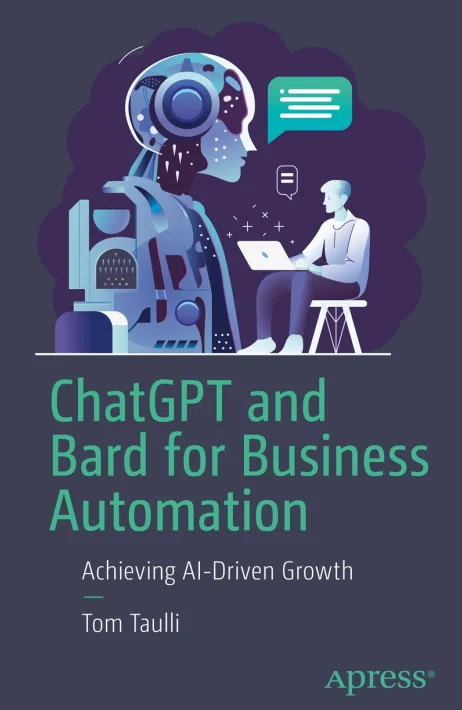 ChatGPT and Bard for Business Automation
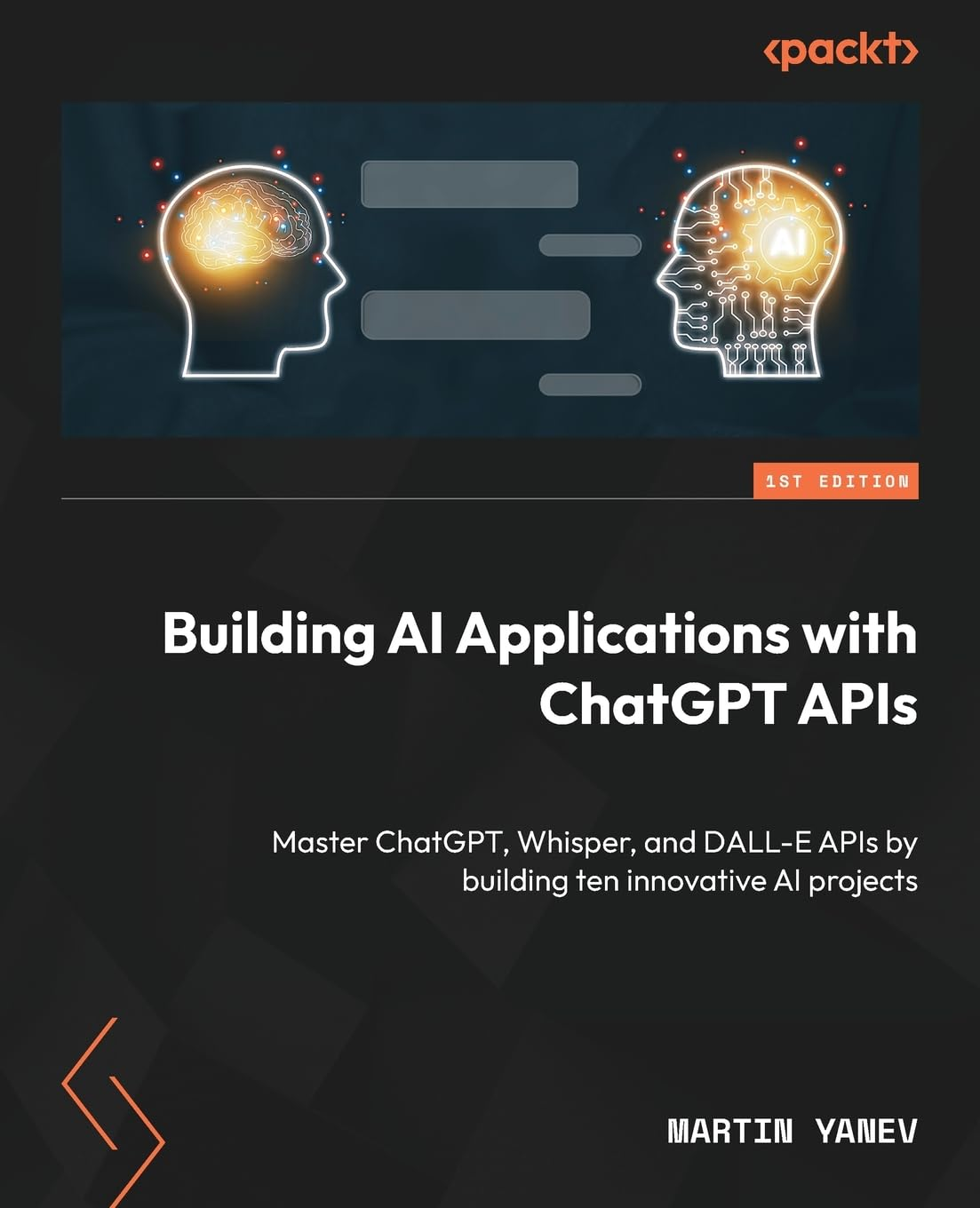 Building AI Applications with ChatGPT APIs: Master ChatGPT, Whisper, and DALL-E APIs by building ten innovative AI projects